
Cash-Out Refinance vs HELOC: Which Is Better for DMV Homeowners in 2026?
Cash-Out Refinance vs HELOC: Which Is Better for DMV Homeowners in 2026?
By Ken Byrne, NMLS #187129 · ALCOVA Mortgage LLC, NMLS #40508 · Updated May 2026

Quick Answer: For most DMV homeowners in 2026, a cash-out refinance makes sense when you need a large lump sum and current rates are at or below your existing mortgage rate. A HELOC is the better choice when you want flexible access to equity over time, plan to repay quickly, or already have a low first-mortgage rate worth protecting. The right answer depends on your existing rate, how much you need, and how fast you'll repay it.
Key Takeaways
- Cash-out refinance replaces your existing mortgage with a new, larger one — you receive the difference in cash, but reset your loan term and rate.
- HELOC (Home Equity Line of Credit) is a second loan that sits behind your first mortgage — you borrow only what you need, when you need it, on a revolving line.
- 2026 DC metro conforming loan limit: $1,249,125 — DMV homeowners with high-value homes have substantial cash-out capacity within conforming guidelines.
- LTV ceilings typically cap conventional cash-out refinances at 80% LTV and HELOCs at 80–90% CLTV — VA cash-out can go up to 100% LTV for eligible borrowers.
- Tax deductibility of interest is limited under current IRS rules to funds used to "buy, build, or substantially improve" the home securing the loan.
- If you're tapping equity to fund a move, selling may be the smarter play — and saving on commission can leave more cash in your pocket than a refinance.
Table of Contents
- What Is a Cash-Out Refinance?
- What Is a HELOC?
- Cash-Out Refi vs HELOC: Side-by-Side Comparison
- When a Cash-Out Refinance Makes Sense
- When a HELOC Makes Sense
- DMV-Specific Considerations
- Tax Implications You Need to Know
- The Application Process Step-by-Step
- Should You Sell Instead?
- Common Mistakes DMV Homeowners Make
- The Bottom Line for DMV Homeowners
- Frequently Asked Questions
- Glossary
If you've owned a home in Northern Virginia, Maryland, or Washington DC for more than a few years, there's a good chance you're sitting on six figures of equity. Median home prices across the DMV have appreciated meaningfully since 2020, and homeowners who locked in low rates between 2020 and 2022 now hold a financial asset that's harder to extract than it used to be.
When you need to tap that equity — for a renovation, college tuition, debt consolidation, or a major life event — the two most common tools are a cash-out refinance and a HELOC (home equity line of credit). They sound similar. They behave very differently. And in the current rate environment, the wrong choice can cost you tens of thousands of dollars over the life of the loan.
This guide breaks down both options through a DMV lens — how each one works, when each one wins, the tax rules that trip people up, and the rare-but-real scenarios where the smartest move is to skip both and sell instead.
What Is a Cash-Out Refinance?
A cash-out refinance replaces your existing mortgage with a new, larger loan. The new loan pays off your current mortgage in full, and the difference between the old balance and the new loan amount is delivered to you as a lump sum at closing.
Here's a simple example. Say you own a home in Vienna, VA worth $850,000 and you currently owe $400,000 on your mortgage. You have $450,000 in equity. If you refinance into a new loan of $600,000 (which keeps you at roughly 70% loan-to-value), $400,000 pays off your old mortgage and you walk away from closing with $200,000 in cash — minus closing costs.
How Cash-Out Refinances Work
- New loan, new terms. You're starting over with a new 15- or 30-year amortization, new interest rate, and a new monthly payment.
- LTV ceiling. Conventional cash-out refinances generally cap at 80% LTV. FHA cash-out caps at 80% LTV. VA cash-out can go up to 100% LTV for eligible veterans and active-duty service members.
- Closing costs. Expect 2–5% of the new loan amount in closing costs, including lender fees, appraisal, title insurance, and Virginia recordation/grantor taxes (or Maryland/DC equivalents).
- Single fixed payment. Most cash-out refinances are fixed-rate, giving you payment predictability for the life of the loan.
What Is a HELOC?
A home equity line of credit (HELOC) is a second loan secured by your home that sits behind your first mortgage in lien position. Instead of receiving a lump sum, you get access to a revolving credit line — similar in structure to a credit card — that you can draw from as needed during a defined "draw period," typically 10 years.
Using the same Vienna example: with a $850,000 home and a $400,000 first mortgage, you might qualify for a HELOC of $280,000–$365,000, depending on the lender's combined loan-to-value (CLTV) ceiling. Your original mortgage stays exactly as it was — same rate, same term, same payment. The HELOC is a separate, second account.
How HELOCs Work
- Two phases. The draw period (typically 10 years) allows you to borrow and repay flexibly. The repayment period (typically 10–20 years) requires fixed principal-and-interest payments on the outstanding balance.
- Variable rate. Most HELOCs carry variable rates tied to the prime rate. Your monthly payment can change as the index moves.
- CLTV ceiling. Most lenders cap HELOC CLTV (your first mortgage plus the HELOC limit, divided by home value) at 80–90%.
- Lower closing costs. HELOCs typically have minimal closing costs — often a few hundred dollars or waived entirely — though some lenders charge early-termination fees if closed within the first 36 months.
- Interest-only payments during draw. Many HELOCs allow interest-only payments during the draw period, but that can be a trap if you don't have a plan for paying down the principal before the repayment period starts.
Cash-Out Refi vs HELOC: Side-by-Side Comparison
| Feature | Cash-Out Refinance | HELOC |
|---|---|---|
| Structure | Replaces your existing mortgage | Second loan behind your existing mortgage |
| Funds delivered | Lump sum at closing | Revolving line you draw from |
| Interest rate type | Typically fixed | Typically variable |
| Max LTV/CLTV | 80% (Conv/FHA), up to 100% (VA) | 80–90% CLTV typical |
| Closing costs | 2–5% of new loan amount | Minimal — often $0–$500 |
| Payment | Principal + interest, fixed | Interest-only during draw, then P&I |
| Affects existing mortgage? | Yes — replaces it entirely | No — leaves it untouched |
| Best use case | Large lump-sum needs | Flexible, ongoing access |
| Typical funding time | 30–45 days | 2–4 weeks |
When a Cash-Out Refinance Makes Sense
A cash-out refinance is the right tool for specific situations — and the wrong tool for others. Here are the scenarios where it tends to win.
1. Current Rates Are At or Below Your Existing Rate
This is the single most important question. If rates today are lower than what you're paying, a cash-out refinance can let you pull equity and lower your monthly payment in one move. If rates today are higher than your existing rate, you're effectively giving up a low-rate loan to access cash — and you'll pay for that decision every month for the next 30 years.
2. You Need a Large, Defined Lump Sum
Big-ticket needs — a $150,000 home addition, debt consolidation of substantial high-interest balances, a significant tuition obligation — are best served by a fixed lump sum at a predictable rate. You know exactly what you're getting and exactly what you'll pay each month.
3. You're a VA-Eligible Borrower
Veterans and active-duty service members in the DMV — particularly in markets like Stafford, Woodbridge, Fort Belvoir, and Quantico — can access up to 100% LTV on a VA cash-out refinance. That's the highest LTV ceiling in residential lending, and HELOCs simply can't match it.
4. You Want Payment Predictability
A fixed-rate cash-out refinance gives you one stable monthly payment. If you're someone who values "set it and forget it" budgeting, this is a real advantage over the variable-rate uncertainty of a HELOC.
Free · No Commitment
See What You Qualify For Today
Get pre-approved in minutes and see exactly how much equity you can access with a cash-out refinance in Virginia, Maryland, or DC. No cost, no obligation.
Ken Byrne NMLS #187129 · ALCOVA Mortgage LLC NMLS #40508
When a HELOC Makes Sense
A HELOC is the better tool in several common scenarios — particularly for DMV homeowners who locked in low first-mortgage rates between 2020 and 2022.
1. You Have a Sub-4% First Mortgage You Don't Want to Lose
If you locked in a 2.75% or 3.25% mortgage during the rate trough, that loan is one of the most valuable financial assets you own. A cash-out refinance forces you to give it up. A HELOC lets you keep it. For most DMV homeowners in this position, a HELOC is the correct answer — even if the HELOC rate is higher than the refi rate would have been.
2. You Need Flexible, Ongoing Access
Renovations are a classic HELOC use case. Costs come in waves — contractor deposits, materials, change orders, finish work — and you don't know the exact total upfront. A HELOC lets you draw as needed, pay interest only on what's outstanding, and avoid taking out (and paying interest on) money you haven't spent yet.
3. You Plan to Repay Quickly
If you're using equity as a short-term bridge — covering a few months of expenses while a bonus, RSU vesting, or sale of another asset clears — a HELOC's low closing costs and revolving structure make it dramatically cheaper than refinancing. There's no point paying $15,000 in closing costs to borrow money you'll repay in 12 months.
4. You Want a Safety Net You May Not Use
Some homeowners open a HELOC simply to have access to liquidity in case of emergency — a job loss, a medical event, an unexpected major repair. You pay nothing if you don't draw, and the line is there if you need it. That's an option no cash-out refinance can replicate.
DMV-Specific Considerations
The DC metro market has features that affect this decision in ways national articles miss. Here's what matters locally.
High-Cost Conforming Loan Limits Work in Your Favor
The 2026 conforming loan limit for the DC metro area is $1,249,125 for a single-family home — one of the highest in the country. That means cash-out refinances on high-value DMV homes can often stay within conforming guidelines (cheaper, easier underwriting) where they'd require a jumbo loan in lower-cost metros. Homeowners in Vienna, McLean, Bethesda, Chevy Chase, Arlington, and parts of NW DC routinely benefit from this.
Virginia Recordation and Grantor Taxes Add Up
A cash-out refinance in Virginia triggers state recordation tax on the new deed of trust. On a $600,000 refinance, that's roughly $1,650 in state recordation tax alone, plus local recordation surcharges that vary by county. HELOCs, because they're secured by a much smaller deed-of-trust amount (often only the credit limit), generate substantially less recordation tax. For DMV homeowners, this is a real cost difference that often gets overlooked in side-by-side comparisons.
Maryland and DC Have Their Own Closing-Cost Profiles
Maryland refinances avoid transfer/recordation taxes on a refinance of the same property if structured correctly (the Maryland "refinance exemption"). DC has its own recordation and transfer tax framework that applies differently to cash-out refinances. A lender who understands the DMV — not a national online lender — can save you real money on the closing side.
HOA Equity in Planned Communities
DMV homeowners in planned communities — Broadlands, Brambleton, Reston, Lansdowne, Stone Ridge, Willowsford — should know that lenders evaluate the HOA's financial health as part of any equity-based loan. Communities with strong reserves and stable assessments underwrite cleanly. Communities with special assessments or litigation can complicate cash-out refinances and HELOCs alike.
Run the Numbers
What Will Your New Payment Look Like?
Use our mortgage calculator to estimate your monthly payment for a cash-out refinance at any loan amount in Virginia, Maryland, or DC.
Tax Implications You Need to Know
The interest you pay on a cash-out refinance or HELOC may or may not be tax-deductible — and the rule is the same for both products. Under current IRS guidance, interest is deductible only on funds used to "buy, build, or substantially improve" the home that secures the loan.
What That Means in Practice
- Renovation or addition to your home: Generally deductible.
- Debt consolidation, tuition, vehicle purchase, vacation: Generally not deductible.
- Investment in another property: Generally not deductible against your primary mortgage interest, though may be deductible elsewhere on your return.
Total mortgage debt eligible for the interest deduction is also capped — generally at $750,000 for mortgages originated after December 15, 2017 (or $1 million for older mortgages, subject to certain conditions). Talk to your CPA before assuming deductibility, especially on larger DMV loan balances.
The Application Process Step-by-Step
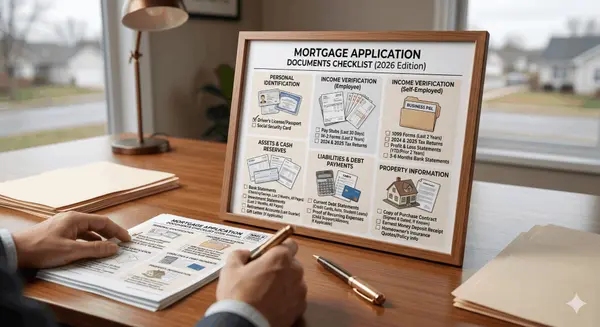
Both products require full underwriting, but the timelines and document loads are slightly different. Here's the typical path for a cash-out refinance.
A HELOC follows the same general workflow but typically closes in 2–4 weeks rather than 30–45 days. The right-of-rescission rule applies to HELOCs on a primary residence as well.
Should You Sell Instead?
Here's the question almost no national mortgage article will ask: do you actually need to keep the house?
If you're tapping equity because you're planning a move anyway — relocating for work, downsizing as kids leave, or upgrading to a home that fits the next 10 years better — selling may be the smarter financial play. You'd avoid the closing costs of a refinance, avoid stacking new debt on top of existing debt, and get full access to your equity rather than a fraction of it.
The variable that tips this math is what you'll pay in commission to sell. In the DMV, full-service traditional listings typically cost sellers 2.5–3% to the listing side. On a $850,000 home, that's $21,000–$25,500 going out the door at closing. If you can sell at a lower listing commission, you keep more of your equity — often more than you'd pull out through a cash-out refinance after closing costs and the rate hit.
Keep More of Your Equity
Selling Instead? Consider 1.5% Full-Service Listing
If selling is the right move, a 1.5% listing commission program can leave thousands more in your pocket at closing — without sacrificing full-service representation.
Common Mistakes DMV Homeowners Make
1. Refinancing Out of a Low-Rate Mortgage to Access Equity
This is the most expensive mistake we see. If your existing first mortgage is below current rates, a cash-out refinance forces you to surrender that low rate on your entire balance — not just the new money. A HELOC is almost always the right structure in this scenario.
2. Using a HELOC Like a Permanent Loan
HELOCs are designed for flexible, often shorter-term borrowing. If you draw $200,000 and only pay interest for 10 years, the day your repayment period starts your monthly payment can multiply overnight. Have a real plan for paying down principal during the draw period.
3. Ignoring Variable-Rate Risk
If your HELOC rate floats with prime, your payment moves when prime moves. Run the numbers at a rate 1–2 percentage points higher than today's and make sure you can still afford the payment.
4. Assuming the Interest Is Tax-Deductible
It's only deductible if used to buy, build, or substantially improve the home securing the loan. Debt consolidation and tuition — common uses — don't qualify under current rules.
5. Skipping the Appraisal Strategy
Your appraised value determines your maximum cash-out or HELOC limit. Investing a few weeks in light prep — decluttering, minor cosmetic touch-ups, documenting recent improvements with receipts and permits — can meaningfully improve appraisal outcomes in DMV markets where comparable sales are tight.
6. Not Shopping Lenders
Rates, fees, and product fit vary meaningfully across lenders. National online lenders often miss DMV-specific cost optimizations (the Maryland refinance exemption, Virginia recordation tax structuring) that local lenders catch. Compare at least two or three quotes.
Free · No Commitment
Talk to a Local DMV Mortgage Expert
Whether a cash-out refinance or HELOC is the right call depends on your existing rate, your goals, and your timeline. Start with a free pre-approval and we'll model both options side by side.
Ken Byrne NMLS #187129 · ALCOVA Mortgage LLC NMLS #40508
The Bottom Line for DMV Homeowners
The cash-out refinance vs HELOC decision comes down to three questions:
- What's your current rate? If it's below market, protect it with a HELOC. If it's at or above market, a cash-out refinance can do double duty.
- How will you use the funds? A defined lump sum favors a refinance. Flexible, ongoing draws favor a HELOC.
- How quickly will you repay? Short timeline favors a HELOC's low closing costs. Long timeline favors the rate stability of a fixed-rate refinance.
For DMV homeowners specifically, the high conforming loan limit ($1,249,125 in the DC metro for 2026), Virginia recordation tax structuring, and the Maryland refinance exemption all create cost variables that a generic national calculator won't model correctly. Work with a lender who knows the local landscape.
And finally — if the underlying reason you're tapping equity is that the house no longer fits your life, the right answer may be to sell. A low-commission listing can return more cash than any refinance.
Frequently Asked Questions
Is a cash-out refinance or HELOC better for DMV homeowners in 2026?
It depends on your existing mortgage rate and how you'll use the funds. If you locked in a low rate between 2020 and 2022, a HELOC almost always wins because it preserves your existing first mortgage. If your current rate is at or above today's market, a cash-out refinance can simultaneously give you cash and improve your payment.
What credit score do I need for a cash-out refinance in Virginia?
Conventional cash-out refinances typically require a minimum credit score of 620, with the best pricing at 740 and above. FHA cash-out refinances generally require 580+ (though many lenders set overlay minimums of 620 or 640). VA cash-out refinances follow lender overlay guidelines, commonly 580–620 minimum.
How much equity can I cash out in Northern Virginia?
Conventional and FHA cash-out refinances cap at 80% LTV — so on an $850,000 home, your new loan can't exceed $680,000. VA cash-out refinances can go up to 100% LTV for eligible borrowers. HELOCs typically cap CLTV (first mortgage + HELOC) at 80–90%, depending on the lender and your credit profile.
What is the 2026 conforming loan limit for the DC metro area?
The 2026 high-cost-area conforming loan limit for the DC metro is $1,249,125 for a single-family property. Many DMV cash-out refinances stay within conforming guidelines even at high home values, which keeps pricing better than a jumbo loan.
What are the closing costs for a cash-out refinance in Virginia?
Expect 2–5% of the new loan amount. On a $600,000 refinance, that's $12,000–$30,000 — including lender fees, appraisal (typically $600–$900), title insurance, settlement fees, and Virginia state recordation tax plus local recordation surcharges. HELOCs typically run from $0 to a few hundred dollars in closing costs.
Is HELOC interest tax-deductible in 2026?
Only if the funds are used to buy, build, or substantially improve the home that secures the loan, under current IRS rules. Funds used for debt consolidation, tuition, vehicles, or other personal purposes generally aren't deductible. Consult your CPA for guidance specific to your situation.
Can I have both a HELOC and a cash-out refinance at the same time?
Yes — your refinanced first mortgage and a separate HELOC can coexist, as long as the combined CLTV stays within your lender's guidelines (typically 80–90%). This can be a useful strategy if you want a lump sum now and a flexible reserve for later.
How long does a cash-out refinance take to close in the DMV?
Plan for 30–45 days from application to funding. HELOCs typically close faster — often 2–4 weeks. Federal "right of rescission" on a primary-residence refinance adds three business days at the end before funds disburse.
Do I need to use the cash for the home?
No — funds from either product can be used for any purpose. However, the tax-deductibility of interest is limited to funds used to buy, build, or substantially improve the home, so the use case affects after-tax cost even if it doesn't affect approval.
How do I get pre-approved for a cash-out refinance or HELOC in Northern Virginia?
Start with a licensed local lender who can model both options based on your current mortgage, equity position, and goals. Ken Byrne (NMLS #187129) at ALCOVA Mortgage LLC (NMLS #40508) is licensed in Virginia, Maryland, DC, and West Virginia and can run the comparison side by side. The application takes minutes online.
How do I find a good mortgage lender in the DMV?
Look for: (1) NMLS-registered loan officers with local DMV experience, (2) ability to model multiple loan products side by side, (3) transparent pricing with Loan Estimates issued promptly, (4) familiarity with Virginia recordation tax, the Maryland refinance exemption, and DC closing-cost structures, and (5) availability to walk you through scenarios before you apply. Ken Byrne at ALCOVA Mortgage meets these criteria and is licensed across the DMV.
Is now a good time to refinance in Northern Virginia 2026?
It depends entirely on your existing rate. Rates change daily and current market levels are best confirmed with a licensed lender. If your existing mortgage rate is meaningfully above current market, a refinance — cash-out or rate-and-term — is worth pricing out. If your existing rate is well below market, a HELOC is usually the better way to access equity.
Glossary
Cash-Out Refinance: A new mortgage that replaces your existing one, where the new loan amount exceeds the old balance and the difference is paid to you as cash at closing.
HELOC (Home Equity Line of Credit): A revolving second loan secured by your home's equity, with a draw period (typically 10 years) followed by a repayment period.
LTV (Loan-to-Value): The ratio of your loan amount to your home's appraised value, expressed as a percentage. A $600,000 loan on an $850,000 home = ~70.6% LTV.
CLTV (Combined Loan-to-Value): The ratio of all loans secured by the property (first mortgage + HELOC, for example) to the home's appraised value.
Conforming Loan Limit: The maximum loan amount eligible for purchase by Fannie Mae or Freddie Mac. The 2026 high-cost-area limit for the DC metro is $1,249,125.
Right of Rescission: A federal three-business-day cancellation period that applies to most refinances and HELOCs on a primary residence.
Prime Rate: The benchmark interest rate set by major banks, used as a reference index for most variable-rate HELOCs.
Maryland Refinance Exemption: A Maryland provision that can reduce or eliminate state recordation tax on a refinance of the same property by the same borrower, when structured correctly.
Disclaimer: This article is for informational purposes only and does not constitute financial or legal advice. Mortgage programs, rates, and eligibility requirements are subject to change. Contact a licensed mortgage professional for guidance specific to your situation. Ken Byrne, NMLS #187129 · ALCOVA Mortgage LLC, NMLS #40508 · Licensed in VA, MD, DC, WV.
Categories
Recent Posts








GET MORE INFORMATION

Broker Associate