
Closing Costs in West Virginia: What You Actually Pay in 2026

The transfer tax on a $325,000 West Virginia purchase is between $1,073 and $1,788, and which end you land on is set by your county commission.
Short answer: closing costs in West Virginia are low by regional standards, and the reason is structural rather than incidental. The state excise tax on transferring title is $1.10 per $500 of value, the county may add between 55 cents and $1.65 per $500 on top, and that is the whole transfer tax. Unlike Virginia, West Virginia does not levy the excise a second time on the deed of trust, so financing the purchase does not double the tax. Expect the combined transfer tax to fall between 0.33 and 0.55 percent of price, plus a flat $20 fee, plus the clerk’s recording charge. Everything else on your Closing Disclosure is lender fees, title, and prepaids.
By Ken Byrne, NMLS #187129 · ALCOVA Mortgage LLC, NMLS #40508 · Updated September 2026
Most West Virginia closing cost guides print a single percentage, usually 0.55, and move on. That number is the statutory ceiling, not the rate, and roughly half the counties in the state sit below it. This guide gives you the line items, the section of the West Virginia Code that imposes each tax, the arithmetic at real price points, and the one place where the figures published online contradict the statute. If you want it run on a specific address and loan amount, JB Financing mortgage will do it the same day.
What closing costs in West Virginia actually run
Two to four percent of the purchase price is the range a West Virginia buyer should budget, and where you land inside it depends far more on your loan size and your escrow setup than on anything you negotiate. Only one line in that total is fixed by law. The rest moves.
| Cost group | Who it goes to | Roughly how much | Can you move it |
|---|---|---|---|
| Transfer excise tax | State and county | 0.33 to 0.55 percent of price | No, set by statute |
| Affordable housing fee | County clerk | $20 flat | No, set by statute |
| Deed and deed of trust recording | County clerk | About $32 each, plus $1 a page after five | No |
| Lender fees | Your lender | Varies widely | Yes, by shopping lenders |
| Title insurance and settlement | Title company | Varies by price and provider | Partly |
| Prepaids and escrow | Your own escrow account | Depends on the closing date | No, but it is your money |
Closing costs are not the down payment. They sit on top of it. A buyer putting 5 percent down on a $325,000 house in Berkeley County needs $16,250 for the down payment and several thousand more on top. Treating the two as one number is the most common budgeting failure we see, and it is the reason a file that looked comfortable at pre-approval gets tight three days before settlement.
Who pays closing costs in West Virginia
Custom governs most of this, but the transfer tax is different: the statute names who owes it, and it names the seller first. Section 11-22-2 makes the tax payable by the grantor, with one important exception written into the same sentence.
| Item | Customarily paid by | Set by |
|---|---|---|
| Transfer excise tax, state and county | Seller | Statute names the grantor |
| $20 affordable housing fee | Seller, with the deed | Statute |
| Deed recording fee | Buyer | Custom |
| Deed of trust recording fee | Buyer | Custom |
| Lender fees and points | Buyer | Custom |
| Appraisal | Buyer | Custom |
| Lender’s title policy | Buyer | Custom |
| Owner’s title policy | Negotiated | Custom |
| Settlement or closing fee | Negotiated, often split | Custom |
| Real estate commissions | Seller | Contract |
The transfer tax assignment is from West Virginia Code section 11-22-2, which makes the tax “payable by the grantor therein unless the grantee accepts the document without such tax having been paid, in which event such tax shall be paid by the grantee.” In other words it is the seller’s by default, but if the deed reaches the clerk unpaid the liability lands on the buyer. That is a good reason to confirm at the settlement table that the stamps were actually bought.

“Send me the county and the price you are looking at and I will tell you the exact transfer tax, the recording charges and what the cash to close looks like, before you write the offer.”
Arslan Jamil, Broker Associate
Loans originated by Ken Byrne, NMLS ID# 187129 · ALCOVA Mortgage LLC, NMLS ID# 40508. Equal Housing Lender.
The West Virginia transfer tax, calculated from the statute
There are two layers and they are both in the same section of the Code. The state layer is fixed statewide. The county layer is a local decision, which is why a flat percentage quoted for the whole state is always wrong for somebody.
| Layer | Rate per $500 of value | Per $1,000 | As a percentage of price |
|---|---|---|---|
| State excise | $1.10 | $2.20 | 0.22 percent |
| County excise, statutory base | 55 cents | $1.10 | 0.11 percent |
| County excise, statutory maximum | $1.65 | $3.30 | 0.33 percent |
| Combined at the county base | $1.65 | $3.30 | 0.33 percent |
| Combined at the county maximum | $2.75 | $5.50 | 0.55 percent |
West Virginia Code section 11-22-2. Subsection (a) imposes the state excise “upon the privilege of transferring title to real estate at the rate of $1.10 for each $500 value or fraction thereof” and separately assesses “a fee of $20 upon the privilege of transferring real estate for consideration.” Subsection (b) imposes the county excise at a base of “55 cents for each $500 value or fraction thereof” and allows the county commission to “increase the excise tax to an amount not to exceed $1.65 for each $500 value, or fraction thereof.”
Two details in that language are worth pausing on. The first is or fraction thereof: the tax is charged on whole $500 increments, so a $325,100 sale is taxed as though it were $325,500. The rounding is small but it is always upward. The second is that the tax attaches to transferring title. A deed of trust does not transfer title, so recording your loan carries the clerk’s recording fee but not the excise.
This is the line that makes West Virginia cheap to close in. Virginia charges recordation twice on a financed purchase, once on the deed and again on the deed of trust. West Virginia charges the excise once, on the transfer. On a $400,000 purchase with 20 percent down, that structural difference is worth roughly a thousand dollars before any other line item is compared.
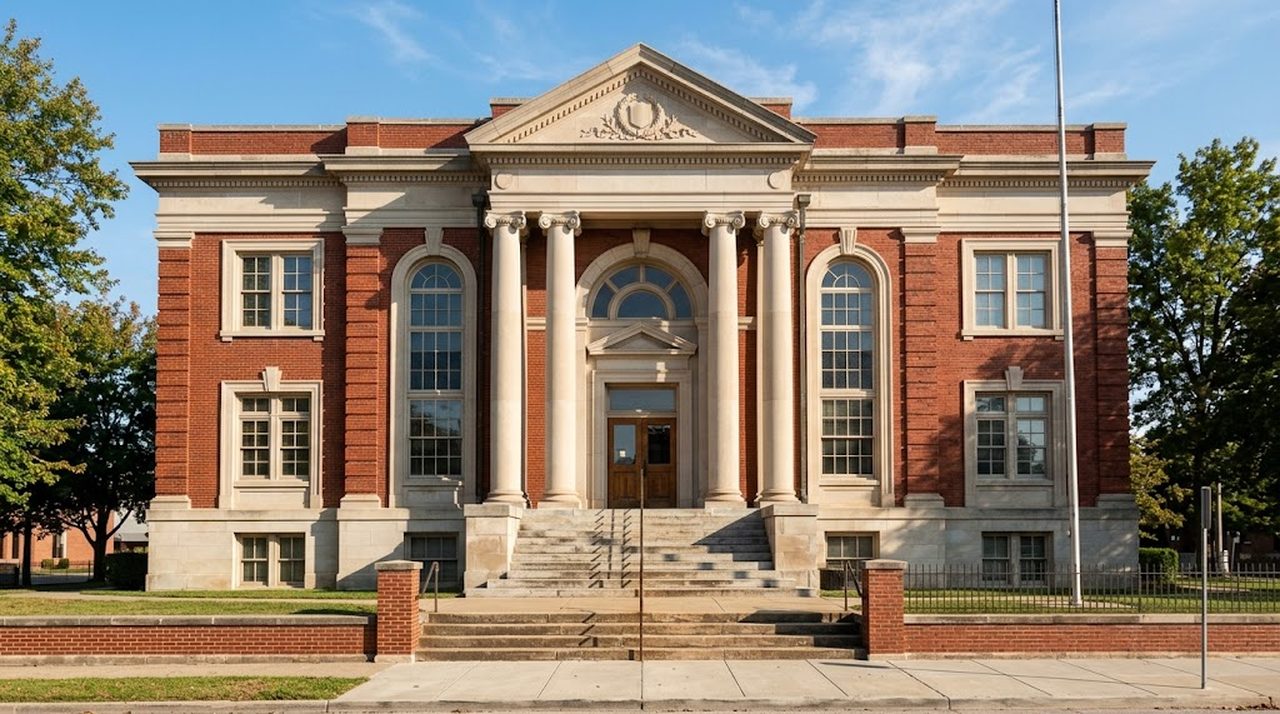
The tax is collected by the county clerk when the deed is recorded, which is also where the county rate is set.
Here is the arithmetic at prices that reflect the market from the Eastern Panhandle across to Morgantown, shown at both ends of the statutory range so you can see how much your county commission’s decision is actually worth.
| Purchase price | Taxable increments | Transfer tax at the county base | Transfer tax at the county maximum | Difference |
|---|---|---|---|---|
| $200,000 | 400 | $660 | $1,100 | $440 |
| $250,000 | 500 | $825 | $1,375 | $550 |
| $325,000 | 650 | $1,073 | $1,788 | $715 |
| $400,000 | 800 | $1,320 | $2,200 | $880 |
| $500,000 | 1,000 | $1,650 | $2,750 | $1,100 |
| $650,000 | 1,300 | $2,145 | $3,575 | $1,430 |
Calculated, not estimated: price divided by $500, rounded up to the next whole increment, multiplied by $1.65 at the combined county base and by $2.75 at the combined county maximum, per West Virginia Code section 11-22-2. Add the flat $20 fee to either column. Figures are rounded to the nearest dollar.
Why the transfer tax figure you found online is probably wrong
This is the part no other guide will tell you, and it is the reason we calculate rather than copy. The statutory ceiling on the combined state and county excise is $2.75 per $500, which is $5.50 per $1,000. Jefferson County publishes exactly that, and it is the county sitting at the legal maximum.
Several widely republished recorder reference tables, however, list counties above that ceiling. Berkeley County appears in those tables at $7.70 per $1,000 and Morgan County at $6.60 per $1,000. Both sit above what section 11-22-2 appears to permit. We could not reconcile the difference against a primary county source: neither county publishes a current fee schedule showing the rate, and the state code contains no second authorization we could find that would explain the gap.
What to do with that. Treat any transfer tax figure you find online, including ours, as something to confirm before you rely on it in an offer. Call the county clerk in the county where the property sits and ask for the current combined excise rate per $500. It takes two minutes and it is the only number that will actually be charged. We flag this rather than quietly printing a county table because a wrong rate on a closing statement is discovered at the settlement table, which is the worst possible moment.
Recording fees and the $20 fee most guides miss
The clerk’s charges are small, fixed and almost always omitted from national estimators. They are worth knowing because they are among the few numbers on your Closing Disclosure that nobody can pad.
| Charge | Amount | Notes |
|---|---|---|
| Deed recording | About $32 | First five pages, then $1 a page |
| Deed of trust recording | About $32 | First five pages, then $1 a page |
| Affordable housing fee | $20 | Due with every deed recorded for consideration |
| Preservation fee | $1 | Added on instruments over 19 pages, $1 per additional 10 pages |
| Certified copies | About $1.50 for two pages | Then $1 a page, plus $1 to certify |
The $20 fee is statutory, under West Virginia Code section 11-22-2(a), and the clerk must collect it before recording a transfer of title for consideration. The recording charges above are the schedule published for Jefferson, Berkeley, Morgan and Kanawha counties, which agree with one another; confirm yours with the county clerk, because a clerk may revise a fee schedule without any announcement that reaches a search engine.
Lender fees, and which of them you can actually shop
This is the largest genuinely negotiable block on the page, and it is where the spread between two lenders quoting the same rate shows up. Your Loan Estimate separates the fees you cannot shop from the ones you can, and the distinction is regulatory rather than advisory.
| Fee | Typical range | Shoppable |
|---|---|---|
| Origination or underwriting | $0 to $1,500 | Between lenders, not within one |
| Discount points | 0 to 2 percent of the loan | Yes, and optional |
| Appraisal | $550 to $900 | No, the lender orders it |
| Credit report and verifications | $75 to $250 | No |
| Flood certification | $10 to $30 | No |
| Title search and lender’s policy | Varies with loan size | Yes, section C of the Loan Estimate |
| Settlement or closing fee | $400 to $900 | Yes |
The practical move is not to argue a single fee down. It is to get two or three Loan Estimates issued within a few days of each other and compare the bottom line of page two. Reading a Loan Estimate properly takes about ten minutes once and saves the same amount every time afterwards.
Ranges above are typical figures, not quotes. They are here so an unfamiliar number on your own estimate stands out. Nothing in this table is a rate sheet, and a fee outside a range is not automatically wrong.
Title insurance and settlement in West Virginia
Two policies exist and they protect different people. The lender’s policy protects the lender’s lien position and is required on every financed purchase. The owner’s policy protects your equity and is optional, which is exactly why it gets declined by buyers who are tired of signing things.
The case for buying the owner’s policy is that the risks it covers are the ones a title search cannot find: a forged signature in the chain, an undisclosed heir, a boundary described differently in two deeds. In a state with a long history of divided mineral and surface estates and hand-drawn rural metes and bounds, those are not theoretical. Buying it at the same time as the lender’s policy is also the cheapest it will ever be, because the simultaneous issue rate is far below the standalone rate.
Mineral rights are a West Virginia specific. Surface and mineral estates are frequently severed here, sometimes generations ago. A standard title commitment will usually except mineral rights from coverage rather than insure them. If the parcel matters to you for reasons beyond the house, read schedule B of the commitment carefully and ask the title company directly what is excepted.
Prepaids and escrow, which are not really costs
The largest surprise on most Closing Disclosures is not a fee at all. It is the escrow setup, and it is your own money moving into an account with your name on it. It looks like a cost because it is cash you have to bring.
You will prepay interest from the closing date to the end of that month, the first year of homeowner’s insurance, and a cushion of property tax and insurance into escrow. How much depends almost entirely on when you close relative to the tax cycle, which is why two identical purchases three weeks apart can differ by a four figure amount. How an escrow account actually works covers the mechanics.
Closing late in the month cuts prepaid interest. Closing on the 28th rather than the 3rd means you prepay a few days of interest instead of most of a month. It does not reduce what you owe over the life of the loan, it only moves it, but it does reduce the cash you bring to the table, and for a tight file that is sometimes the difference.
How to reduce what you bring to closing
Seller concessions
The seller can pay some or all of your closing costs, and on a conventional loan the ceiling is set by the investor rather than negotiated. For a principal residence Fannie Mae caps interested party contributions at 3 percent of the lower of price or appraised value when the loan to value is above 90 percent, 6 percent between 75.01 and 90 percent, and 9 percent at 75 percent or below. Anything above the cap is not disallowed so much as re-characterised: it comes off the sale price instead, which changes the appraisal math.
Fannie Mae Selling Guide B3-4.1-02, Interested Party Contributions. Investment properties are capped at 2 percent at all loan to value ratios. FHA and VA set their own limits and a VA loan treats seller paid closing costs differently from what it calls concessions, so ask about your specific program rather than assuming the conventional numbers apply.
Lender credits
A lender credit is a higher interest rate exchanged for cash at the table. It is neither good nor bad in itself, it is a trade, and the right answer turns on how long you will hold the loan. If you are short on cash and expect to refinance or move inside five years, taking the credit is often the stronger play. If you will hold the loan fifteen years, it rarely is.
Assistance from the state housing fund
West Virginia runs its own down payment and closing cost help through the state housing fund, with income and price caps that are generous in the Eastern Panhandle. It is the single largest lever available to a first time buyer here and it is routinely missed. The WVHDF programs, rates and county income caps has the current figures.
What it looks like in the Eastern Panhandle
The Panhandle counties are where most of our West Virginia volume sits, because Jefferson and Berkeley are commuter distance to the Washington job market while the closing costs and the property tax stay on the West Virginia side of the line. Jefferson is the more expensive of the two and it is also the county at the statutory transfer tax maximum, which is worth knowing before you compare a Charles Town contract to a Martinsburg one.
If you are weighing a Panhandle purchase against a Northern Virginia one, the transfer tax gap is real but it is not the largest number in the comparison. Property tax and commute cost are. Our county guides for Jefferson County and Berkeley County work through both, including the conforming loan limit difference that makes Jefferson unusual among West Virginia counties.
For the side by side against the other three jurisdictions we lend in, the Virginia, DC and Maryland comparison sets the four against each other on the same purchase price. West Virginia is the cheapest of the four to close in, and the single structural reason is the one covered above: the excise is charged once, on the transfer, not twice.
Every program, rate and county detail we quote for this state is collected on our West Virginia lending page.
What buyers get wrong
| The assumption | What actually happens |
|---|---|
| The transfer tax is 0.55 percent statewide | That is the ceiling. Counties at the base charge 0.33 percent, and the difference on a $400,000 purchase is $880 |
| Financing the purchase doubles the tax | It does in Virginia. It does not here, because the excise attaches to the deed, not the deed of trust |
| The buyer pays the transfer tax | The statute makes it the grantor’s, but it shifts to the buyer if the deed is accepted unpaid |
| Closing costs come out of the down payment | They sit on top of it, and both have to be in the account |
| The estimate at pre-approval is the final number | It is an estimate until the Closing Disclosure three days before settlement |
| Owner’s title insurance is optional so it is not needed | Optional and unnecessary are different words, particularly where mineral and surface estates are severed |
| All lenders charge about the same | Section A of the Loan Estimate is where the spread between two lenders on the same rate shows up |
Want the cash to close for a specific West Virginia address rather than a percentage?
Arslan Jamil, Broker Associate
Give us the county, the price and the down payment. You get back the transfer tax calculated from the statute, the recording charges, a realistic estimate of lender and title fees, and the escrow setup for your actual closing month.
Loans originated by Ken Byrne, NMLS ID# 187129 · ALCOVA Mortgage LLC, NMLS ID# 40508. Equal Housing Lender.
Frequently asked questions
How much are closing costs in West Virginia?
Budget 2 to 4 percent of the purchase price as a buyer. On a $325,000 purchase that is roughly $6,500 to $13,000. The fixed statutory part of that is small: the transfer tax is between $1,073 and $1,788 depending on your county, plus a $20 fee and about $64 in recording charges. The rest is lender fees, title and prepaid escrow, and the escrow piece is the one that moves most with your closing date.
Who pays closing costs in West Virginia, the buyer or the seller?
Both, on different items. The transfer excise tax and the $20 fee are the seller’s under West Virginia Code section 11-22-2, which makes the tax payable by the grantor. The buyer customarily pays the recording fees, lender fees, the appraisal, the lender’s title policy and the prepaid escrow. Commissions come out of the seller’s side under the listing contract. Almost everything except the statutory tax assignment is negotiable in the contract.
What is the transfer tax in West Virginia?
The state excise is $1.10 for each $500 of value or fraction thereof. The county adds its own excise, which starts at 55 cents per $500 and can be raised by the county commission to no more than $1.65 per $500. So the combined tax runs from $1.65 to $2.75 per $500, which is 0.33 to 0.55 percent of the purchase price. Both layers are in West Virginia Code section 11-22-2.
Who pays transfer tax in West Virginia?
The grantor, meaning the seller, by default. The statute says the tax is payable by the grantor unless the grantee accepts the document without the tax having been paid, in which case the grantee pays it. In practice the settlement agent collects it from the seller’s proceeds. It is still worth confirming at the table that it was actually paid, because the fallback liability is yours.
Does West Virginia charge transfer tax on the mortgage as well as the deed?
No, and this is the main reason closing here is cheaper than closing in Virginia. The excise is imposed on the privilege of transferring title to real estate. A deed of trust secures a debt, it does not transfer title, so recording it costs the clerk’s recording fee and no excise. Virginia, by contrast, charges recordation on both the deed and the deed of trust.
Are closing costs in West Virginia lower than in Virginia or Maryland?
Yes, on the tax side, and the gap is structural rather than a matter of local custom. West Virginia charges its excise once and caps it at 0.55 percent. Virginia charges recordation on both the deed and the loan. Maryland layers state transfer tax, county transfer tax and recordation tax. Lender and title fees are broadly comparable across all three, so the difference you see is almost entirely tax.
Can the seller pay my closing costs in West Virginia?
Yes, within your loan program’s limit. On a conventional loan for a principal residence Fannie Mae caps interested party contributions at 3 percent of the lower of price or appraised value above 90 percent loan to value, 6 percent from 75.01 to 90 percent, and 9 percent at 75 percent or below. FHA and VA set their own limits. Ask before you write the concession into the offer, because an amount over the cap is treated as a price reduction instead.
Are closing costs included in the down payment?
No. They are separate and they are additive. A 5 percent down payment on a $325,000 house is $16,250, and closing costs are on top of that. Both amounts have to be documented and seasoned in your account, which is a detail worth knowing before you move money around in the sixty days before an application.
Can I roll closing costs into my West Virginia mortgage?
Not on a purchase, as a general rule. You can finance them indirectly by taking a lender credit in exchange for a higher rate, or have the seller pay them within the program cap, but you cannot simply add them to the loan amount the way you can on many refinances. The distinction matters because the two routes cost different amounts over time.
Do closing costs differ between West Virginia counties?
Yes, and the transfer tax is the reason. Every county charges the same $1.10 state excise, but the county excise is a local decision that ranges from 55 cents to $1.65 per $500. Jefferson County sits at the maximum. On a $400,000 purchase the difference between a base rate county and a maximum rate county is $880. Recording fees, by contrast, are broadly uniform.
What assistance is available for closing costs in West Virginia?
The West Virginia Housing Development Fund runs down payment and closing cost assistance alongside its first mortgage programs, with income and purchase price caps that are set by county and are notably higher in Jefferson and Berkeley. Eligibility turns on the county, the household income and the loan to value on the first mortgage, so it is worth checking even if you assume you earn too much.
When will I know my exact closing costs?
Three business days before settlement, on the Closing Disclosure. Before that you have a Loan Estimate, which is a good faith projection with legal tolerance limits on how far some lines may move. Compare the two documents side by side when the Disclosure arrives, and ask about any line that changed. That comparison is the single most useful thing a buyer can do in the last week.
Do I need a lawyer to close in West Virginia?
A settlement agent handles most residential closings here, and a title company can act as that agent. You are entitled to bring your own attorney and it is sensible on anything unusual: a severed mineral estate, an estate sale, a boundary that does not match the survey, or seller financing. For a straightforward purchase with a clean commitment it is not customary.
“Give me the county, the price and the down payment and I will send back the actual cash to close for that transaction, with the transfer tax calculated from the statute rather than copied from a table.”
Arslan Jamil, Broker Associate
Loans originated by Ken Byrne, NMLS ID# 187129 · ALCOVA Mortgage LLC, NMLS ID# 40508. Equal Housing Lender.
This article is general information, not financial or legal advice and not a commitment to lend or an offer of credit. Loan limits, program rules, premium schedules and rates change, and individual eligibility depends on a full review of your credit, income, assets and the property. Every figure here is an illustration, not a quote, built from published sources and a weekly survey average rather than underwriting decisions. Insurance and mortgage insurance amounts are planning estimates. Confirm anything you plan to act on with a licensed mortgage professional. Tax rates and fees cited are from the West Virginia Code and county clerk fee schedules as published at the time of writing and are subject to change; the county excise rate is set by each county commission and should be confirmed with that county clerk before it is relied on in an offer. Fee ranges are typical figures, not quotes.
Categories
Recent Posts






GET MORE INFORMATION

Broker Associate