
Closing Costs in Virginia: What Buyers Pay in 2026
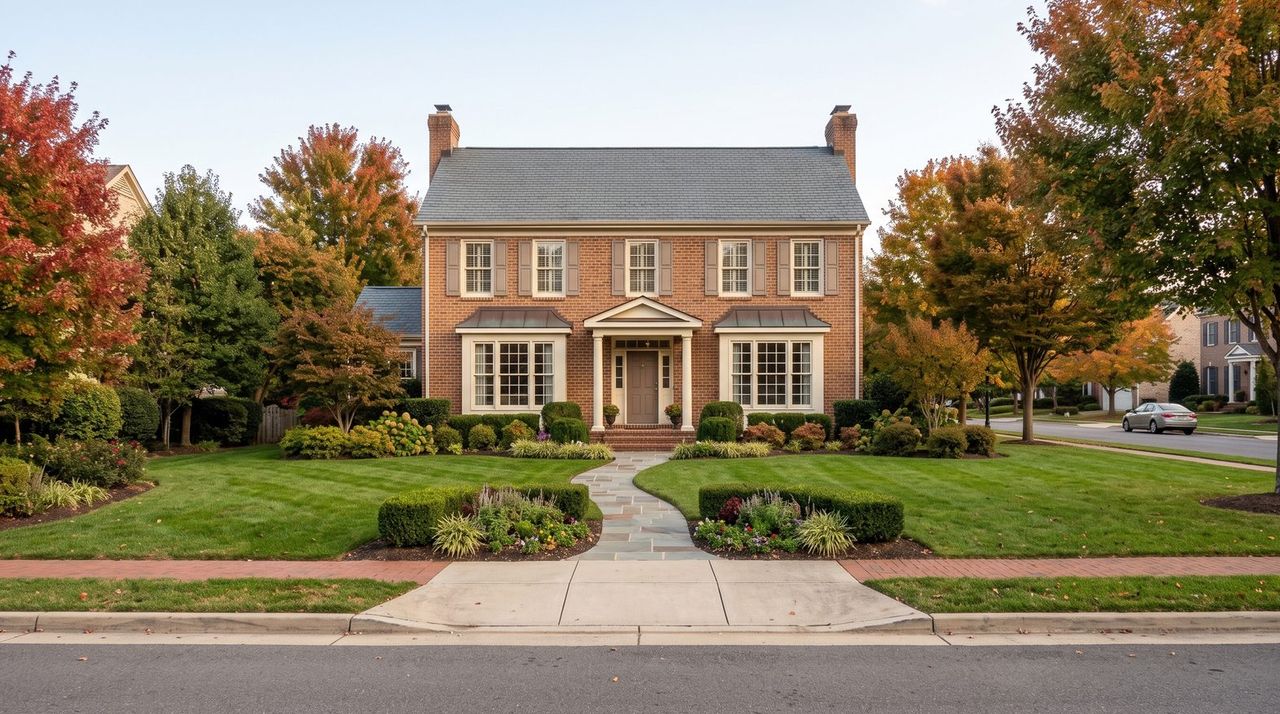
On a $725,000 Fairfax purchase the recordation taxes alone come to $4,350.
Short answer: closing costs in Virginia run roughly 2 to 5 percent of the purchase price for a buyer, and about 3 percent is typical across Northern Virginia. The part that is specific to Virginia, and the part national calculators get wrong, is recordation tax: the buyer pays it twice, once on the deed and once on the loan, at 25 cents per $100 each with a local surcharge of one third on top. On a $725,000 purchase with 20 percent down that is $4,350 before a single lender fee. The seller, not the buyer, pays the grantor tax and the two Northern Virginia transfer fees.
By Ken Byrne, NMLS #187129 · ALCOVA Mortgage LLC, NMLS #40508 · Updated September 2026
Most closing cost guides give you a percentage and leave. This one gives you the line items, the Virginia statutes that set the tax rates, what each side customarily pays, and the three levers that actually reduce the number. Every tax figure below is cited to the section of the Code of Virginia that imposes it, because this is the area where national sites are most often wrong. If you want it run on a specific address and loan amount, JB Financing, the Ken Byrne Team at ALCOVA Mortgage will do it the same day.
What closing costs in Virginia actually run
Two to five percent is the honest range, and where you land inside it depends more on your loan size and your escrow setup than on anything you can negotiate. Here is roughly what a buyer brings across common Northern Virginia price points.
| Purchase price | Loan at 20 percent down | Recordation taxes (buyer) | Typical all in, about 3 percent |
|---|---|---|---|
| $400,000 | $320,000 | $2,400 | $12,000 |
| $575,000 | $460,000 | $3,450 | $17,250 |
| $725,000 | $580,000 | $4,350 | $21,750 |
| $795,000 | $636,000 | $4,770 | $23,850 |
| $825,000 | $660,000 | $4,950 | $24,750 |
Recordation figures are calculated, not estimated: state tax at 25 cents per $100 on both the deed and the deed of trust under Code of Virginia sections 58.1-801 and 58.1-803, plus the local tax at one third of the state amount under section 58.1-814. The right hand column is an illustration at 3 percent of price and will move with your lender, your title company and how many months of escrow are collected.
Closing costs are not the down payment. They sit on top of it. A buyer putting 20 percent down on a $725,000 house needs $145,000 for the down payment and roughly $21,750 on top. The single most common budgeting failure in this market is treating the two as one number.
Who pays closing costs in Virginia
There is no law assigning most of these. Custom governs, and custom in Virginia is settled enough that deviating from it is itself a negotiating position. The exceptions are the transfer taxes, which the Code does assign.
| Item | Customarily paid by | Set by |
|---|---|---|
| State and local recordation tax on the deed | Buyer | Custom; rate set by statute |
| State and local recordation tax on the deed of trust | Buyer | Custom; rate set by statute |
| Grantor tax | Seller | Statute names the grantor |
| Regional WMATA capital fee (Northern Virginia) | Seller | Statute names the grantor |
| Regional congestion relief fee (Northern Virginia) | Seller | Statute names the grantor |
| Lender fees, appraisal, credit report | Buyer | Custom |
| Lender’s title insurance | Buyer | Custom |
| Owner’s title insurance | Buyer | Custom, and optional |
| Settlement fee | Split or negotiated | Custom |
| Home inspection | Buyer | Custom |
| Real estate commissions | Negotiated | Contract |
| Prepaid taxes, insurance and interest | Buyer | Lender requirement |
The three seller fees are assigned by the Code of Virginia: the grantor tax by section 58.1-802, the regional WMATA capital fee by section 58.1-802.3 and the regional congestion relief fee by section 58.1-802.4. All three statutes add that the grantor and grantee may agree for the buyer to pay some or all of them, so the assignment is a default, not a bar.
That last point is worth holding on to. In a soft negotiation a buyer can be asked to absorb a seller fee, and in a strong one a seller can be asked to cover buyer costs. Neither is unusual and neither is prohibited.

“Send me the address and the price you are considering and I will give you the actual recordation tax for that county, an insurance estimate for that structure, and the cash to close in writing rather than as a percentage.”
Arslan Jamil, Broker Associate
Loans originated by Ken Byrne, NMLS ID# 187129 · ALCOVA Mortgage LLC, NMLS ID# 40508. Equal Housing Lender.
The Virginia taxes that national calculators get wrong
Virginia charges recordation tax twice on a financed purchase, and this is what national estimates miss. One charge is on the deed, which transfers the house. The other is on the deed of trust, which is the security instrument for your loan. They are separate taxes on separate documents and the buyer customarily pays both.
| Tax | Rate | On what | Who pays |
|---|---|---|---|
| State recordation, deed | 25 cents per $100 | The purchase price, or the value if higher | Buyer |
| State recordation, deed of trust | 25 cents per $100 | The loan amount | Buyer |
| Local recordation | One third of the state amount | Both of the above | Buyer |
| Grantor tax | 50 cents per $500 | The price | Seller |
| Regional WMATA capital fee | 10 cents per $100 | The price | Seller |
| Regional congestion relief fee | 10 cents per $100 | The price | Seller |
Code of Virginia sections 58.1-801 (deeds), 58.1-803 (deeds of trust), 58.1-814 (local tax at one third of the state amount), 58.1-802 (grantor tax), 58.1-802.3 (WMATA capital fee, localities that are members of the Northern Virginia Transportation Authority) and 58.1-802.4 (congestion relief fee, Planning District 8). The deed of trust rate steps down above $10 million of secured debt, which no residential buyer will reach.
Combined, a Virginia buyer pays about $3.33 per $1,000 on the price and the same again on the loan. That is the number to carry: roughly a third of one percent, charged twice. It is also the reason a larger down payment lowers your closing costs slightly as well as your loan, since the deed of trust tax follows the loan amount.
The two regional fees only apply in Northern Virginia. Both are tied to membership of the Northern Virginia Transportation Authority or to Planning District 8. A buyer in Richmond or Roanoke will not see either on the settlement statement, which is one reason a statewide average is close to meaningless.

The buyer pays recordation tax twice: once on the deed, once on the loan.
Lender fees, and which of them are negotiable
| Fee | Typical range | Negotiable? |
|---|---|---|
| Origination fee | 0 to 1 percent of the loan | Yes, and frequently waived |
| Underwriting fee | $700 to $1,200 | Sometimes, as part of a credit |
| Processing fee | $300 to $600 | Sometimes, often bundled with underwriting |
| Appraisal | $550 to $800 | No, it is a third party cost |
| Credit report | $60 to $130 | No |
| Flood certification | $15 to $30 | No |
| Tax service | $70 to $100 | No |
| Discount points | 1 percent per point | Optional entirely |
Ranges reflect what is typical in Northern Virginia transactions and will vary by lender. The third party costs are passed through at cost and are not a margin item.
The useful distinction is between fees the lender sets and fees the lender collects. The first group is where a credit can come from. The second group is fixed no matter who you use, so a lender who claims to have beaten a competitor on the appraisal fee has not actually done anything. Compare page two of the Loan Estimate, section A, across lenders and ignore the rest.
Title, settlement and the insurance decision
| Item | Typical cost | Required? |
|---|---|---|
| Lender’s title insurance | About $3.50 per $1,000 of loan | Yes, the lender requires it |
| Owner’s title insurance | About $3.50 to $5.50 per $1,000 of price | No, and it is the one worth thinking about |
| Settlement or closing fee | $500 to $900 | Yes |
| Title search and exam | $200 to $400 | Yes |
| Recording fees | $100 to $200 | Yes |
| Survey | $400 to $700 | Sometimes |
Owner’s title insurance is the only genuinely optional line on the whole statement, and it is the one buyers most often cut. What it covers is a defect in the chain of title that no search found: a forged signature two owners back, an unknown heir, a missed lien. The lender’s policy protects the lender’s position in that event and returns nothing to you. Declining it is a defensible choice on a new build with a short chain and a poor one on a century old house.
In Virginia you choose the settlement agent. The buyer generally has the right to select the title company, and rates are not uniform across them. Getting two quotes takes ten minutes and the spread on a $700,000 purchase is routinely several hundred dollars.
Prepaids and escrow, which are not really costs
A large share of what shows up as cash to close is not a fee at all. It is money you would have spent anyway, collected early.
| Item | What is collected | Why |
|---|---|---|
| Homeowners insurance | The first full year, upfront | The policy must be active at closing |
| Insurance escrow reserve | About two months | A cushion for next year’s premium |
| Property tax escrow | Two to six months | Depends on the closing date against the county due date |
| Prepaid interest | Daily rate to the end of the month | Your first payment does not cover the closing month |
| HOA capital contribution | $500 to $5,000 and up | Common in Northern Virginia planned communities |
Prepaid interest is the one you can actually move. Closing on the 28th rather than the 3rd cuts it to a few days. Nobody schedules a settlement around it alone, but if two dates are otherwise equal, the later one costs less at the table. The HOA capital contribution is the opposite: it is set by the association, it is not refundable, and it catches buyers in Reston, Brambleton and Broadlands who budgeted from a generic calculator.
How to actually reduce what you bring
Seller concessions, and the ceiling on each loan type
| Loan type | Limit on interested party contributions |
|---|---|
| VA | Seller concessions capped at 4 percent of reasonable value; credits toward closing costs are not capped |
| FHA | 6 percent |
| USDA | 6 percent |
| Conventional, more than 10 percent down | 6 percent |
| Conventional, 10 percent down or less | 3 percent |
| Conventional, 25 percent down or more | 9 percent |
VA limits from VA.gov, which distinguishes concessions from closing cost credits and caps only the former. FHA, USDA and conventional limits from the respective agency and Fannie Mae selling guidelines. Confirm the applicable figure with your lender before writing it into an offer, because the conventional tiers turn on the final loan to value, not the intended one.
This is the largest lever available and the least used. On the $725,000 example, a conventional buyer with 20 percent down can accept up to 6 percent, which is $43,500, comfortably more than the entire closing cost bill. Whether a seller will agree is a market question, but the ceiling is rarely what stops it. The VA rules are set out on our VA loans page.
Lender credits
A lender credit is a slightly higher rate in exchange for cash at the table. It is the mirror image of discount points, and it is the right trade for a buyer who is short on cash today and expects to refinance or move within a few years. It is the wrong trade for someone who will hold the loan for its full term.
Shopping the services you are allowed to shop
The Loan Estimate separates services you cannot shop for from services you can. Title, settlement and survey usually sit in the second group in Virginia, and the spread between providers is real. Taking the lender’s default is convenient and frequently costs money.
Programs that cover closing costs in Virginia
Virginia Housing, the state housing finance agency, runs both a Down Payment Assistance Grant and a Closing Cost Assistance Grant, and the second is specifically for this problem. Both require a 620 credit score, which is stricter than the 580 FHA itself allows, so the assistance rather than the loan is usually the binding constraint. The structures, income caps and how they layer are on our Virginia home loans page.
The FHA route deserves its own mention here because of how the arithmetic interacts. FHA allows 6 percent in seller concessions against a 3.5 percent down payment, which means a motivated seller can cover the entire down payment and most of the closing costs in one concession. Whether that is a good idea depends on the price you paid to get it. The product detail is on our FHA loans page.
What it looks like across Northern Virginia
The recordation tax scales with price, so the differences below are mostly a function of what houses cost rather than of any jurisdiction being cheaper to close in.
| Jurisdiction | Sample price | Buyer recordation tax at 20 percent down | All in at about 3 percent |
|---|---|---|---|
| Prince William County | $575,000 | $3,450 | $17,250 |
| Alexandria City | $715,000 | $4,290 | $21,450 |
| Fairfax County | $725,000 | $4,350 | $21,750 |
| Loudoun County | $795,000 | $4,770 | $23,850 |
| Arlington County | $825,000 | $4,950 | $24,750 |
Sample prices are illustrative round figures for comparison, not current market values. Recordation figures are calculated from the statutory rates above and are exact for those prices. The all in column is an illustration at 3 percent.
Every one of those jurisdictions charges the same rates. What differs is the tax base, and after settlement what differs a great deal more is the annual property tax rate, which is a separate question from closing and covered on our Fairfax County page.
If you are weighing a Virginia purchase against one across the river, the three jurisdictions have genuinely different transfer tax systems rather than different rates within one system. That comparison is set out in our Virginia, DC and Maryland closing cost guide.
What buyers get wrong
| Mistake | What it costs |
|---|---|
| Treating closing costs as part of the down payment | Arriving short at the table by tens of thousands |
| Using a national calculator | It will miss the deed of trust recordation tax entirely, which is half the Virginia transfer bill |
| Not asking for concessions | The ceiling is usually far above the bill. Not asking is the reason it goes unused. |
| Taking the lender’s title company by default | Rates are not uniform and the buyer generally chooses |
| Skipping owner’s title insurance to save a few hundred | The one line item that covers a risk nothing else covers |
| Forgetting the HOA capital contribution | Not refundable, set by the association, and routinely four figures |
| Waiting for the Closing Disclosure to check the numbers | It arrives three business days before settlement. The Loan Estimate arrives in three days from application. |
The last one is the one worth acting on today. You are entitled to a Loan Estimate within three business days of a complete application, long before you are committed to anything, and it carries almost every figure discussed here. Getting one early is covered in our guide to getting pre approved in Northern Virginia.
One more structural point. If you are choosing between putting more down and keeping cash for closing, remember that the deed of trust recordation tax follows the loan, so a larger down payment shaves it slightly. It is a small effect next to the payment difference, and the trade-offs between loan types at the same price are on our conventional loans page.
Want the cash to close for a specific address rather than a percentage?
Arslan Jamil, Broker Associate
Send me the price, the county and your down payment. You get the exact recordation tax for that transaction, a real insurance estimate, the escrow months your closing date triggers, and the concession ceiling your loan type allows, in writing.
Loans originated by Ken Byrne, NMLS ID# 187129 · ALCOVA Mortgage LLC, NMLS ID# 40508. Equal Housing Lender.
Frequently asked questions
How much are closing costs in Virginia?
Between 2 and 5 percent of the purchase price for a buyer, with about 3 percent typical across Northern Virginia. On a $725,000 purchase that is roughly $21,750, of which $4,350 is recordation tax alone. The range is wide mainly because of how many months of escrow your closing date triggers.
Who pays closing costs in Virginia, the buyer or the seller?
Both, on different items. The buyer customarily pays lender fees, title insurance, the appraisal and the recordation taxes on both the deed and the deed of trust. The seller pays the grantor tax and, in Northern Virginia, the WMATA capital fee and the congestion relief fee. Commissions and the settlement fee are negotiated.
What is the recordation tax in Virginia?
25 cents per $100 charged by the state on the deed, and another 25 cents per $100 on the deed of trust, with most localities adding one third of the state amount on top of each. That works out at roughly $3.33 per $1,000 of price and the same again per $1,000 of loan, both paid by the buyer.
Does the buyer pay the grantor tax in Virginia?
No, not by default. The Code of Virginia names the grantor, meaning the seller. The statute does allow the two parties to agree that the buyer will pay some or all of it, so it can end up on the buyer’s side of a negotiated contract, but it does not start there.
Can the seller pay my closing costs in Virginia?
Yes, up to a ceiling set by your loan type: 6 percent on FHA and USDA, 3 to 9 percent on conventional depending on the down payment, and 4 percent of reasonable value on VA for concessions, with VA closing cost credits uncapped. On a $725,000 conventional purchase with 20 percent down the ceiling is $43,500, well above the whole bill.
Are closing costs included in the down payment?
No. They are separate and they sit on top. A buyer putting 20 percent down on a $725,000 house needs about $145,000 for the down payment and roughly $21,750 more for closing. Confusing the two is the most common cash planning error in this market.
Can I roll closing costs into my mortgage in Virginia?
Not on a purchase, as a general rule. You can cover them with a seller concession, with a lender credit in exchange for a higher rate, or with an assistance program. Financing them directly into the loan is a refinance feature, not a purchase one.
Why is my Virginia closing cost estimate higher than the national average?
Usually because of the deed of trust recordation tax, which many national calculators omit entirely. It is a second charge at the same rate as the deed tax, so leaving it out understates the Virginia transfer bill by about half.
Do I have to buy owner’s title insurance?
No. It is the only genuinely optional item on the statement. The lender’s policy is required and protects only the lender. The owner’s policy is what protects your equity against a defect in the chain of title, and it is a single premium paid once.
Can I choose my own title company in Virginia?
Generally yes, and rates are not uniform between providers. The Loan Estimate marks which services you are allowed to shop for, and title and settlement usually appear in that group. Two quotes is normally worth several hundred dollars on a Northern Virginia purchase.
What closing cost assistance is available in Virginia?
Virginia Housing runs a Closing Cost Assistance Grant alongside its Down Payment Assistance Grant. Both require a 620 credit score, which is stricter than FHA’s own 580 minimum, so for many applicants the assistance program rather than the loan is what sets the credit bar.
When will I know my exact closing costs?
You get a Loan Estimate within three business days of a complete application and a Closing Disclosure at least three business days before settlement. The first is early enough to act on and to compare lenders; the second is the final figure and arrives too late to shop.
Do closing costs differ between Virginia counties?
The rates do not. Every Virginia locality charges the same state recordation rate, and nearly all add the same one third local share. What differs is the price the rate applies to, plus the two Northern Virginia regional fees, which are seller paid and do not apply elsewhere in the state.
“Give me the county, the price and the down payment and I will send back the actual cash to close for that transaction, with the recordation tax calculated rather than estimated.”
Arslan Jamil, Broker Associate
Loans originated by Ken Byrne, NMLS ID# 187129 · ALCOVA Mortgage LLC, NMLS ID# 40508. Equal Housing Lender.
This article is general information, not financial or legal advice and not a commitment to lend or an offer of credit. Loan limits, program rules, premium schedules and rates change, and individual eligibility depends on a full review of your credit, income, assets and the property. Every figure here is an illustration, not a quote, built from published sources and a weekly survey average rather than underwriting decisions. Insurance and mortgage insurance amounts are planning estimates. Confirm anything you plan to act on with a licensed mortgage professional. Tax rates cited are from the Code of Virginia as published at the time of writing and are subject to legislative change; localities set their own recordation share within the statutory limit. Fee ranges are typical Northern Virginia figures, not quotes.
Categories
Recent Posts







GET MORE INFORMATION

Broker Associate