
Construction-to-Permanent Loans in Northern Virginia: 2026 Single-Close Guide
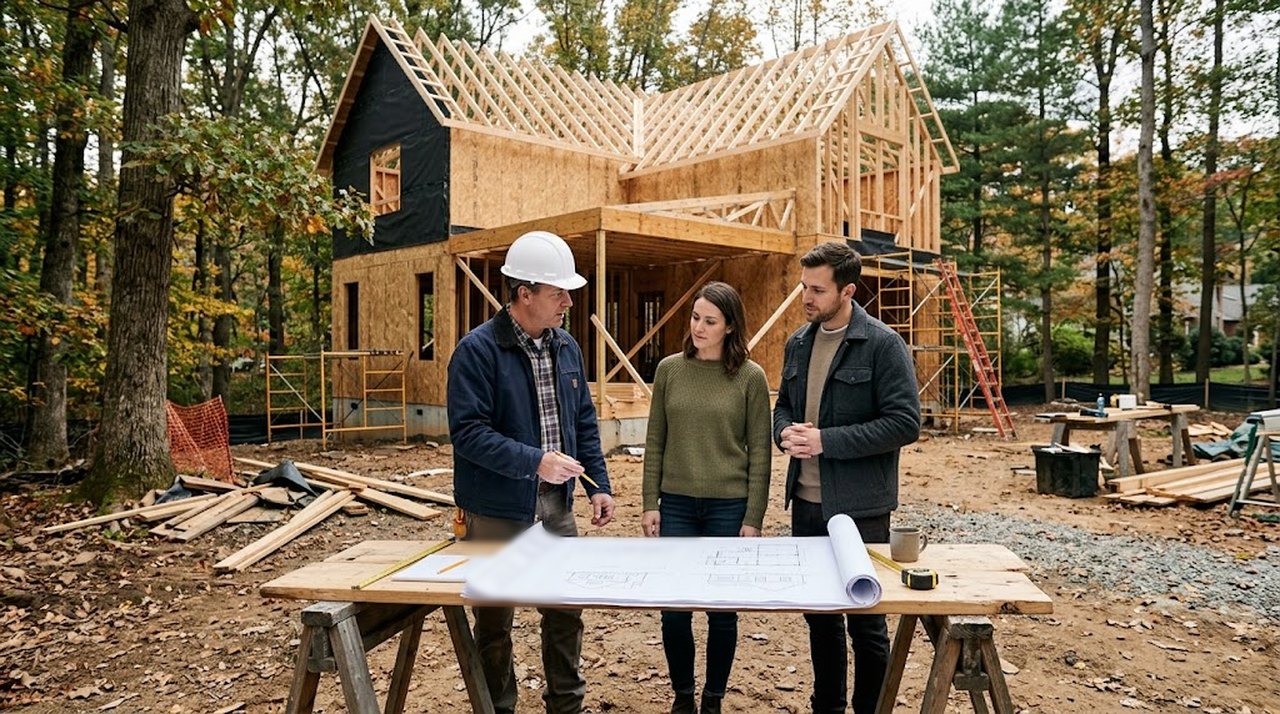
With a single-close loan, the lot, the build and the permanent mortgage are financed in one closing.
Short answer: a construction-to-permanent loan pays for your lot and the build, then becomes your regular mortgage when the home is finished, with one application and one closing. During construction you usually pay interest only on the money drawn so far. In Northern Virginia, conventional and FHA loans for a one-unit home go up to $1,249,125 in 2026, VA has no loan limit with full entitlement, and larger builds need a jumbo loan.
By Ken Byrne, NMLS #187129 · ALCOVA Mortgage LLC, NMLS #40508 · Updated September 2026
Building in Loudoun, Fairfax or Prince William means paying a builder over many months before there is a house to mortgage. A construction-to-permanent loan, also called a single-close or one-time close loan, solves that with one loan that funds the build in stages and then converts to a 15 or 30 year mortgage. This guide covers how the loan works, what Fannie Mae, FHA and VA actually require in 2026, what you pay during the build, and the Virginia rules on builders and liens you should know. To talk through financing options for your build, contact the Ken Byrne Team.
What is a construction-to-permanent loan?
It is one loan with two phases. In the construction phase, the lender pays the builder in draws as work is completed and inspected. When the home is done, the loan converts to permanent financing on terms set at the original closing. Fannie Mae’s rules describe it this way: because the loan documents already specify the permanent terms, the construction loan converts automatically when construction is complete.
| Single close (construction-to-permanent) | Two close (construction loan, then a mortgage) | |
|---|---|---|
| Closings | One | Two, each with its own closing costs |
| Qualifying | Usually once, before construction starts; updated documents may be needed at conversion | Again for the permanent mortgage after the build |
| Permanent terms | Set at the first closing | Set when you apply for the second loan |
| Risk if your income or credit changes during the build | Lower, though a drop in value can require requalifying | Higher, since you must qualify again |
| Flexibility | Fewer changes allowed at conversion | You can shop the permanent loan separately |
Fannie Mae Selling Guide B5-3.1-01 and B5-3.1-02; CFPB, TILA-RESPA guide for construction loans (2019). The comparison of risks is general information.
How the single close works under Fannie Mae rules
You must hold title to the lot, either one you already own or one bought as part of the loan. The lender manages payments to the builder. No single construction period can run longer than 12 months, and the total cannot exceed 18 months. At conversion, only the interest rate, the loan amount, the term, and a change from an adjustable to a fixed rate are allowed, and a higher loan amount can only cover documented increases in construction cost.
Attached condo units and co-ops cannot be financed this way. Before the loan is sold to Fannie Mae, the work must be finished and paid for, every mechanics’ lien must be cleared, and the lender needs a certificate of occupancy. How the CFPB treats these loans also matters for your paperwork: a lender may disclose a construction-to-permanent loan as one transaction or as two.
Fannie Mae Selling Guide B5-3.1-01 and B5-3.1-02 (May 2026); CFPB construction loan disclosure guide.

Get a Mortgage Estimate for Free
See the loan amount and payment your build supports before you sign a builder contract.
✓Free, no obligation✓Licensed in VA, MD, DC and WV✓Loan officer Ken Byrne, NMLS #187129
Construction loan options in 2026
| Program | Down payment | 2026 loan limit in Northern Virginia | Builder rule |
|---|---|---|---|
| Conventional (Fannie Mae) | As little as 3% for an eligible first-time buyer on a fixed rate; 5% otherwise | $1,249,125 for one unit | Set by the lender |
| FHA | 3.5% with a 580 score or higher; 10% with 500 to 579 | $1,249,125 for one unit | Builder must be a licensed general contractor |
| VA | No down payment with full entitlement | No loan limit with full entitlement | Local licensing and inspections; builder warranty |
| Jumbo | Set by the lender | Above $1,249,125 | Set by the lender |
Fannie Mae Eligibility Matrix (August 5, 2026); HUD Mortgagee Letters 2010-29, 2019-08 and 2025-23; VA.gov loan limits and purchase loan pages; FHFA 2026 conforming loan limits. The 3% option does not apply to high-balance loans above $832,750.
FHA allows you to act as your own general contractor only if you are a licensed general contractor yourself. The same one closing structure, upfront premium and annual premium apply as on any FHA loan, and the loan is not eligible for FHA insurance until after the final inspection or certificate of occupancy, whichever is later.
For veterans, VA lists building a new home as an eligible use of the benefit. Since March 31, 2025, VA no longer requires a VA-issued builder ID for new construction; it relies on local building inspections and a 1-year or 10-year construction warranty. Not every lender makes VA construction loans, so ask early. How entitlement and the funding fee work is on our VA loans page.
Many Northern Virginia custom builds land above $1,249,125. Those need a jumbo construction loan, where the down payment, reserves and credit rules are set by each lender. Our guide to jumbo loans in Northern Virginia explains how they are underwritten.
What credit score do you need for a construction loan?
Less than many articles claim, at the program level. Fannie Mae’s Desktop Underwriter stopped requiring a minimum 620 score for new loan files in mid-November 2025. FHA allows maximum financing from a 580 score and 90 percent financing from 500 to 579. VA’s regulation sets no minimum score. In practice, many lenders set higher minimums for construction loans because of the added risk, so the score you need depends on the lender.
Fannie Mae DU release notes (November 2025); HUD Mortgagee Letter 2010-29; 38 CFR 36.4340.
Does the land you already own count toward the down payment?
It can. Under Fannie Mae rules, if you held title to the lot before the first construction advance, the loan is measured against the as-completed value of the lot and the house, so equity in the lot works like a down payment. If you buy the lot as part of the loan, the lender uses the lower of the lot price plus construction cost or the as-completed value. FHA values land you have owned for six months or less at the lower of its cost or appraised value.
Fannie Mae Selling Guide B5-3.1-02; HUD Mortgagee Letter 2019-08.
What you pay during the build
Construction-phase payments are usually interest only, charged on the money advanced so far. Here is an example: a $300,000 lot and a $600,000 build in Loudoun County, 10 percent down, and an $810,000 loan. The loan funds $210,000 of the lot price at closing, then pays the builder in five draws.
| Stage | Draw | Amount advanced | Interest-only payment |
|---|---|---|---|
| Closing (lot) | $210,000 | $210,000 | $1,230 |
| Foundation | $90,000 | $300,000 | $1,758 |
| Framing and roof | $150,000 | $450,000 | $2,636 |
| Mechanicals and drywall | $150,000 | $600,000 | $3,515 |
| Finishes | $150,000 | $750,000 | $4,394 |
| Final draw | $60,000 | $810,000 | $4,745 |
Illustration at 7.03 percent, the Freddie Mac 30-year average on September 24, 2026. Construction rates, draw counts and how interest is charged vary by lender; some charge on the full commitment. Property tax and insurance are not included.
After conversion, principal and interest on $810,000 over 30 years at the same rate is $5,405 a month, before property tax, homeowners insurance and any HOA dues. Plan for the draw inspection fees your lender charges, and for a contingency in your builder budget, since changes after closing are hard to finance.
Virginia charges recordation tax on the deed of trust: $0.25 per $100 of the loan, or $2,025 on $810,000, plus up to one third more where the county levies its local share. What else buyers pay at settlement is in our guide to closing costs in Virginia.
Va. Code 58.1-803 and 58.1-3800.
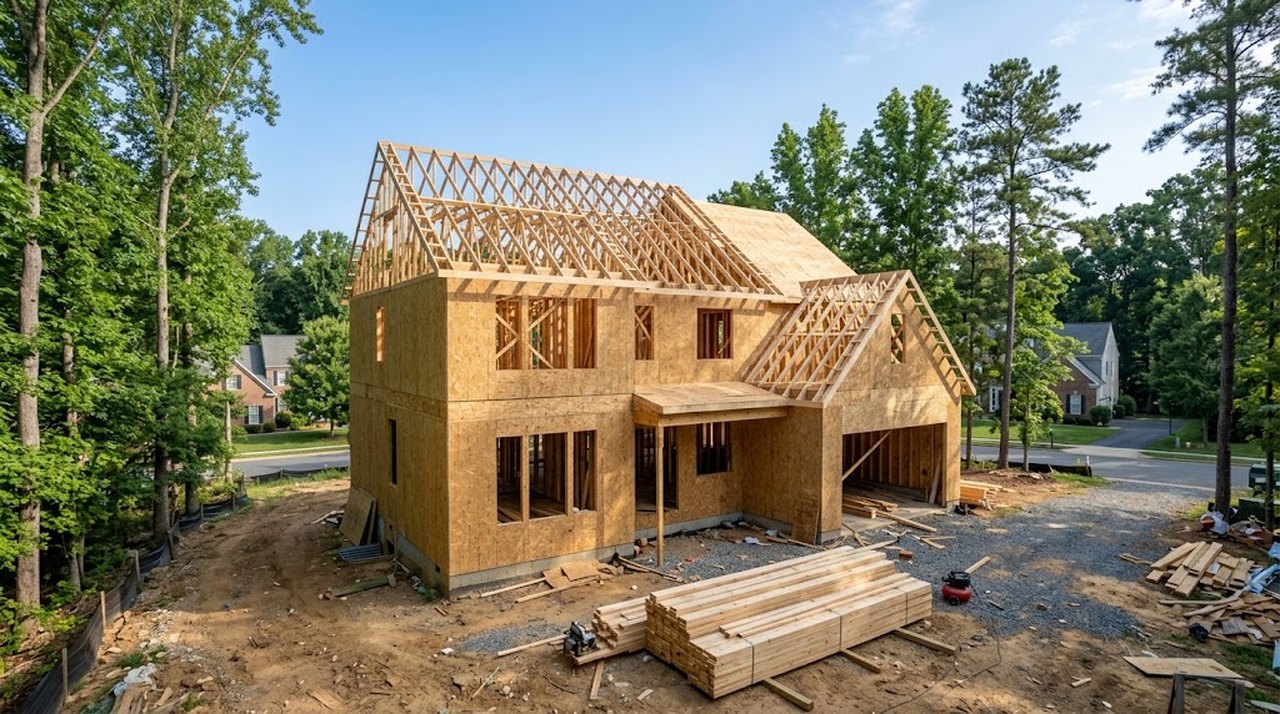
Draws are paid as each stage passes inspection, so interest grows as the house goes up.
FHA and VA payments on a $600,000 lot and build
For a $150,000 lot and a $450,000 build, here is how the permanent payment compares at the same 7.03 percent rate, principal and interest only.
| FHA, 3.5% down | VA, no down payment | |
|---|---|---|
| Down payment | $21,000 | $0 |
| Upfront fee financed | $10,133 (1.75% premium) | $12,900 (2.15% first-use funding fee) |
| Loan amount | $589,133 | $612,900 |
| Principal and interest | $3,931 | $4,090 |
| Monthly mortgage insurance | $265 | None |
| Total before tax and insurance | $4,196 | $4,090 |
HUD Mortgagee Letter 2023-05 (annual premium 0.55% for this loan size and down payment); VA.gov funding fee table. Veterans exempt from the funding fee would pay about $4,004.
The VA funding fee changes with prior use and down payment, and veterans receiving VA disability compensation do not pay it. See our VA funding fee guide.
Get Pre-Approved Today
Ask which construction and purchase programs fit your lot and build budget.
✓Free, no obligation✓Licensed in VA, MD, DC and WV✓Loan officer Ken Byrne, NMLS #187129
The construction-to-permanent process, step by step
| Step | What happens |
|---|---|
| 1. Pre-approval | The lender confirms the total budget you qualify for: lot, build and closing costs |
| 2. Lot | You buy the lot, or document the one you already own |
| 3. Builder | You pick a licensed builder the lender approves |
| 4. Plans and contract | Final plans, specifications and a fixed or cost-plus contract go to the lender |
| 5. Appraisal | The appraiser values the home as completed; for Fannie Mae loans it can be no more than four months old at closing |
| 6. One closing | You sign once for the construction and permanent financing |
| 7. Draws | The builder is paid in stages after each inspection |
| 8. Occupancy | The county issues the final occupancy approval |
| 9. Conversion | A completion report confirms the home is finished and the loan becomes your permanent mortgage |
Fannie Mae Selling Guide B5-3.1-02; VA builder registration; HUD Mortgagee Letter 2019-08.
If the completion report shows the value has dropped, Fannie Mae requires a new appraisal and requalification at the new loan-to-value ratio. FHA requires the builder and buyer to sign a one-year Warranty of Completion of Construction (form HUD-92544, the same form as VA 26-1859); VA accepts a one-year builder warranty or a 10-year protection plan.
Northern Virginia rules on builders, liens and occupancy
Check the builder’s license class
Virginia requires a Class A contractor license for a single contract of $150,000 or more, Class B from $30,000 up to $150,000, and Class C from over $1,000 up to $30,000. A whole-house build will almost always need Class A. You can look up any contractor’s license and class on the Virginia Department of Professional and Occupational Regulation website.
Va. Code 54.1-1100.
Know how mechanics’ liens work
A contractor or supplier who is not paid can file a mechanics’ lien on your home, no later than 90 days from the last day of the month in which they last worked, and no later than 90 days after the home is finished or the work otherwise ends. On a one or two-family home, the building permit can name a mechanics’ lien agent, and subcontractors and suppliers must then notify that agent within 30 days of starting work to keep full lien rights. Draw inspections and lien waivers protect you, and liens must be cleared before a Fannie Mae loan can be sold after conversion.
Va. Code 43-4 and 43-4.01.
Occupancy approval
In Fairfax County, the final approval is a Residential Use Permit, the county’s residential certificate of occupancy, issued after the required building and trade inspections pass. Loudoun County issues an occupancy permit for new construction. Budget time for these final steps, since conversion waits for them.
Fairfax County Land Development Services; Loudoun County Building and Development.
Building new is not the only way to get the home you want. If you would rather buy an existing house and improve it, compare the options in our guide to home renovation loans.
Mistakes to avoid
| Mistake | Better approach |
|---|---|
| Signing a builder contract before pre-approval | Get pre-approved on the full lot and build budget first |
| No contingency in the budget | Keep cash aside; raising the loan at conversion is limited to documented cost increases |
| Skipping the license check | Confirm the builder’s class on DPOR before you sign |
| Ignoring lien protection | Ask about lien waivers with each draw and a lien agent on the permit |
| Assuming every lender offers VA or FHA construction | Ask which construction programs the lender offers before you apply |
| Planning a build over $1,249,125 on a conforming loan | Plan for a jumbo loan or a larger down payment |
How much to put down on a new build, and how that changes mortgage insurance, is covered in our guide to how much down payment you need.
Frequently asked questions
What is a construction-to-permanent loan?
A single loan that pays for the lot and construction in stages, then converts to a regular 15 or 30 year mortgage when the home is finished, with one application and one closing.
How does a construction-to-permanent loan work?
The lender pays the builder in draws after inspections, you usually pay interest only on the amount drawn, and when the home is complete the loan converts to permanent payments on terms set at closing.
What is a single close construction loan?
Another name for a construction-to-permanent loan. You close once, instead of closing a construction loan and then a separate mortgage.
How much down payment do I need to build a house?
As little as 3 to 5 percent on a conventional loan within the conforming limit, 3.5 percent on FHA with a 580 score, and nothing on VA with full entitlement. Equity in a lot you already own can count. Lenders may require more on construction loans.
What credit score do I need for a construction loan?
The programs set low floors: FHA allows 580 for maximum financing and VA sets no minimum, and Fannie Mae’s automated system no longer requires 620. Many lenders set higher minimums for construction loans.
Can I use a VA loan to build a house in Virginia?
Yes. VA lists building a new home as an eligible use, with no down payment if you have full entitlement. VA relies on local inspections and a builder warranty, and not every lender makes VA construction loans.
What is the construction loan limit in Northern Virginia in 2026?
$1,249,125 for a one-unit home on conventional and FHA loans in Fairfax, Loudoun, Prince William, Arlington and Alexandria. VA has no limit with full entitlement. Larger builds need a jumbo loan.
How long can the construction phase last?
On a Fannie Mae single-close loan, no single construction period can exceed 12 months and the total cannot exceed 18 months. Other programs and lenders set their own limits.
Can I be my own general contractor?
On FHA, only if you are a licensed general contractor. For other programs, ask the lender; most require a licensed builder.
Next stepStart Your Pre-Approval
Start online, and Ken Byrne’s team will talk through financing options for your build.
✓Free, no obligation✓Licensed in VA, MD, DC and WV✓Loan officer Ken Byrne, NMLS #187129
This article is general information, not financial or legal advice and not a commitment to lend or an offer of credit. Loan limits, program rules, premium schedules and rates change, and individual eligibility depends on a full review of your credit, income, assets and the property. Every figure here is an illustration, not a quote, built from published sources and a weekly survey average rather than underwriting decisions. Insurance and mortgage insurance amounts are planning estimates. Confirm anything you plan to act on with a licensed mortgage professional. Program rules, loan limits and Virginia law were checked against official sources on September 29, 2026. Payments are estimates at a 7.03 percent rate. Construction programs vary by lender; ask which are available for your build.
Categories
Recent Posts






GET MORE INFORMATION

Broker Associate