
Physician Mortgage Loans in Maryland: 2026 Guide
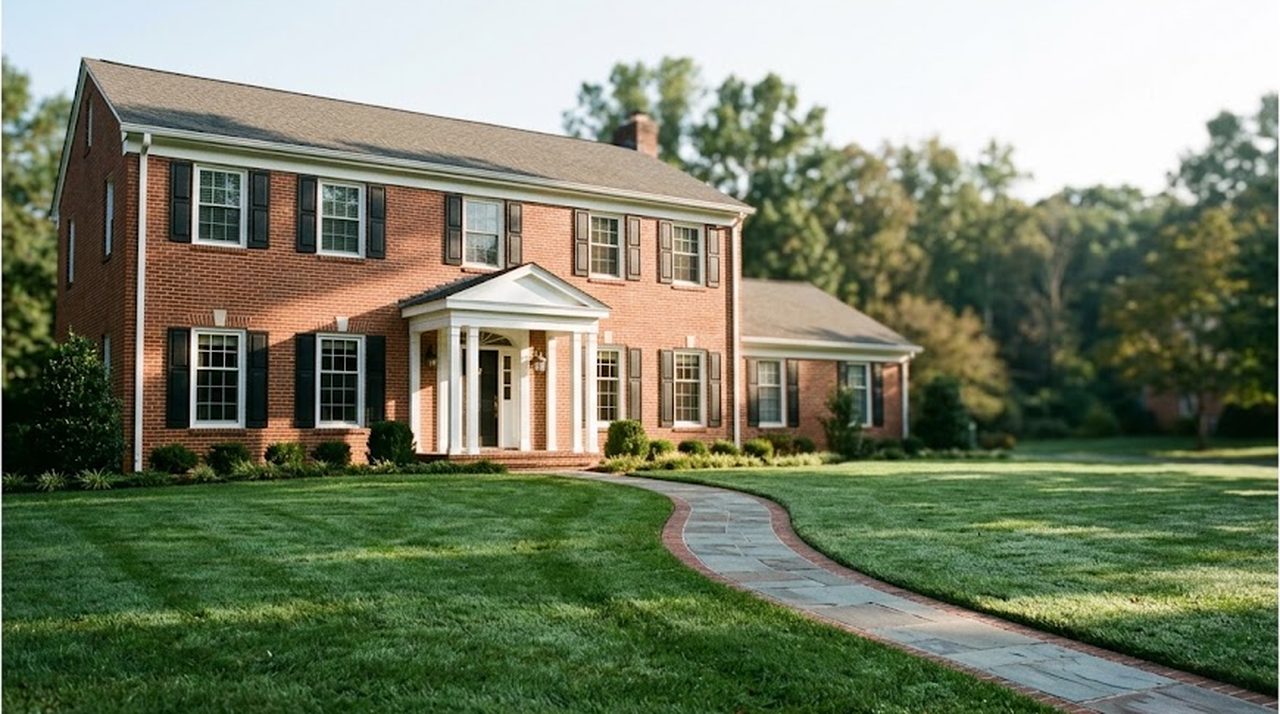
A physician program is a trade: less cash and no mortgage insurance, in exchange for a rate and a set of conditions worth reading closely.
Short answer: a physician mortgage loan lets a doctor, dentist or veterinarian buy with little or nothing down and no private mortgage insurance, and lets the lender treat student debt more generously than a conventional loan would. In Maryland that matters most in Montgomery County and along the Baltimore hospital corridor, where the purchase prices are high and new attendings are cash poor and income rich at the same time. The catch is that these are portfolio products: terms, rates and eligibility are set by each lender rather than by Fannie Mae, so the only meaningful comparison is between written offers, not between articles.
By Ken Byrne, NMLS #187129 · ALCOVA Mortgage LLC, NMLS #40508 · Updated September 2026
Most physician loan guides describe an idealized product that no particular lender actually offers. This one separates what is true of the category from what varies by lender, states the agency rules the comparison is measured against, and is honest about the parts we cannot quote for you. If you want the specific terms available to you in Maryland this week rather than a general description, JB Financing mortgage will put them in writing.
What a physician mortgage loan actually is
It is a portfolio loan. The lender keeps it rather than selling it to Fannie Mae or Freddie Mac, which is precisely why it can break the agency rules: nobody downstream is enforcing them. That single fact explains every feature of the product and every one of its limitations.
| Feature | What it usually means | Why the lender can do it |
|---|---|---|
| Low or no down payment | Often 0 to 10 percent, scaled by loan size | No agency minimum applies to a loan it keeps |
| No private mortgage insurance | No monthly PMI even above 80 percent loan to value | PMI protects the investor; here the lender is the investor |
| Student debt treated differently | Deferred or income-driven payments handled more generously | Its own underwriting rules, not the Selling Guide |
| Employment contract accepted | A signed contract starting soon can count as income | Risk judgment about a profession with reliable earnings |
| Higher loan amounts | Frequently past the conforming ceiling without jumbo treatment | Portfolio, so the conforming limit is not the boundary |
Portfolio means it varies, and the variation is the whole story. Two Maryland lenders can both advertise a physician loan and differ on the down payment at your price point, which degrees qualify, how many years post-residency you remain eligible, whether it covers a condo, and what the rate premium is. There is no standard. Anyone who quotes you the terms of a physician loan without naming the lender is describing a genre.
Who qualifies in Maryland
Eligibility turns on the degree and the career stage, and both are lender-specific. The commonly included credentials are MD and DO, frequently DDS and DMV, sometimes DPM and OD, occasionally pharmacists and nurse anesthetists at a minority of lenders. Where the lines fall is a question for the lender in front of you.
| Career stage | Typical treatment | What to confirm before relying on it |
|---|---|---|
| Resident or fellow | Usually eligible, often at the lowest loan ceiling | The maximum loan at your stage, not the headline maximum |
| Attending inside 10 years of training | The core case for the product | How the lender counts years, from graduation or from licensure |
| Established attending past 10 years | Often no longer eligible | Whether a conventional loan is now simply cheaper |
| Signed contract, not yet started | Frequently allowed, typically within 60 to 90 days of the start date | The exact window and what documentation the contract needs |
| Self-employed or practice owner | Treated as self-employed, which is a different file | How many years of returns are required |

“Tell me your degree, your start date and the county you are buying in, and I will tell you which physician programs you actually qualify for in Maryland and what each one costs.”
Arslan Jamil, Broker Associate
Loans originated by Ken Byrne, NMLS ID# 187129 · ALCOVA Mortgage LLC, NMLS ID# 40508. Equal Housing Lender.
Physician loan rates, and the trade you are making
This is the question everyone asks and the one no article can answer honestly with a number. Rates on portfolio products move daily, differ between lenders on the same day, and are set against your file rather than published. What can be explained is the structure of the trade, which does not change.
A physician loan usually carries a somewhat higher note rate than a conventional loan at the same credit profile. In exchange you avoid mortgage insurance and you keep cash. Whether that is a good trade is arithmetic, and it turns almost entirely on how long the mortgage insurance would have lasted.
| The comparison | Conventional with PMI | Physician loan |
|---|---|---|
| Down payment | 3 to 20 percent | Often 0 to 10 percent |
| Mortgage insurance | Yes below 20 percent down | None |
| Note rate | Usually lower | Usually somewhat higher |
| When the insurance ends | At 80 percent on request, 78 percent automatically | Not applicable |
| Where the cost sits | Temporary, in the insurance | Permanent, in the rate |
Conventional private mortgage insurance has statutory end dates: 12 U.S.C. section 4901 defines the cancellation date as the point the principal balance is first scheduled to reach 80 percent of the original value, and the termination date as 78 percent, with section 4902 setting out the request and automatic termination mechanisms.
The decision rule, stated plainly. Mortgage insurance is a temporary cost with a legal end date. A higher rate is a permanent cost for as long as you hold the loan. If you expect to refinance or move within a few years, buying out of PMI with rate is often the better trade. If this is a house you intend to hold for fifteen years and you could reach 20 percent equity reasonably soon, it frequently is not. Ask your lender to run both and show you the crossover year rather than arguing the principle.

The decision is a trade, not a discount. What it turns on is how long you will hold the loan.
How student loans are treated, and why it matters most here
This is the feature that decides more physician files than the down payment does. A new attending can have an income that comfortably supports the house and a student loan balance that, counted the conventional way, makes the ratios fail.
On a conventional loan the rules are written down. If a monthly student loan payment appears on the credit report the lender may use that amount. Where the report shows zero or no payment, a borrower on an income-driven plan may document that the actual payment is $0 and have that used; for loans in deferment or forbearance the lender uses either a payment equal to 1 percent of the outstanding balance or a fully amortizing payment on the documented terms.
Fannie Mae Selling Guide B3-6-05, Monthly Debt Obligations. The 1 percent calculation is the one that ends conventional approvals for residents: on a large balance in deferment it produces a monthly obligation far above anything the borrower actually pays.
Physician underwriting is where the difference shows. Because the loan is held in portfolio, the lender can use the documented income-driven payment, or in some programs exclude deferred student debt altogether. That is frequently the entire reason the file works. It is also entirely lender-specific, so it is the first question to ask, not the last.
Maryland loan limits in 2026, and where the physician product sits
Physician loans are portfolio products, so the conforming limit is not a hard boundary for them. It still matters, because it is the line where a conventional alternative becomes a jumbo alternative, and that is the comparison you are making.
| 2026 limit | One-unit amount | Announced by |
|---|---|---|
| Conforming baseline | $832,750 | FHFA, November 25, 2025 |
| Conforming high-cost ceiling | $1,249,125 | FHFA, 150 percent of the baseline |
| FHA national floor | $541,287 | HUD, December 11, 2025 |
| FHA national ceiling | $1,249,125 | HUD, for case numbers from January 1, 2026 |
FHFA conforming loan limit values for 2026, announced November 25, 2025, and HUD news release 25-145 announcing 2026 FHA forward mortgage limits, December 11, 2025. County assignments differ across Maryland: the Washington metropolitan counties sit at the high-cost ceiling while much of the rest of the state sits at or near the baseline. Confirm the limit for the specific county before assuming which bracket a purchase falls into.
The per-county detail across Maryland, Virginia, DC and West Virginia is set out in our 2026 loan limits guide, which is worth reading before you decide a purchase is jumbo.
Physician loan against conventional and FHA
| Physician | Conventional | FHA | |
|---|---|---|---|
| Minimum down | Often 0 to 10 percent | 3 percent first-time, 5 percent otherwise | 3.5 percent |
| Mortgage insurance | None | PMI below 20 percent, cancellable | Annual premium, cancellation depends on the loan |
| Student debt handling | Lender specific, usually more generous | Selling Guide rules apply | Agency rules apply |
| Rate | Usually somewhat higher | Usually lowest of the three | Competitive, with the premium on top |
| Loan size | Portfolio, can exceed conforming | Conforming or jumbo above the limit | Capped by county FHA limit |
| Who it suits | New attending, cash poor, income strong | Strong credit with a down payment | Lower credit scores, smaller down payment |
Where your credit score puts you across these three is usually the deciding input, and it is worth knowing before you choose a product rather than after. The minimums by loan type sets out where each program starts.
Where Maryland physicians actually buy
Two clusters account for most of the physician files in this state, and they behave quite differently.
Montgomery County: Bethesda, Chevy Chase, Potomac
NIH, Walter Reed and the Suburban and Holy Cross campuses, inside the Washington metropolitan area and therefore at the high-cost conforming ceiling. Purchase prices here are the reason the no-PMI feature is worth real money: the mortgage insurance avoided on a large loan is a substantial monthly figure.
The Baltimore hospital corridor
Johns Hopkins and the University of Maryland Medical Center, with the residential spread running out to Towson, Lutherville-Timonium, Columbia and Ellicott City. Prices are lower than Montgomery County, which changes the calculation: with a smaller loan, the rate premium on a physician product is a smaller absolute cost, but so is the PMI you are avoiding. It is worth running both here rather than assuming the physician loan wins.
Frederick County
Frederick Health and the commute to both metros, with the lowest entry prices of the three. This is the part of the state where a conventional loan with a modest down payment most often beats the physician product outright.
What a Maryland purchase costs to close, including the state and county transfer and recordation layering that surprises buyers coming from Virginia, is covered in our Maryland closing cost breakdown.
What those prices mean against a physician salary, with the ratios lenders actually apply, is worked through in what you can afford in Maryland.
If the post you are taking is on the Virginia side of the river instead, the same product behaves differently against Northern Virginia prices and transfer taxes; that comparison is in our Northern Virginia physician loan guide.
What to ask before you commit
Because the product is not standardized, the comparison has to be made on written offers. These are the questions that actually separate two physician programs.
| Question | Why it decides the file |
|---|---|
| What is the maximum loan at my exact down payment | The tiers move, and the headline maximum rarely applies at 0 percent down |
| How do you count my student loans | The single most common reason a file works or fails |
| How many years post-training am I still eligible | Programs differ by years and by how they count them |
| Does this cover a condo, and is the building approved | Condo eligibility is where Montgomery County files die |
| What is the rate against your conventional option today | The only way to see the actual premium you are paying |
| Is there a prepayment penalty | Portfolio loans can carry them where agency loans cannot |
| Will you still service it, or is it sold | Affects who you deal with later, and sometimes the terms |
Get it in writing on a Loan Estimate. A verbal quote on a portfolio product is worth very little, because there is no standard product behind it to hold anyone to. Two Loan Estimates issued within a few days of each other is the only comparison that means anything.
What physician buyers get wrong
| The assumption | What actually happens |
|---|---|
| A physician loan is always the best option for a doctor | It is a trade. Past a certain price and holding period, conventional with PMI wins |
| The terms are standard across lenders | There is no standard. It is a portfolio product and every lender writes its own |
| No PMI means it is cheaper | The cost moved into the rate, where it is permanent rather than cancellable |
| My student loans will be ignored | Some programs exclude deferred debt, many do not. Ask first |
| I can buy as much house as the maximum loan | The maximum applies at the highest down payment tier, not at zero down |
| My signed contract is enough | Usually yes, within a window, with specific documentation. Confirm both |
| Zero down means no cash needed | Closing costs and reserves are separate, and reserves are often required |
The sequence after you have chosen a program, and what each stage actually tests, is set out in what happens after you are pre-approved.
If you do not fit a physician program, or the arithmetic says conventional is cheaper, Maryland runs its own first mortgage and down payment assistance through the state housing agency. The income and price caps, and who they actually reach, are in our Maryland Mortgage Program guide.
Everything we lend on in this state, with the county detail, sits on our Maryland lending page.
Want the physician programs you actually qualify for, in writing?
Arslan Jamil, Broker Associate
Send your degree, your career stage, your student loan situation and the county you are buying in. You get back which programs you fit, the real down payment at your price point, and the rate against the conventional alternative so you can see the premium.
Loans originated by Ken Byrne, NMLS ID# 187129 · ALCOVA Mortgage LLC, NMLS ID# 40508. Equal Housing Lender.
Frequently asked questions
What is a physician mortgage loan in Maryland?
A portfolio loan for doctors and comparable professionals that allows little or no down payment, charges no private mortgage insurance, and treats student debt more generously than agency rules allow. Because the lender keeps the loan rather than selling it, each lender sets its own terms, so there is no single Maryland physician loan to describe.
Who qualifies for a physician loan in Maryland?
Typically MD and DO, frequently DDS and DMV, sometimes DPM and OD, and at a minority of lenders certain other clinical credentials. Residents, fellows and attendings within roughly ten years of training are the core market. The exact list and the exact year cut-off are lender-specific and worth confirming before you shop for a house.
What are physician loan mortgage rates?
There is no published rate for these, because they are portfolio products priced per lender and per file, and they move daily. Structurally the rate is usually somewhat above a conventional loan at the same credit profile, and the premium is what you pay in exchange for avoiding mortgage insurance and keeping cash. The only honest comparison is two Loan Estimates issued in the same week.
Is a physician loan better than a conventional loan?
It depends on holding period and price. Mortgage insurance is temporary and ends by law at 78 percent of original value. A higher rate lasts as long as the loan does. If you will refinance or move within a few years, or you have very little cash, the physician loan usually wins. If you are buying a long-term house and can reach 20 percent equity, conventional often does.
Can I get a physician loan with zero down in Maryland?
Many programs allow it, usually at a lower maximum loan amount than the headline figure. Zero down does not mean zero cash: closing costs are separate, and most programs want reserves after closing. Ask for the maximum loan at zero percent down specifically, not the maximum loan.
How are student loans counted on a physician loan?
More generously than on a conventional loan, and the detail varies by lender. Conventionally, a documented income-driven payment of $0 can be used, while deferred or forbearance loans are counted at 1 percent of the balance or a fully amortizing payment. Physician programs often use the actual income-driven payment, and some exclude deferred education debt entirely.
Do physician loans have PMI?
No, that is the defining feature. The lender takes the risk that mortgage insurance would normally cover, and prices it into the rate instead. That is why comparing the two products on rate alone is misleading: the insurance did not disappear, it moved.
Can I use a physician loan for a condo in Maryland?
Sometimes, and this is where Montgomery County purchases most often fail. Condo eligibility is set by the lender and usually requires the building itself to be acceptable, which brings in owner-occupancy ratios, reserves and litigation. Confirm both the program and the specific building before writing an offer.
What loan amount can I get with a physician loan?
Because it is portfolio, the loan can exceed the conforming limit without being underwritten as a jumbo loan, which is one of the real advantages in Montgomery County. The maximum is set by the lender and scales with your down payment. For context, the 2026 conforming baseline is $832,750 and the high-cost ceiling is $1,249,125.
Can I get a physician loan before I start my job?
Usually, on a signed employment contract, within a window that is commonly 60 to 90 days of the start date. Both the window and the documentation requirements are lender-specific. This is one of the most useful features of the product for someone relocating to Maryland for a post.
Do physician loans have prepayment penalties?
They can, which agency loans generally cannot. It matters because the sensible plan with a physician loan is often to refinance once the rate environment or your equity position improves. A penalty that blocks that changes the whole calculation, so ask directly.
Is a physician loan available for a second home or investment property?
Rarely. These programs are built around a primary residence and most exclude investment property outright. Second homes are occasionally allowed at lower loan-to-value. Assume primary residence only unless a lender tells you otherwise in writing.
Should a resident buy at all, or wait until attending?
It depends on how long you will be in the area and how stable the position is. The product makes buying possible during residency; it does not make it wise on a two-year posting where transaction costs alone could exceed any appreciation. The honest answer for a short rotation is often to rent, and a lender who will say that is worth more than one who will not.
“Tell me your degree, your start date and your student loan position and I will tell you plainly whether a physician loan beats a conventional one for your situation, even when the answer is that it does not.”
Arslan Jamil, Broker Associate
Loans originated by Ken Byrne, NMLS ID# 187129 · ALCOVA Mortgage LLC, NMLS ID# 40508. Equal Housing Lender.
This article is general information, not financial or legal advice and not a commitment to lend or an offer of credit. Loan limits, program rules, premium schedules and rates change, and individual eligibility depends on a full review of your credit, income, assets and the property. Every figure here is an illustration, not a quote, built from published sources and a weekly survey average rather than underwriting decisions. Insurance and mortgage insurance amounts are planning estimates. Confirm anything you plan to act on with a licensed mortgage professional. Physician mortgage programs are portfolio products whose terms, rates and eligibility are set by each lender and change without notice; nothing here describes the terms of any particular program and no rate is quoted. Agency figures cited are current at the time of writing. This is not a commitment to lend.
Categories
Recent Posts







GET MORE INFORMATION

Broker Associate