
FHA Loans in Virginia: Limits, Requirements and Credit Rules for 2026
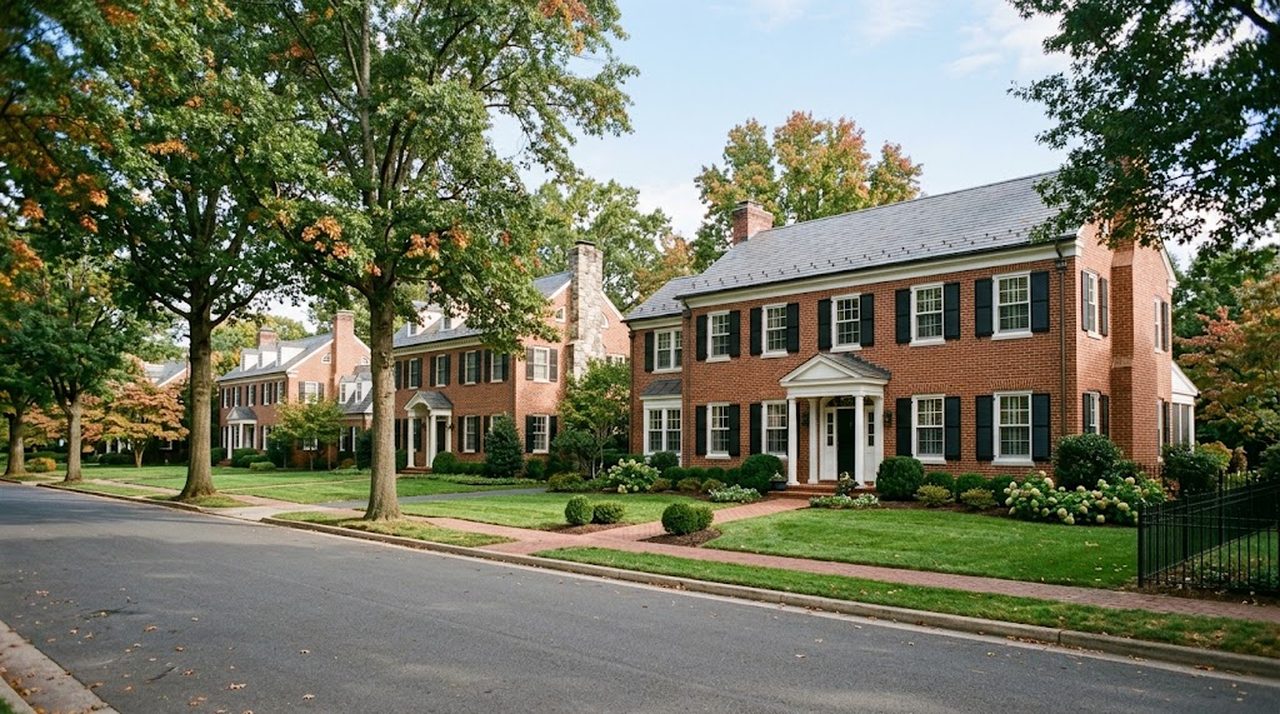
The same FHA program buys a $1,249,125 house in Stafford County and a $541,287 house in King George County, one county line away.
Short answer: an FHA loan in Virginia needs 3.5 percent down with a credit score of 580 or higher, or 10 percent down between 500 and 579. The property has to be your primary residence, and mortgage insurance is charged twice, once up front at 1.75 percent of the loan and again every year. What changes across Virginia is the ceiling. In the 17 Northern Virginia jurisdictions inside the Washington metro area the 2026 one-unit limit is $1,249,125. In most of the rest of the state it is $541,287. Same program, same rules, a difference of $707,838 decided entirely by which county the house sits in.
By Ken Byrne, NMLS #187129 · ALCOVA Mortgage LLC, NMLS #40508 · Updated September 2026
Most FHA guides tell you the down payment and the credit score and stop, which is fine if you live somewhere the numbers are uniform. Virginia is not that state. It holds four separate FHA loan limit tiers, the widest gap of any state in the region, and the tier your address falls into decides not only how much you can borrow but whether your mortgage insurance can ever reach the expensive rate. This guide gives you the qualifying rules, all four Virginia tiers with every jurisdiction named, the state assistance that stacks on top, and the places the program quietly stops working. If you want it run against a specific address and price, the Ken Byrne Team will do it the same day.
What an FHA loan actually requires
Four rules decide most FHA files. Everything else is documentation.
| Requirement | The rule | What it means in practice |
|---|---|---|
| Down payment, score 580 and up | 3.5 percent of the adjusted value | The standard case. On a $500,000 purchase that is $17,500. |
| Down payment, score 500 to 579 | 10 percent of the adjusted value | Nearly three times the cash for a 79-point credit difference. |
| Occupancy | Primary residence only | You have to live in it. A two to four unit property qualifies if you occupy one unit. |
| Mortgage insurance | 1.75 percent up front, plus an annual premium | Charged on every FHA loan regardless of down payment or score. |
FHA minimum down payment tiers are set by Mortgagee Letter 10-29 and carried in Handbook 4000.1. The up-front premium of 1.75 percent is set by Mortgagee Letter 2012-4. Annual premium rates are set by Mortgagee Letter 2023-05.
The 3.5 percent is not 3.5 percent of your offer. HUD calculates the minimum required investment on the adjusted value, which its own glossary defines as the lesser of the purchase price less inducements, or the property value from the appraisal. If you agree to $650,000 and the appraisal lands at $620,000, your minimum is not $22,750. It is 3.5 percent of $620,000, which is $21,700, plus the entire $30,000 appraisal gap in cash. The published percentage is the smaller half of the number.
That single definition explains more failed FHA offers in Northern Virginia than credit scores do. In a market where buyers routinely go over list, the appraisal is the quiet second underwriter, and it is the one that decides how much cash you actually have to bring. Your score decides the percentage; the appraisal decides what the percentage is taken on. Both have to work.
The 2026 FHA loan limits in Virginia, all four tiers
HUD publishes two lists each year: the areas at the national ceiling and the areas above the floor but below it. Anywhere that appears on neither takes the national floor. Virginia appears on both lists, which is why the state has four tiers rather than one.
| Tier | One unit | Two units | Three units | Four units |
|---|---|---|---|---|
| Washington metro, 17 Northern Virginia jurisdictions | $1,249,125 | $1,599,375 | $1,933,200 | $2,402,625 |
| Virginia Beach, Chesapeake and Norfolk metro | $757,850 | $970,200 | $1,172,750 | $1,457,450 |
| Richmond metro | $707,250 | $905,400 | $1,094,450 | $1,360,100 |
| Charlottesville metro | $598,000 | $765,550 | $925,350 | $1,150,000 |
| Everywhere else in Virginia, the national floor | $541,287 | $693,050 | $837,700 | $1,041,125 |
HUD 2026 areas-at-ceiling and areas-above-floor-and-below-ceiling lists, and Mortgagee Letter 2025-23 for the national floor and ceiling. The floor is 65 percent and the ceiling 150 percent of the $832,750 conforming limit. All 2026 figures apply to FHA case numbers assigned on or after January 1, 2026.
The 17 jurisdictions at the ceiling
Alexandria City, Arlington County, Clarke County, Culpeper County, Fairfax City, Fairfax County, Falls Church City, Fauquier County, Fredericksburg City, Loudoun County, Manassas City, Manassas Park City, Prince William County, Rappahannock County, Spotsylvania County, Stafford County and Warren County. Every one of them carries the same $1,249,125 one-unit limit, because HUD sets the limit for the whole metro area rather than county by county.

“Tell me the county and the price and I will tell you your FHA ceiling, your minimum down payment and what the mortgage insurance costs for as long as you keep the loan.”
Arslan Jamil, Broker Associate
Loans originated by Ken Byrne, NMLS ID# 187129 · ALCOVA Mortgage LLC, NMLS ID# 40508. Equal Housing Lender.
The county line worth $707,838
The Washington metro area reaches a long way into Virginia, and the boundary does not follow commute times or house prices. It follows the federal statistical area. Cross it and your FHA ceiling falls by more than seven hundred thousand dollars, in one step, with no gradient.
| Inside the metro | 2026 FHA limit | Adjacent county outside | 2026 FHA limit | Difference |
|---|---|---|---|---|
| Stafford County | $1,249,125 | King George County | $541,287 | $707,838 |
| Spotsylvania County | $1,249,125 | Caroline County | $541,287 | $707,838 |
| Clarke County | $1,249,125 | Frederick County and Winchester | $541,287 | $707,838 |
Derived from HUD’s two 2026 attachment lists. King George, Caroline, Frederick County and Winchester City appear on neither list, so each takes the national floor.
Winchester is the one worth pausing on. It sat above the floor in prior years and has now dropped to it, while Clarke County next door holds the full ceiling. Two adjacent jurisdictions in the same commuter shed, and an FHA buyer can borrow $707,838 more in one of them than the other. Nothing about the houses explains it.
This is not a distance rule. Rappahannock and Culpeper counties are roughly 60 to 70 miles from Washington and carry the full ceiling. Frederick County is closer to Loudoun than Culpeper is, and carries the floor. If you are shopping on the edge of Northern Virginia, check the limit before you set the price range, because the two are not related in the way anyone expects.

Stafford County carries a $1,249,125 FHA ceiling. King George County, across the line, carries $541,287.
Mortgage insurance, and the part that outlives everything else
FHA charges mortgage insurance twice. The up-front premium is 1.75 percent of the base loan amount and is normally financed into the loan rather than paid at closing. The annual premium is charged monthly and its rate depends on two things: how big the loan is and how much you put down.
| Base loan amount | Loan to value | Annual premium | How long you pay it |
|---|---|---|---|
| $726,200 or less | 90 percent or less | 0.50 percent | 11 years |
| $726,200 or less | Over 90 up to 95 percent | 0.50 percent | The full mortgage term |
| $726,200 or less | Over 95 percent | 0.55 percent | The full mortgage term |
| Over $726,200 | 90 percent or less | 0.70 percent | 11 years |
| Over $726,200 | Over 90 up to 95 percent | 0.70 percent | The full mortgage term |
| Over $726,200 | Over 95 percent | 0.75 percent | The full mortgage term |
Mortgagee Letter 2023-05, annual MIP for purchase mortgages with terms greater than 15 years, effective for case numbers endorsed on or after March 20, 2023.
The cliff is at exactly 10 percent down. Put 10 percent down and the annual premium stops after 11 years. Put 9.9 percent down and you pay it for all 30. There is no sliding scale between those two outcomes and no way to cancel out of the second one by paying the balance down later. On a $500,000 loan at 0.55 percent, the 19 extra years cost roughly $52,000 in premium you would not otherwise have paid. It is the single most expensive rounding decision in the program.
This is also where FHA and conventional diverge permanently. Conventional private mortgage insurance has to be canceled on request at 80 percent loan to value and terminated automatically at 78 percent, under the Homeowners Protection Act. FHA annual premium above 90 percent loan to value has no such exit. The comparison is covered in more depth in our guide to what mortgage insurance costs and when it disappears.
The premium tier most of Virginia can never reach
Look at the annual premium table again. The rate splits at a base loan amount of $726,200. Above that line the premium is 0.70 or 0.75 percent instead of 0.50 or 0.55. Now put that next to the Virginia limit tiers, and something falls out that no FHA article mentions.
| Where the property is | Maximum FHA base loan | Can the loan reach $726,200? | Highest premium possible |
|---|---|---|---|
| Northern Virginia, 17 jurisdictions | $1,249,125 | Yes, with room to spare | 0.75 percent |
| Virginia Beach, Chesapeake, Norfolk | $757,850 | Only in the top $31,650 | 0.75 percent |
| Richmond metro | $707,250 | No | 0.55 percent |
| Charlottesville metro | $598,000 | No | 0.55 percent |
| The rest of Virginia, at the floor | $541,287 | No | 0.55 percent |
In most of Virginia an FHA borrower is structurally incapable of paying the higher annual premium, because the county limit stops the loan below the threshold that triggers it. In Northern Virginia the same borrower with the same credit and the same program crosses it easily and then pays it for the life of the loan. In the Virginia Beach metro the possibility exists but only inside a $31,650 window at the very top of the limit.
Why this matters when you are choosing a price. A Northern Virginia buyer stretching from a $740,000 base loan to $760,000 is not just adding $20,000 of principal. They are moving from the 0.55 percent premium tier into the 0.75 percent tier, permanently, on the entire balance. That is a different decision from the one the payment calculator shows.
Stacking Virginia Housing on top of an FHA loan
Virginia runs its own first-time buyer programs through Virginia Housing, and the FHA versions are the ones that change the arithmetic most, because they are sized against the FHA minimum rather than against a conventional one.
| Program | What it gives | Repaid? | Covers how much of the FHA 3.5 percent |
|---|---|---|---|
| Down Payment Assistance Grant, FHA Bond | 2.5 percent of the sales price | No, a true grant | About 71 percent of it |
| Down Payment Assistance Grant, Conventional Bond | 2 percent of the sales price | No, a true grant | Not applicable, conventional |
| Plus Second Mortgage, FHA | 3.5 percent of the sales price | Yes, a 30 year fixed second | All of it |
| Closing Cost Assistance Grant | Up to 2 percent, on RHS and VA loans only | No | Not applicable, closing costs |
Virginia Housing program terms. The Plus Second Mortgage carries a minimum credit score of 620 for the FHA 3.5 percent tier and is priced at the first mortgage rate plus 0.25 percent on FHA. The Down Payment Assistance Grant and the Plus Second Mortgage cannot be combined.
The grant is the one worth understanding properly. At 2.5 percent of the sales price on an FHA bond loan, it covers roughly seven tenths of the minimum down payment and is never repaid. The Plus Second Mortgage covers the whole 3.5 percent but is a real amortizing second lien with a monthly payment, not assistance, and the two cannot be stacked. Which one is right depends on whether you would rather keep cash or keep the payment down. Our full breakdown of the Virginia Housing programs walks through both.
The limit that catches Northern Virginia buyers. Virginia Housing caps the sales price at $800,000 in the Washington metro area, with grant-tier income limits of $148,000 for households of one or two and $174,000 for three or more, effective August 1, 2026. FHA will lend to $1,249,125 there. So between $800,000 and $1,249,125 you keep FHA eligibility and lose the state help entirely. In practice that is the band where most Northern Virginia FHA buyers actually shop.
Is FHA actually the cheaper loan for you?
Arslan Jamil, Broker Associate
For some Virginia buyers it clearly is. For others, a conventional loan with a slightly higher down payment costs less over five years because the mortgage insurance ends. I will run both side by side on your numbers rather than tell you which one is better in the abstract.
Loans originated by Ken Byrne, NMLS ID# 187129 · ALCOVA Mortgage LLC, NMLS ID# 40508. Equal Housing Lender.
Where the Virginia FHA limit runs out
An FHA loan stops at the county ceiling, and it stops hard. There is no over-limit version of the program. If the loan you need is larger than the tier you are in allows, you are looking at a conventional loan, and above the conforming limit, a jumbo.
| Purchase price, 3.5 percent down | Base loan | FHA at the Northern Virginia ceiling | FHA at the Virginia floor |
|---|---|---|---|
| $560,000 | $540,400 | Within the limit | Within the limit, just |
| $600,000 | $579,000 | Within the limit | Over the limit |
| $900,000 | $868,500 | Within the limit | Over the limit |
| $1,294,000 | $1,248,710 | At the limit | Over the limit |
| $1,400,000 | $1,351,000 | Over the limit | Over the limit |
Base loan is the purchase price less 3.5 percent, before the financed up-front premium, which does not count against the limit. Figures rounded to the nearest dollar.
At the Virginia floor, FHA effectively caps a 3.5 percent down purchase at about $561,000. That is below the median sale price in several Northern Virginia jurisdictions, which is exactly why the metro tier exists. Above the conforming limit the conversation changes shape entirely, and our comparison of jumbo against conforming in the DMV covers where that line sits.
Maryland works the same way and splits four ways too, which matters if you are shopping both sides of the river. Charles County carries the same $1,249,125 ceiling as Fairfax, while Calvert County, one county over, takes the $541,287 floor. The full county-by-county picture is in our guide to FHA loans in Maryland.
Credit, and what the score really buys you
FHA is the program people reach for when credit is the constraint, and the 580 threshold is the one that matters most. Below it the down payment triples. Above it, the score stops changing the down payment and starts changing the rate instead.
| Score band | FHA minimum down | What changes |
|---|---|---|
| 580 and above | 3.5 percent | Rate and lender overlays, not the down payment |
| 500 to 579 | 10 percent | The cash requirement, sharply |
| Below 500 | Not eligible | No FHA financing |
One practical note that catches people. A lender is allowed to require a higher score than HUD does, and most do. HUD sets the floor of the program; your lender sets the floor of its own appetite, and the two are rarely the same number. If you have been told no at 580, it was probably an overlay rather than the rule. Our guide to the credit score you need to buy a house covers where the real thresholds sit across programs.
FHA loans are available across the state through the same channels as any other product, and the qualifying file looks much like a conventional one: income documented, debts counted, assets sourced, appraisal ordered on an FHA case number. What differs is the appraisal itself, which is a little more prescriptive about property condition, and the fact that the case number assignment date is what locks your loan limit year. Full detail on the program sits on our FHA loans page.
One last thing worth saying plainly. FHA is a national program with national rules, and almost everything you read about it will be true in every state. The part that is not national is the ceiling, and in Virginia that single variable moves by $707,838 across a county line. Start with the limit for the address, then work backward to the price range, rather than the other way round. The rest of the state picture sits on the Virginia mortgage hub.
Frequently asked questions
What are Virginia FHA loan limits for 2026?
Virginia has four tiers. The 17 Northern Virginia jurisdictions in the Washington metro area are at the national ceiling of $1,249,125 for one unit. The Virginia Beach, Chesapeake and Norfolk metro is $757,850, Richmond is $707,250 and Charlottesville is $598,000. Everywhere else in Virginia takes the national floor of $541,287.
What credit score is needed for an FHA loan in Virginia?
HUD allows 3.5 percent down at a score of 580 or higher, and 10 percent down between 500 and 579. Below 500 there is no FHA financing. Individual lenders commonly require a higher score than HUD does, so a decline at 580 is usually a lender overlay rather than the program rule.
How do you apply for an FHA loan in Virginia?
You apply through an FHA approved lender rather than through HUD. The lender pulls an FHA case number, which fixes the loan limit year and the premium schedule that apply to your file, then underwrites income, debts and assets and orders an FHA appraisal. The process is the same in every Virginia county; only the limit changes.
Is the FHA down payment 3.5 percent of the purchase price?
Not exactly. It is 3.5 percent of the adjusted value, which HUD defines as the lesser of the purchase price less inducements or the appraised value. If the appraisal comes in below the price, the difference is cash you bring on top of the 3.5 percent.
How much is FHA mortgage insurance in Virginia?
The up-front premium is 1.75 percent of the base loan amount and is usually financed. The annual premium is 0.50 or 0.55 percent on loans of $726,200 or less, and 0.70 or 0.75 percent above that, depending on your loan to value. The rates are national; what varies in Virginia is whether your county limit even lets the loan reach the higher tier.
Does FHA mortgage insurance ever go away?
Only if you put at least 10 percent down. At 90 percent loan to value or less the annual premium stops after 11 years. Above 90 percent it runs for the full mortgage term and cannot be canceled by paying the balance down. Refinancing out of FHA is the usual exit.
Can you use an FHA loan for a duplex or fourplex in Virginia?
Yes, if you occupy one of the units as your primary residence. The limits rise with unit count. In Northern Virginia a four-unit property can go to $2,402,625, and at the Virginia floor the same four-unit limit is $1,041,125.
Can Virginia Housing assistance be used with an FHA loan?
Yes. The Down Payment Assistance Grant on an FHA bond loan is 2.5 percent of the sales price and is never repaid, covering most of the 3.5 percent minimum. The Plus Second Mortgage covers the full 3.5 percent but is a repayable second lien. The two cannot be combined, and in the Washington metro area the sales price cap is $800,000.
Is an FHA loan better than conventional in Virginia?
It depends mostly on credit and on how long you plan to keep the loan. FHA is usually easier to qualify for at lower scores. Conventional mortgage insurance ends at 80 percent loan to value, while FHA annual premium above 90 percent does not, so a five-year hold often favors conventional even when the FHA rate looks better on day one.
Did FHA loan limits go up in Virginia for 2026?
The national ceiling rose to $1,249,125 and the floor to $541,287, both tied to the $832,750 conforming limit. Not every Virginia area moved the same way. Winchester and Frederick County sat above the floor in prior years and are now at it, while Clarke County next door holds the full ceiling.
“Send me a county and a price and I will come back with your FHA ceiling, the real minimum down payment after the appraisal, the premium tier you land in and what it all costs a month.”
Arslan Jamil, Broker Associate
Loans originated by Ken Byrne, NMLS ID# 187129 · ALCOVA Mortgage LLC, NMLS ID# 40508. Equal Housing Lender.
This article is general information, not financial or legal advice and not a commitment to lend or an offer of credit. Loan limits, program rules, premium schedules and rates change, and individual eligibility depends on a full review of your credit, income, assets and the property. Every figure here is an illustration, not a quote, built from published sources and a weekly survey average rather than underwriting decisions. Insurance and mortgage insurance amounts are planning estimates. Confirm anything you plan to act on with a licensed mortgage professional. FHA loan limits, premium schedules and program rules cited here are published by HUD and change at least annually, and 2026 limits apply to case numbers assigned on or after January 1, 2026. Virginia Housing program terms, income limits and sales price caps are set by the agency and revised periodically. Confirm current figures before relying on them.
Categories
Recent Posts








GET MORE INFORMATION

Broker Associate