
How Much House Can I Afford on a $200K Salary in Northern Virginia? (2026)

On $200,000 of income, your debts and down payment move your price range by hundreds of thousands of dollars.
Short answer: on a $200,000 household income with no other debts and 20 percent down, you can afford about $939,000 in Fairfax County if you keep the payment at 36 percent of gross income, or about $1,125,000 at 43 percent, at the September 2026 average rate of 7.03 percent. With 10 percent down, those numbers drop to about $815,000 and $977,000. With 20 percent down, Loudoun’s lower tax rate adds about $40,000 to $50,000 of buying power.
By Ken Byrne, NMLS #187129 · ALCOVA Mortgage LLC, NMLS #40508 · Updated September 2026
$200,000 is a strong income almost anywhere, and in Northern Virginia it covers the typical home in every county. But the range is wide. Whether you land at $800,000 or $1.2 million depends on your down payment, your car and student loan payments, the county tax rate and how much of your income you want going to the house. This guide does that math with 2026 tax rates, home values and loan limits. To run it with your own numbers, talk to JB Financing.
What $200,000 a year means to a lender
Lenders qualify you on gross monthly income: $200,000 divided by 12 is $16,667. They compare it with your total monthly debts, including the new house payment, to get your debt-to-income ratio (DTI).
| DTI level | Total monthly debts allowed on $16,667 | What it means |
|---|---|---|
| 36% | $6,000 | Conservative; also Fannie Mae’s base limit for manual approvals |
| 43% | $7,167 | A common planning ceiling |
| 45% | $7,500 | Manual approval limit with strong credit and reserves |
| 50% | $8,333 | Fannie Mae’s maximum through its automated system |
Fannie Mae Selling Guide B3-6-02. Lenders may set lower limits, and jumbo lenders often do.
How much house $200K buys in each Northern Virginia county
| County (tax per $100) | 20% down, 36% | 20% down, 43% | 10% down, 36% | 10% down, 43% |
|---|---|---|---|---|
| Loudoun ($0.805) | $980,000 | $1,174,000 | $846,000 | $1,013,000 |
| Prince William ($0.937) | $962,000 | $1,153,000 | $833,000 | $998,000 |
| Arlington ($1.053) | $947,000 | $1,135,000 | $822,000 | $984,000 |
| Fairfax County ($1.12) | $939,000 | $1,125,000 | $815,000 | $977,000 |
| Alexandria ($1.135) | $937,000 | $1,123,000 | $814,000 | $975,000 |
No other debts; 30-year fixed at 7.03% (Freddie Mac average, September 24, 2026); homeowners insurance $111 a month (Virginia average, NAIC); 2026 tax rates from each locality, before special district and stormwater charges. Mortgage insurance at 10% down: 0.38% a year, from one insurer’s published card for a 740 to 759 score. HOA dues not included.
Here is the Fairfax example at 43 percent with 20 percent down: a $1,125,000 home, $225,000 down, and a $900,000 loan. Principal and interest are $6,006 a month, property tax $1,050 and insurance $111, for $7,167. Note that a $900,000 loan is above the $832,750 national limit, so it is a high-balance conforming loan, which is still conventional but priced a little higher. Rates for every locality are in our guide to Northern Virginia property tax rates.
What the rate does to your budget
At 6.03 percent, the same Fairfax buyer at 43 percent with 20 percent down could spend about $1,228,000. At 8.03 percent, about $1,035,000. A one point move in rates shifts your price range by roughly $100,000 at this income.

Get a Mortgage Estimate for Free
See exactly what $200,000 of income buys in the county you want, with your real debts.
✓Free, no obligation✓Licensed in VA, MD, DC and WV✓Loan officer Ken Byrne, NMLS #187129
Typical home prices vs a $200K budget
| Area | Typical home value | Payment with 20% down | Share of $200K income |
|---|---|---|---|
| Centreville | $618,763 | $3,992 | 24% |
| Reston | $624,958 | $4,031 | 24% |
| Gainesville | $754,533 | $4,728 | 28% |
| Ashburn | $798,580 | $4,910 | 29% |
| Leesburg | $851,239 | $5,226 | 31% |
| Vienna | $1,176,798 | $7,492 | 45% |
| McLean | $1,459,672 | $9,266 | 56% |
Zillow Home Value Index (Vienna as of July 31, 2026; others August 31, 2026). Payment includes principal, interest, property tax at the county rate and insurance, at 7.03% with 20% down; towns such as Leesburg and Vienna add a town tax not included here.
At this income the typical home in most of Northern Virginia fits under 36 percent with 20 percent down. Vienna is a stretch at 45 percent, and the typical McLean home is out of range without more income, more cash down or both. For a closer look at one common price point, see our breakdown of the mortgage payment on a $700,000 house.
How your debts and HOA shrink your buying power
| Monthly payment | Buying power lost (Fairfax, 20% down, 43%) |
|---|---|
| $100 (HOA dues or a small loan) | About $16,000 |
| $300 | About $48,000 |
| $500 (a typical car payment) | About $80,000 |
| $800 | About $128,000 |
| $1,500 | About $239,000 |
Calculated at 7.03% with the tax and insurance assumptions above.
HOA and condo dues count exactly like a debt, so a townhouse with $150 dues costs you about $24,000 of price compared with one without. For student loans, lenders use the payment on your credit report, can use a documented $0 income-driven payment, and for deferred loans use 1 percent of the balance or the documented full payment.
Fannie Mae Selling Guide B3-6-05.
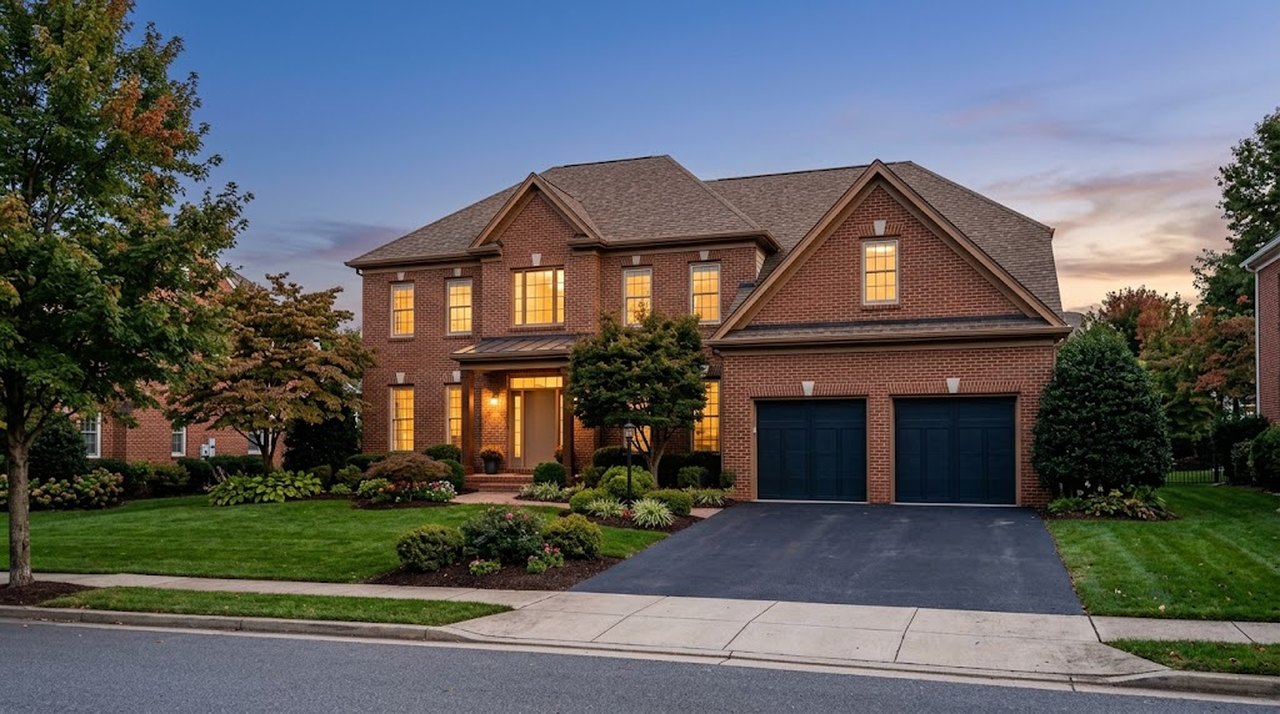
In Northern Virginia, $200,000 of income usually buys a single-family home; how large depends on your down payment.
Down payment: 20% vs 10% vs 5%
Putting less down lowers the price you can reach, because the loan is bigger and mortgage insurance is added. In Fairfax at 43 percent, the price range is about $1,125,000 with 20 percent down, $977,000 with 10 percent and $917,000 with 5 percent.
| 20% down | 10% down | 5% down | |
|---|---|---|---|
| Mortgage insurance, 740 to 759 score | None | 0.38% a year | 0.53% a year |
| On a $900,000 loan, per month | $0 | About $285 | About $398 |
| Maximum for a high-balance loan | Allowed | Allowed | Allowed, 95% is the cap |
Enact published monthly mortgage insurance rate card (updated July 2025); Fannie Mae Eligibility Matrix, August 5, 2026. Insurers and lenders price differently; get a quote.
Mortgage insurance is not permanent. You can ask to remove it when your balance is scheduled to reach 80 percent of the original value, and it ends automatically at 78 percent if you are current. More on the cost and how to drop it is in our guide to PMI.
CFPB, When can I remove private mortgage insurance (reviewed August 28, 2026).
Get Pre-Approved Today
Get pre-approved with your bonus, commission or RSU income counted correctly.
✓Free, no obligation✓Licensed in VA, MD, DC and WV✓Loan officer Ken Byrne, NMLS #187129
Conforming, high-balance or jumbo?
At this income your loan amount decides which kind of loan you need. In Fairfax, Loudoun, Prince William, Arlington and Alexandria, the 2026 conforming limit for a one-unit home is $1,249,125.
| Loan amount | Loan type | What changes |
|---|---|---|
| Up to $832,750 | Standard conforming | Lowest down payment options, including 3% for eligible first-time buyers |
| $832,751 to $1,249,125 | High-balance conforming | Still Fannie Mae or Freddie Mac; 5% minimum down; a pricing add-on |
| Above $1,249,125 | Jumbo | Set by each lender; often more cash down and more reserves |
FHFA 2026 conforming loan limits; Fannie Mae Eligibility Matrix and LLPA Matrix.
With 20 percent down you can buy up to about $1,561,000 before the loan becomes jumbo. The trade-offs are in our guide to jumbo vs conforming loans.
Bonus, commission and RSU income
Many $200,000 households include variable pay. Fannie Mae’s rules for counting it:
| Income type | How lenders count it |
|---|---|
| Bonus, commission, overtime | Two years of history recommended, at least 12 months; averaged over year to date and the prior year; declining income must have stabilized |
| Restricted stock units, time-based | Shares must have vested and been paid out; 12 months with the current employer; one-time awards must be documented to vest for at least three more years |
| RSU calculation | 200-day average share price times shares vested in the last 24 months, divided by 24 |
| RSU sign-on bonuses | Not eligible |
Fannie Mae Selling Guide B3-3.3-02 and B3-3.3-07 (March 2026).
If part of your pay is new or variable, get pre-approved early so the lender can tell you which income counts before you make an offer. Readers comparing a lower income band can see our guide to what $100K buys in Northern Virginia.
Cash to close
Beyond the down payment, plan for closing costs and reserves. Virginia buyers pay recordation tax on both the deed and the loan, plus title, settlement and lender charges. A line by line list is in our guide to closing costs in Virginia.
Programs, loan limits and resources for the rest of the state are on our Virginia mortgage page.
Frequently asked questions
How much house can I afford on a $200K salary in Northern Virginia?
About $939,000 to $1,125,000 in Fairfax County with 20 percent down and no other debts, keeping the payment between 36 and 43 percent of gross income at 7.03 percent. Loudoun’s lower tax rate raises that to about $980,000 to $1,174,000.
What is the monthly income on a $200,000 salary for a mortgage?
$16,667 a month before taxes. Lenders use gross income, so 43 percent is $7,167 for all debts including the house payment.
Can I afford a $1 million house on $200K?
Often yes, with 20 percent down and few other debts: a $1 million Fairfax home with $200,000 down costs about $6,400 a month, or 38 percent of income. With 10 percent down or large car and student loan payments, it gets tight.
Do I need a jumbo loan on a $200K salary?
Usually not. In Northern Virginia the conforming limit is $1,249,125, so with 20 percent down you can buy up to about $1.56 million before needing a jumbo loan.
How much should I put down on a $1 million home?
The minimum is 5 percent on a high-balance conforming loan, but 20 percent removes mortgage insurance and raises what you qualify for. Many buyers pick an amount that still leaves cash reserves.
Will my bonus or RSUs count toward qualifying?
Yes, if they meet Fannie Mae’s rules: generally 12 to 24 months of history for bonus and commission, and vested, distributed RSUs from your current employer, with one-time awards documented to keep vesting for three more years.
How much does a car payment reduce what I can afford?
A $500 monthly payment cuts about $80,000 from your price range at these rates.
What DTI do lenders allow in 2026?
Up to 50 percent on conventional loans approved through Fannie Mae’s automated system, 36 to 45 percent on manual approvals. Jumbo lenders set their own limits.
Is the 28/36 rule realistic in Northern Virginia?
At $200,000 it often is: 36 percent with 20 percent down still covers the typical home in Fairfax, Loudoun, Prince William, Arlington and Alexandria.
Next stepStart Your Pre-Approval
Start online, and Ken Byrne’s team will price your Northern Virginia purchase.
✓Free, no obligation✓Licensed in VA, MD, DC and WV✓Loan officer Ken Byrne, NMLS #187129
This article is general information, not financial or legal advice and not a commitment to lend or an offer of credit. Loan limits, program rules, premium schedules and rates change, and individual eligibility depends on a full review of your credit, income, assets and the property. Every figure here is an illustration, not a quote, built from published sources and a weekly survey average rather than underwriting decisions. Insurance and mortgage insurance amounts are planning estimates. Confirm anything you plan to act on with a licensed mortgage professional. Tax rates, home values, loan limits and underwriting rules were checked against official sources on September 30, 2026. Payments are estimates at a 7.03 percent rate.
Categories
Recent Posts







GET MORE INFORMATION

Broker Associate