
How Much House Can I Afford in Northern Virginia? (With Calculator)

The income needed for a 600k mortgage in Northern Virginia runs about $127,000 to $133,000 at a 43 percent debt to income ratio.
Short answer: The income needed for a 600k mortgage in Northern Virginia is about $127,000 to $133,000 at a 43 percent debt to income ratio, or $152,000 to $159,000 if you hold yourself to 36 percent, and which end you land on is decided by the county, not by your rate. A $600,000 loan with 20 percent down buys a $750,000 house, which is almost exactly the Northern Virginia median. Below that, a $100,000 salary reaches roughly $463,000 to $585,000 and a $150,000 salary reaches $707,000 to $891,000. All figures use the 6.76 percent 30 year fixed average Freddie Mac reported for the week ending September 10, 2026, 20 percent down, and each county's own rate.
Almost every affordability article you will find answers a different question than the one you are asking. It tells you what a bank might lend someone, somewhere, at some rate. What you actually want to know is what your salary buys in the county you are shopping in, this month. That is what this guide does. The Ken Byrne Team at JB Financing runs these numbers every day across Loudoun, Fairfax, Arlington, Prince William and Alexandria, and the county line moves the answer more than most buyers expect.
Three things drive every number below. Your gross monthly income. The share of it a lender will let you commit, which is your debt to income ratio. And the cost of carrying the house, which is principal and interest plus the property tax rate where the house sits plus insurance. Change the county and nothing about you changes, but your maximum price does.
What income is needed for a 600k mortgage?
Most buyers know the house before they know the salary, so start there. A $600,000 mortgage at 6.76 percent on a 30 year fixed is $3,896 a month in principal and interest alone. Add the property tax for the jurisdiction and homeowners insurance, and the income needed for a 600k mortgage lands between $127,000 and $133,000 at a 43 percent ratio, and between $152,000 and $159,000 at the more conservative 36 percent.
| County | Income needed at 43% DTI | Income needed at 36% DTI |
|---|---|---|
| Loudoun County | $126,941 | $151,623 |
| Prince William County | $127,987 | $152,873 |
| Arlington County | $131,266 | $156,790 |
| City of Alexandria | $132,696 | $158,498 |
| Fairfax County | $133,019 | $158,884 |
A $600,000 loan with 20 percent down means a $750,000 purchase, which is almost exactly the Northern Virginia median of $750,000 that the Northern Virginia Association of Realtors reported for July 2026. Assumes no other monthly debt. Any car payment raises both columns by roughly $17,000 of required income.
That is the honest picture of this market. Carrying the regional median house on a single income takes roughly $130,000 a year at the aggressive end and $155,000 at the careful end, before a single dollar of car payment. It is why so many purchases here are two income files, and why the county you choose is a financial decision and not only a lifestyle one.
What your salary buys, band by band
The three tables below are the summary. Each band has its own deeper guide with the full payment breakdown, the cash to close and the programs that apply at that income, and those are linked from each section.
On a $100,000 salary
On a $100,000 salary your gross monthly income is $8,333. At a conservative 36 percent total debt to income ratio, that gives you $3,000 a month for everything: the mortgage payment, property tax, homeowners insurance, and any car loan, student loan or credit card minimum. At 43 percent, which is where a lot of approved conventional files actually land, the same salary gives you $3,583.
| County | At 36% DTI, no other debt | At 43% DTI, no other debt | At 43% with a $600 car payment |
|---|---|---|---|
| Loudoun County | $485,939 | $585,400 | $483,097 |
| Prince William County | $481,831 | $580,451 | $479,013 |
| Arlington County | $469,398 | $565,474 | $466,653 |
| City of Alexandria | $464,174 | $559,181 | $461,460 |
| Fairfax County | $463,012 | $557,780 | $460,304 |
Assumes a 30 year fixed at 6.76 percent, 20 percent down, homeowners insurance assumed at $150 a month, and each jurisdiction's 2026 real estate tax rate. Insurance is a planning figure, not a quote. Fairfax County is shown at roughly $1.1535 per $100 including the stormwater and pest levies.
Read the last column first. A $600 car payment costs you about $100,000 of house at this salary. That is the single largest lever most buyers at $100,000 actually control, and it is bigger than anything a quarter point of rate will do.
There is a catch in these numbers that most calculators hide. Every figure above assumes 20 percent down. On a $558,000 house in Fairfax County that is $111,600 in cash, plus closing costs. Very few buyers earning $100,000 have that. In practice the binding constraint at this salary is almost never the debt to income ratio. It is the down payment. If you are putting 5 or 10 percent down, mortgage insurance enters the payment and your maximum price drops by roughly 10 to 12 percent from the table above, so treat these as the ceiling your income allows, not the number your savings support. The full version of this band, including the cash to close and the assistance programs that apply, is in our $100K salary guide for Northern Virginia.

“Send me your salary, your county and whatever you owe each month. I will send back the real number, with the down payment you actually have rather than the one the calculator assumes.”
Arslan Jamil, Broker Associate
Loans originated by Ken Byrne, NMLS ID# 187129 · ALCOVA Mortgage LLC, NMLS ID# 40508. Equal Housing Lender.
On a $150,000 salary
At $150,000 the gross monthly figure is $12,500, which gives you $4,500 a month at 36 percent and $5,375 at 43 percent. This is the salary band where Northern Virginia starts to open up, because the region's median sale price was $750,000 in July 2026 according to the Northern Virginia Association of Realtors, and a 43 percent file at this income clears it in every jurisdiction below.
| County | At 36% DTI, no other debt | At 43% DTI, no other debt | At 43% with a $600 car payment |
|---|---|---|---|
| Loudoun County | $741,696 | $890,888 | $788,585 |
| Prince William County | $735,426 | $883,357 | $781,919 |
| Arlington County | $716,450 | $860,563 | $761,743 |
| City of Alexandria | $708,476 | $850,986 | $753,265 |
| Fairfax County | $706,702 | $848,855 | $751,378 |
Same assumptions as above. The gap between Loudoun County and Fairfax County at this income is about $42,000 of purchasing power, created entirely by the tax rate.
Notice what the $600 car payment does here versus at $100,000. The dollar loss is the same, about $100,000 of price, but it is a much smaller share of a larger number. Debt hurts lower earners disproportionately, which is exactly backwards from how most people assume it works. The detailed version of this band sits in our $150K salary guide for the DC area.
On a $200,000 salary
At $200,000 you are at $16,667 gross a month, $6,000 at 36 percent and $7,167 at 43 percent. This is where a second constraint appears that has nothing to do with your income: the conforming loan limit. In the Washington metro area the 2026 one unit conforming limit is $1,249,125, the national high cost ceiling, so a 43 percent file in Loudoun County at this salary runs right up against the point where a different product takes over.
| County | At 36% DTI, no other debt | At 43% DTI, no other debt | At 43% with a $600 car payment |
|---|---|---|---|
| Loudoun County | $997,453 | $1,196,375 | $1,094,073 |
| Prince William County | $989,022 | $1,186,262 | $1,084,824 |
| Arlington County | $963,502 | $1,155,653 | $1,056,832 |
| City of Alexandria | $952,779 | $1,142,791 | $1,045,070 |
| Fairfax County | $950,392 | $1,139,929 | $1,042,453 |
Same assumptions. At 20 percent down, a $1,196,000 purchase is a $957,000 loan, comfortably inside the $1,249,125 conforming limit for this metro area.
Two hundred thousand dollars of household income does not put you into jumbo territory in this region, and that surprises people. Because the whole Washington metro sits at the high cost ceiling rather than the $832,750 national baseline, the conforming box here is unusually large. If you are being told a $1.1 million purchase requires a jumbo loan, the person telling you is using the wrong limit. Our $200K salary guide carries the full breakdown at this band, including where jumbo actually starts.
Want the number for your actual file, not a table?
Arslan Jamil, Broker Associate
Send the salary, the county, the monthly debts and what you have saved. You will get back the maximum price, the payment at that price, and the cash you need to close, all three.
Loans originated by Ken Byrne, NMLS ID# 187129 · ALCOVA Mortgage LLC, NMLS ID# 40508. Equal Housing Lender.
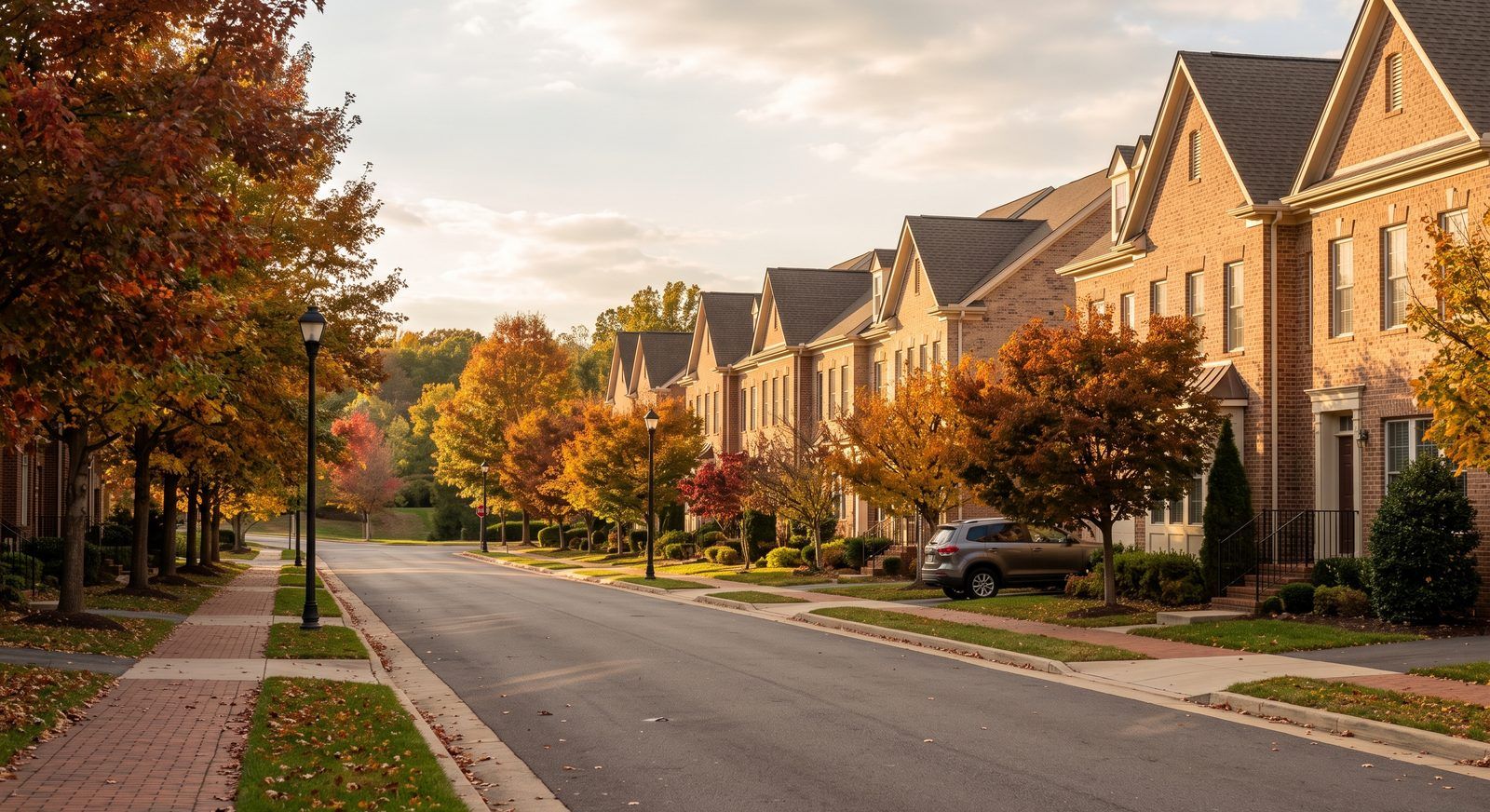
Attached homes in Loudoun and Prince William are where the affordability math works first in Northern Virginia, well before detached homes do.
The 28/36 rule, and why your lender does not use it
The 28/36 rule says your housing payment should stay under 28 percent of gross income and your total debt under 36 percent. It is a sound budgeting habit and a poor prediction of what you will be approved for, because no major loan program enforces it. Fannie Mae's published maximum is 50 percent through Desktop Underwriter, and on manually underwritten files the baseline is 36 percent rising to 45 percent when the credit score and reserve requirements in the Eligibility Matrix are met.
On the federal side the rule of thumb has even less force. The Consumer Financial Protection Bureau removed the 43 percent debt to income limit from the General Qualified Mortgage definition entirely and replaced it with a price based test: the loan's annual percentage rate has to stay under the average prime offer rate plus 2.25 percentage points. Your ratio is no longer the legal line. Pricing is. That is why two lenders can look at the same file and give you materially different answers, and why how your debt to income ratio actually affects approval is worth understanding before you shop.
So treat 28/36 as the number you should want and 43 to 50 percent as the number you might be offered. The gap between those two is the space where people get into houses they regret.
Why the county changes your answer by six figures
Property tax is a monthly expense that underwriting counts exactly like principal and interest, and Northern Virginia rates vary by more than half a percentage point across jurisdictions that are twenty minutes apart. On a $600,000 house that is a difference of roughly $250 a month, which is about $45,000 of purchasing power at a 43 percent ratio.
| Jurisdiction | 2026 rate per $100 of assessed value | Notes |
|---|---|---|
| Loudoun County | $0.805 | Held flat from 2025 |
| Prince William County | $0.865 general levy | Down from $0.906. Fire and rescue levy is additional |
| Arlington County | $1.053 | Separate stormwater utility fee applies |
| City of Alexandria | $1.135 | Stormwater utility fee $340.30 per unit annually |
| Fairfax County | $1.12 base | Plus stormwater $0.0325 and pest $0.001, so about $1.1535 |
| City of Falls Church | $1.18 | Cut from $1.185, but assessments rose 6.2 percent |
| City of Manassas | $1.24 | $1.05 base plus a $0.19 fire and rescue levy |
Rates as adopted for tax year 2026 or the relevant fiscal year. Special district and stormwater levies are additional and vary by address, so confirm the exact rate for the specific parcel before you rely on it. This is the single most underweighted number in Northern Virginia affordability.
The practical consequence is that shopping one county out is often worth more than shopping one rate quote out. If you want to see which submarkets actually trade at the prices these tables produce, the best places to live in Northern Virginia on a first time buyer budget has current entry price ranges by area.
What the salary tables leave out
The down payment, which is usually the real ceiling
Income sets a maximum. Cash sets the actual one. At $100,000 a year the 43 percent table says $558,000 in Fairfax County, but that assumes $111,600 down. With 5 percent down the same buyer is looking at a materially lower price because mortgage insurance is added to the payment and the payment budget has not changed. Check what Virginia down payment assistance you qualify for before you decide the number is out of reach.
Reserves after closing
Conventional files on a primary residence frequently close with little or nothing left over, and underwriting allows it. That does not make it wise in a region where a failed HVAC system in August is a five figure event. Two to six months of full payment in reserve after closing is the standard worth holding yourself to even when the lender does not require it.
Condo and HOA fees
A condo fee counts in your ratio dollar for dollar, the same as a car payment. A $500 monthly fee reduces your maximum price by roughly $80,000 at a 43 percent ratio. At the entry price points in this region that is often the difference between a condo and a townhouse being the cheaper monthly outcome, which is the reverse of what the list prices suggest.
Two incomes, one file
Combining incomes raises the ceiling but also combines the debts. A household at $150,000 total with two car payments and a student loan often qualifies for less than a single earner at $120,000 with nothing owed. Run the household, not the salaries.
How to move your number up
In rough order of how much they actually move the maximum price, for a buyer in this region: pay off or pay down the highest monthly payment you carry, because the ratio counts the payment and not the balance. Increase the down payment past 20 percent to remove mortgage insurance entirely. Shop the county, since half a point of tax rate is worth more than most rate differences. Add a co-borrower whose income exceeds their debts. Buy attached rather than detached at the same price point, where the tax bill is lower because the assessment is.
What generally does not move it much: a small rate improvement, a slightly longer term, or a credit score change inside the same pricing tier. Buyers spend most of their energy on the rate, which is the lever with the least travel in it.
Questions Northern Virginia buyers ask
What income is needed for a 600k mortgage with a car payment?
Add roughly $17,000 a year. A $600,000 mortgage needs about $127,000 to $133,000 of income at a 43 percent ratio with no other debt, and about $144,000 to $150,000 once a $600 car payment is counted. The ratio counts the payment, not the balance, so a nearly paid off loan hurts you as much as a new one. If the loan has ten or fewer payments left, ask your loan officer whether it can be excluded, because conventional guidelines allow that in defined cases.
What salary do I need for a 500k house in Northern Virginia?
Between about $86,000 and $90,000 at a 43 percent ratio with 20 percent down and no other debt, and between about $103,000 and $108,000 if you hold yourself to 36 percent. Loudoun County sits at the low end of both ranges and Fairfax County at the high end, purely because of the tax rate. Add a car payment and both numbers rise by roughly $17,000 of required income.
Is the 28/36 rule still accurate?
It is accurate as advice and inaccurate as a prediction. No agency enforces it. Fannie Mae allows up to 50 percent through Desktop Underwriter, and the Consumer Financial Protection Bureau removed the 43 percent limit from the General Qualified Mortgage definition and replaced it with a pricing test. You will very often be approved for more than 28/36 permits. Whether you should use that room is a different question, and in a high cost, high property tax region the answer is usually no.
Does a higher credit score raise how much house I can afford?
Only indirectly, and less than people expect. Score affects your rate and your mortgage insurance cost, both of which change the payment slightly, which changes the maximum price slightly. It does not change your debt to income ceiling. A borrower who moves from 700 to 760 typically gains a small fraction of what the same borrower gains by clearing a $400 monthly obligation.
Should I use the 43 percent number or the 36 percent number?
Use 36 percent to decide what to buy and treat 43 percent as headroom you hope not to need. In this region the gap between them is about $95,000 of price at a $100,000 salary and $145,000 at $150,000. Buyers who use the full ratio are the ones who find that property tax reassessments, HOA increases and insurance renewals have nowhere to go.
How much house can I afford on a 200k salary if I want to stay conservative?
About $950,000 to $997,000 at a 36 percent ratio with 20 percent down, depending on the county. That keeps the full housing and debt obligation at $6,000 a month on $16,667 of gross income, which leaves real room for retirement contributions, childcare and the maintenance a house at that price actually costs. The 43 percent version of the same salary reaches about $1.14 million to $1.20 million.
“Tell me the salary, the county and what you owe. I will give you the maximum price, the monthly payment at that price and the cash to close, and I will tell you if the down payment is the real constraint rather than the income.”
Arslan Jamil, Broker Associate
Loans originated by Ken Byrne, NMLS ID# 187129 · ALCOVA Mortgage LLC, NMLS ID# 40508. Equal Housing Lender.
This article is general information, not financial or legal advice and not a commitment to lend or an offer of credit. Loan limits, program rules, premium schedules and rates change, and individual eligibility depends on a full review of your credit, income, assets and the property. Every figure here is an illustration, not a quote. The affordability figures here are illustrations built from published tax rates and a survey average rate, not underwriting decisions. Confirm anything you plan to act on with a licensed mortgage professional.
Categories
Recent Posts








GET MORE INFORMATION

Broker Associate