
How Much Is a Mortgage on a $500,000 House? Full Payment Breakdown
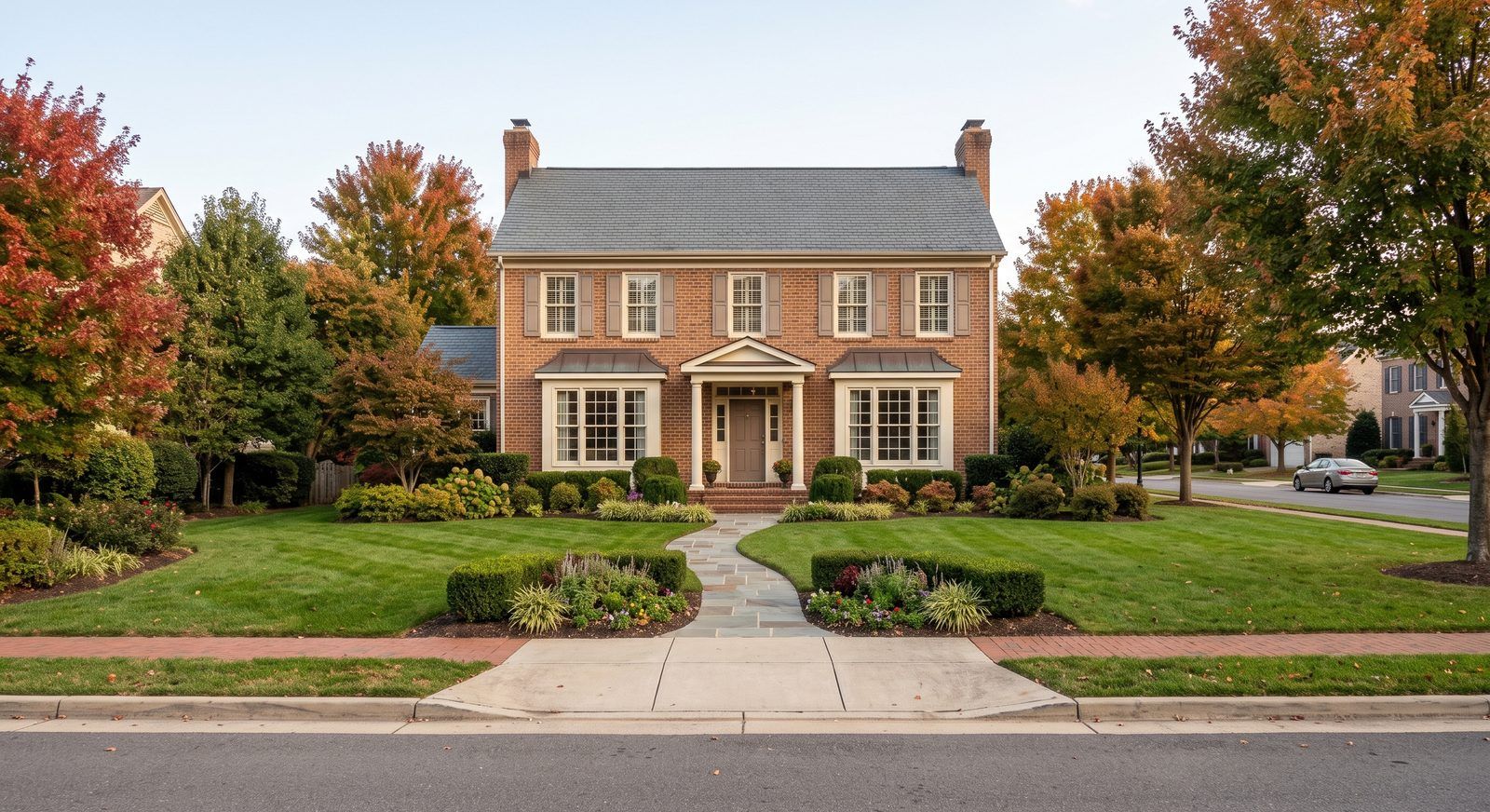
With 20 percent down at 6.76 percent, a $500,000 house runs about $3,082 a month in Loudoun County and $3,228 in Fairfax County.
Short answer: How much is a mortgage on a 500k house depends far more on your down payment and your county than on the headline rate. With 20 percent down at the 6.76 percent 30 year fixed average Freddie Mac reported for the week ending September 10, 2026, principal and interest on a $500,000 house is $2,597 a month. The full 500k house monthly payment, with property tax and insurance included, runs about $3,082 in Loudoun County and $3,228 in Fairfax County. Put 10 percent down instead and mortgage insurance pushes the same house to roughly $3,613 to $3,759.
The number you see advertised is principal and interest. The number that leaves your account every month is four or five components, and the three you did not shop for are the ones that vary by address. That is why two buyers with the same rate and the same price can have payments $700 apart in this region. Below is the whole payment, built from its parts, using published tax rates rather than a national average. If you want the version with your own numbers in it, the Ken Byrne Team at JB Financing mortgage desk will run it the same day.
The five parts of a 500k house monthly payment
Principal and interest is the loan repayment itself. Property tax is set by the jurisdiction and collected into escrow monthly. Homeowners insurance is escrowed the same way. Mortgage insurance applies on conventional loans below 20 percent down and on every FHA loan regardless of down payment. Homeowners association or condo fees are not part of the mortgage payment but are counted by underwriting exactly as if they were.
| Component | On a $500,000 house | What drives it |
|---|---|---|
| Principal and interest | $2,597 | 20 percent down, $400,000 loan at 6.76 percent, 30 year fixed |
| Property tax | $335 to $481 | Depends entirely on the jurisdiction. See the county table below |
| Homeowners insurance | About $150 | A planning figure. Your actual premium depends on the home and your claims history |
| Mortgage insurance | $0 at 20 percent down | About $206 a month at 10 percent down on a conventional loan |
| HOA or condo fee | $0 to $600 or more | Not part of the mortgage, but counted in your debt to income ratio |
Principal and interest calculated from the Freddie Mac Primary Mortgage Market Survey 30 year fixed average of 6.76 percent for the week ending September 10, 2026. Mortgage insurance shown at an illustrative 0.55 percent annual rate; actual pricing depends on credit score and loan to value.
How much is a mortgage on a 500k house, county by county
Hold the price, the rate and the down payment steady and change only the address. This is the table almost no national calculator will give you, and in the DMV it is the one that matters.
| Jurisdiction | Principal and interest | Property tax | Insurance | Total monthly |
|---|---|---|---|---|
| Loudoun County | $2,597 | $335 | $150 | $3,082 |
| Prince William County | $2,597 | $360 | $150 | $3,107 |
| Arlington County | $2,597 | $439 | $150 | $3,186 |
| City of Alexandria | $2,597 | $473 | $150 | $3,220 |
| Fairfax County | $2,597 | $481 | $150 | $3,228 |
| Montgomery County, MD | $2,597 | $480 | $150 | $3,227 |
| Prince George’s County, MD | $2,597 | $558 | $150 | $3,305 |
| Washington, DC | $2,597 | $354 | $150 | $3,101 |
All rows: $500,000 purchase, 20 percent down, 30 year fixed at 6.76 percent, insurance assumed at $150 a month. Virginia rates are the 2026 adopted rates, Fairfax County shown at roughly $1.1535 including stormwater and pest levies. Maryland and DC rows use the county or district rate and exclude special district levies. Confirm the exact rate for the specific parcel.
The spread from Loudoun County to Prince George’s County is about $200 a month on an identical house, which is $72,000 of interest and tax over thirty years. That is a larger number than most buyers will ever save by negotiating their rate.

“Send me the address you are looking at and the down payment you have. I will send back the exact payment for that parcel, with the real tax rate rather than an estimate.”
Arslan Jamil, Broker Associate
Loans originated by Ken Byrne, NMLS ID# 187129 · ALCOVA Mortgage LLC, NMLS ID# 40508. Equal Housing Lender.
The 500k house monthly payment by down payment
Down payment changes two things at once: the loan amount, and whether mortgage insurance applies. Below 20 percent both move against you, which is why the jump from 10 percent to 20 percent is worth more than the loan amount alone suggests.
| Down payment | Cash down | Loan amount | Principal and interest | Mortgage insurance | Total monthly |
|---|---|---|---|---|---|
| 3 percent | $15,000 | $485,000 | $3,149 | $222 | $4,002 |
| 5 percent | $25,000 | $475,000 | $3,084 | $218 | $3,932 |
| 10 percent | $50,000 | $450,000 | $2,922 | $206 | $3,759 |
| 20 percent | $100,000 | $400,000 | $2,597 | None | $3,228 |
Fairfax County tax rate used for every row so the only variable is the down payment. Mortgage insurance shown at an illustrative 0.55 percent annually; real pricing moves with credit score and loan to value, and at 3 percent down it is typically higher than at 10 percent.
Going from 3 percent down to 20 percent down saves about $645 a month here. It also costs $85,000 in cash at closing. Dividing one by the other gives roughly eleven years to break even on the monthly saving alone, which is why the right answer depends on how long you will hold the house and what else the cash could do. It is a genuinely open question, not a rule.

At $500,000 in 2026 the DMV inventory is mostly attached homes inside the Beltway and detached homes further out in Prince William and Frederick.
By loan type: conventional, FHA and VA on the same house
The product changes the payment as much as the down payment does, because each one treats mortgage insurance differently. On most FHA loans written today the annual premium runs for the life of the loan. Conventional mortgage insurance comes off once you reach 20 percent equity. VA charges no monthly mortgage insurance at all, but does charge a one time funding fee unless you are exempt.
| Program | Principal and interest | Monthly mortgage insurance | The part that matters later |
|---|---|---|---|
| Conventional, 20 percent down | $2,597 | None | Cleanest monthly outcome if you have the cash |
| Conventional, 5 percent down | $3,084 | About $218 | Premium falls off at 20 percent equity, by request at 20 or automatically at 22 |
| FHA, 3.5 percent down | $3,133 | About $217 | Annual premium runs for the life of the loan at this down payment, plus a 1.75 percent upfront premium financed into the balance |
| VA, nothing down | $3,246 | None | No monthly mortgage insurance. A one time funding fee applies unless exempt |
Illustrative monthly mortgage insurance figures. FHA and conventional premium pricing depend on term, loan to value and, for conventional, credit score. The VA row shows the loan amount before any financed funding fee. Every figure is an illustration, not a quote.
The VA row is the one most people in this region underuse. If you have full entitlement there is no VA loan limit and no monthly mortgage insurance, which on a $500,000 purchase is worth more than any rate concession you are likely to negotiate. Our guide to VA loan requirements covers the funding fee table and the exemptions.
What salary do you need for a 500k house?
Working the payment backwards gives the income. At a 43 percent debt to income ratio with 20 percent down and no car payment, a $500,000 house needs roughly $86,000 to $90,000 a year depending on the county. Held to a more conservative 36 percent, the salary for a 500k house is about $103,000 to $108,000.
| County | At 43% DTI | At 36% DTI | At 43% with a $600 car payment |
|---|---|---|---|
| Loudoun County | $86,022 | $102,749 | $102,767 |
| Prince William County | $86,720 | $103,582 | $103,464 |
| Arlington County | $88,906 | $106,193 | $105,650 |
| City of Alexandria | $89,860 | $107,332 | $106,604 |
| Fairfax County | $90,075 | $107,589 | $106,819 |
Assumes 20 percent down and no other monthly debt except where the last column says otherwise. A $600 car payment raises the required income by roughly $17,000 a year.
If the number in the second column is above your household income, the honest read is that a $500,000 purchase is a stretch rather than an impossibility, and the levers are the ones in our affordability guide by salary band: clear a monthly payment, add a co-borrower, or move one county out.
How the rate changes the payment
On a $400,000 loan every half point of rate is worth roughly $130 a month. That is real money and it is also smaller than the county tax spread in this region, which is the point most rate focused buyers miss.
| Rate | Principal and interest | Difference from 6.76 percent |
|---|---|---|
| 5.76 percent | $2,337 | $-260 |
| 6.26 percent | $2,465 | $-132 |
| 6.76 percent | $2,597 | $0 |
| 7.26 percent | $2,731 | $134 |
| 7.76 percent | $2,868 | $271 |
A $400,000 loan, which is a $500,000 purchase with 20 percent down, on a 30 year fixed. The 6.76 percent row is the Freddie Mac survey average for the week ending September 10, 2026.
The thirty year cost nobody quotes you
Held to term, a $400,000 loan at 6.76 percent costs about $535,000 in interest, which is more than the house. On a 15 year fixed at the 6.09 percent Freddie Mac reported the same week, the payment rises to about $3,395 and the interest falls to roughly $211,000. That is $324,000 of difference for $798 more a month. Whether that trade is right for you is covered in our 15 vs 30 year mortgage comparison, and the short version is that it depends on what the extra $798 would otherwise be doing.
Want this table for the actual house?
Arslan Jamil, Broker Associate
Send the address, the price and the down payment. You will get the real property tax rate for that parcel, an insurance estimate for that structure, and the payment three ways.
Loans originated by Ken Byrne, NMLS ID# 187129 · ALCOVA Mortgage LLC, NMLS ID# 40508. Equal Housing Lender.
Questions buyers ask about a 500k mortgage
How much is a mortgage on a 500k house per month?
With 20 percent down at 6.76 percent, principal and interest is $2,597. The full payment including property tax and insurance runs from about $3,082 in Loudoun County to $3,228 in Fairfax County and roughly $3,305 in Prince George’s County, Maryland. With 10 percent down, add mortgage insurance and a larger loan and the range moves to roughly $3,613 to $3,759.
What is the 500k house monthly payment with 5 percent down?
About $3,835 a month in Fairfax County: $3,084 in principal and interest on a $475,000 loan, $481 in property tax, $150 in insurance and roughly $218 in mortgage insurance. The mortgage insurance is not permanent on a conventional loan. You can request removal at 20 percent equity and it terminates automatically at 22 percent based on the original amortization schedule.
How much do I need to earn to buy a 500k house?
Roughly $86,000 to $90,000 at a 43 percent debt to income ratio with 20 percent down and no other debt, or $103,000 to $108,000 if you keep your total obligations at 36 percent. Those numbers assume you have the $100,000 down payment. With 5 percent down the required income rises because the payment does, even though the cash barrier falls.
How much cash do I need at closing on a 500k house?
The down payment plus closing costs. In Virginia the buyer side of settlement on a $500,000 purchase typically runs in the low to mid five figures once lender fees, title, recording, the state recordation tax and prepaid escrows are counted, and the tax component alone differs by state. Our closing costs guide for Virginia, DC and Maryland has the jurisdiction by jurisdiction figures.
Is a 500k mortgage a jumbo loan?
No, and it is not close. The 2026 one unit conforming loan limit for the Washington metropolitan area is $1,249,125, the national high cost ceiling. A $500,000 purchase is well inside conforming territory anywhere in this region, which means standard conventional pricing and standard guidelines apply.
Does the payment change if I buy a condo at $500,000?
The mortgage payment does not, but your qualifying does. The condo fee is counted in your debt to income ratio dollar for dollar, so a $500 monthly fee has the same effect on approval as a $500 car payment. Condos also carry their own project review and, on some loans, slightly different pricing, so tell your loan officer it is a condo at the first conversation rather than the third.
Can I buy a 500k house with no money down?
With a VA loan and full entitlement, yes, and with no monthly mortgage insurance. USDA is the other zero down route but the property has to sit in an eligible rural area, which rules out most of inner Northern Virginia. Outside those two programs, conventional starts at 3 percent down for eligible first time buyers and FHA at 3.5 percent.
“Tell me the county and the price and I will tell you the real monthly number, including the tax rate for that specific parcel rather than a regional average.”
Arslan Jamil, Broker Associate
Loans originated by Ken Byrne, NMLS ID# 187129 · ALCOVA Mortgage LLC, NMLS ID# 40508. Equal Housing Lender.
This article is general information, not financial or legal advice and not a commitment to lend or an offer of credit. Loan limits, program rules, premium schedules and rates change, and individual eligibility depends on a full review of your credit, income, assets and the property. Every figure here is an illustration, not a quote. Payment figures are illustrations built from published tax rates and a weekly survey average, not quotes or underwriting decisions. Insurance and mortgage insurance amounts are planning estimates. Confirm anything you plan to act on with a licensed mortgage professional.
Categories
Recent Posts







GET MORE INFORMATION

Broker Associate