
Jumbo Loan Requirements in Northern Virginia 2026
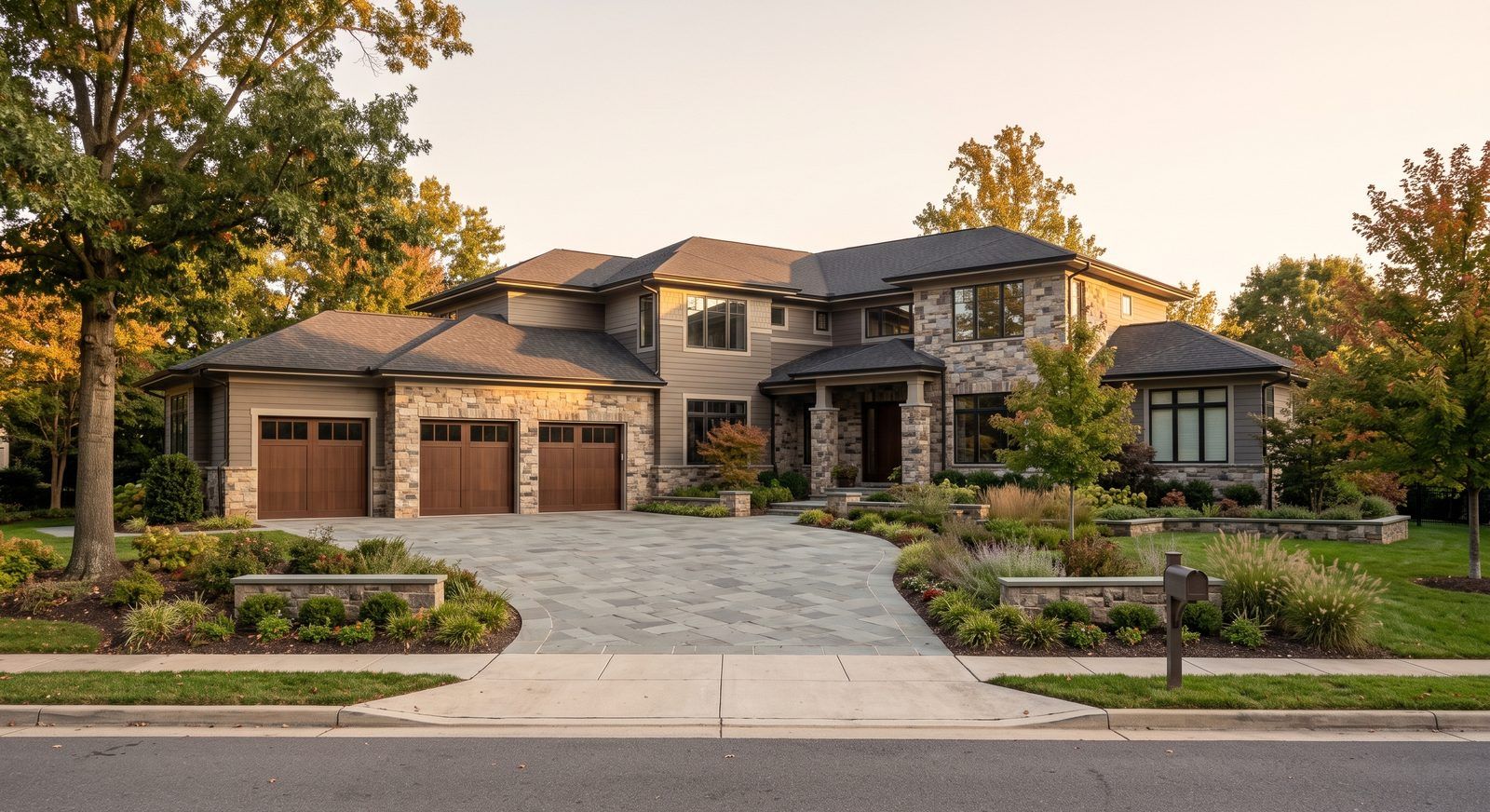
Jumbo lending in Northern Virginia begins above $1,249,125 on a one unit home, not at the $832,750 national baseline.
Short answer: Jumbo loan requirements in Northern Virginia start with knowing where jumbo actually begins, and it is not where most national sites say. The 2026 conforming loan limit for the entire Washington metropolitan area is $1,249,125 on a one unit home, the national high cost ceiling, not the $832,750 national baseline. Below that figure you are conforming. Above it you are jumbo, and jumbo is not an agency loan, so there is no published rulebook. Expect roughly 10 to 20 percent down, a credit score in the 700s, several months of reserves after closing and full documentation, all set by the investor buying the loan rather than by Fannie Mae or Freddie Mac.
Almost every jumbo article makes the same two errors. It quotes the national baseline limit, which is wrong for this region by more than $400,000, and it states jumbo requirements as if they were rules. They are not rules. Conforming loans follow a published guide anyone can read. Jumbo loans are held on a balance sheet or sold to a private investor, and each of those buyers writes its own overlay. That is the single most useful thing to understand before you shop, and it is why the Ken Byrne Team at JB Financing treats a jumbo file as a search for the right investor rather than a search for the right rate.
Where jumbo actually starts: the 2026 conforming loan limit
The Federal Housing Finance Agency sets a national baseline conforming loan limit and a higher ceiling for high cost areas. For 2026 the baseline rose 3.26 percent to $832,750 on a one unit property and the high cost ceiling is $1,249,125. The Washington, Arlington and Alexandria metropolitan statistical area sits at the ceiling, and that covers every jurisdiction a Northern Virginia buyer is likely to be shopping in.
| Property type | 2026 national baseline | 2026 ceiling, which applies here |
|---|---|---|
| One unit | $832,750 | $1,249,125 |
| Two unit | $1,066,250 | $1,599,375 |
| Three unit | $1,288,800 | $1,933,200 |
| Four unit | $1,601,750 | $2,402,625 |
Source: FHFA 2026 conforming loan limit values. The Washington, Arlington and Alexandria metro area includes Arlington, Fairfax, Loudoun, Prince William and Stafford counties, the cities of Alexandria and Fairfax, Washington DC, Montgomery, Frederick and Prince George’s counties in Maryland and Jefferson County, West Virginia. All sit at the ceiling column.
Work through what that means on a purchase. With 20 percent down, a $1,561,000 house produces a $1,249,000 loan, which is still conforming. A buyer in this region can purchase well over one and a half million dollars without ever touching a jumbo product, provided the down payment is there. If someone has told you a $1.1 million purchase requires jumbo financing, they are applying the national baseline to a high cost metro.
Jumbo loan requirements at a glance, and why there is no rulebook
Conforming loans are underwritten to a guide Fannie Mae publishes and updates in the open. Jumbo loans are not sold to Fannie Mae or Freddie Mac, so no such document exists. What you get instead is each investor’s own credit box, and the variation between them is genuinely wide. The table below describes what is typical in this market, and every line of it is a starting point for a conversation rather than a threshold you either clear or fail.
| Requirement | What is typical | What actually varies |
|---|---|---|
| Down payment | Commonly 10 to 20 percent | Some investors go to 5 percent at lower loan amounts, others require 25 percent above a certain size |
| Credit score | Commonly 700 to 740 minimum | A 680 file is placeable with the right investor and strong compensating factors |
| Reserves | Commonly 6 to 12 months of full payment after closing | This is where most jumbo files actually fail, not on score |
| Debt to income | Commonly capped near 43 percent | No longer a legal line, see the section below. Investor preference, not regulation |
| Documentation | Full income and asset documentation | Two years of returns is standard. Self employed files draw the most scrutiny |
| Appraisal | One, sometimes two above a threshold | Second appraisals are more common above roughly $1.5 million |
| Property type | Primary, second home, some investment | Condo and unique property rules tighten faster on jumbo than on conforming |
These are market observations, not published standards. Jumbo loans are not agency loans and no agency publishes requirements for them. Any specific figure quoted to you comes from one investor’s overlay and another investor may price or decide the same file differently.

“Jumbo is a shopping problem, not a qualifying problem. Send me the price, the down payment and how your income is documented, and I will tell you which investors your file actually fits.”
Arslan Jamil, Broker Associate
Loans originated by Ken Byrne, NMLS ID# 187129 · ALCOVA Mortgage LLC, NMLS ID# 40508. Equal Housing Lender.
Jumbo loan down payment: what investors actually want
The jumbo loan down payment is the requirement that has moved the most in the last few years, and it is no longer true that jumbo means twenty percent. Ten percent down jumbo programs are widely available at loan amounts up to roughly $2 million, and some investors will write five percent down at the lower end of the jumbo range for borrowers with strong scores and deep reserves. What rises with the loan amount is not usually the down payment percentage but the reserve requirement behind it.
The trade to understand is that a smaller down payment on a jumbo loan usually costs you in rate rather than in mortgage insurance. Most jumbo programs do not use monthly mortgage insurance at all. The investor prices the additional risk into the note rate instead, which means a 10 percent down jumbo and a 20 percent down jumbo are often the same product at different prices rather than different products.
Jumbo loan credit score and reserves
On credit score, 700 is the number you will hear most often and 740 is where pricing genuinely improves. Below 700 the file becomes an investor search rather than a rate shop, and it is placeable more often than borrowers expect, particularly when the reserve position is strong.
Reserves are the requirement that surprises people and the one that sinks the most files in this region. A jumbo investor commonly wants six to twelve months of the full monthly payment sitting in verified assets after the down payment and closing costs are paid. On a $1.5 million purchase with 20 percent down, the payment is comfortably north of $9,000 a month once tax and insurance are counted, so twelve months of reserves is more than $100,000 that has to still be there on closing day. Buyers who empty their accounts into the down payment to strengthen the offer are the ones who get a condition they cannot clear.
Retirement accounts usually count toward reserves, typically at a discounted percentage of the vested balance, which is why the reserve requirement is less brutal than it first sounds for borrowers with a long 401(k) history.

Self employed and equity compensated borrowers are the most common jumbo files in this region, and the ones where the documentation path matters more than the rate.
The debt to income question, and what replaced the 43 percent rule
You will be told that jumbo caps debt to income at 43 percent. That figure has a history worth knowing, because it explains why the number is softer than it sounds. It came from the General Qualified Mortgage definition under the ability to repay rule, and the Consumer Financial Protection Bureau removed it. The General QM definition no longer contains a 43 percent debt to income limit at all. It was replaced with a price based test: a first lien loan qualifies when its annual percentage rate stays under the average prime offer rate for a comparable transaction plus 2.25 percentage points, with a safe harbor under 1.5 points.
So when a jumbo investor caps you at 43 percent today, that is the investor’s preference and not the law. Some go higher with compensating factors. The practical implication is that a borderline ratio is a reason to place the file carefully, not a reason to assume you are declined, and that how your debt to income ratio affects approval works differently above the conforming limit than below it.
How to avoid a jumbo loan: the piggyback loan and high balance conforming
Often the best jumbo advice is not to take one. Two structures do this, and in a metro area with a $1,249,125 conforming ceiling both have more room to work than they do almost anywhere else in the country.
The piggyback loan
A piggyback loan splits the financing into a first mortgage at or below the conforming limit and a second lien, usually a home equity line of credit, covering the gap. The classic structure is 80/10/10: an 80 percent first, a 10 percent second and 10 percent down. In this region the version that matters is different. You size the first mortgage to land at $1,249,125, take a second behind it, and the whole purchase is financed at conforming pricing on the large piece rather than jumbo pricing on all of it.
That works cleanly up to roughly $1.6 million with a modest second. Above that the second lien gets large enough that its rate, which is usually variable, starts to undo the saving. A piggyback also means two payments, two sets of closing costs and a second lien that will need attention if you ever refinance the first.
High balance conforming
A high balance conforming loan is a conforming loan above the national baseline but at or below the local ceiling. In most of the country that is a distinct product with its own price adjustment. Here it is simply the normal loan, because the whole metro sits at the ceiling. It still carries a loan level price adjustment relative to a baseline sized loan, so a $1.2 million conforming loan does not price identically to a $700,000 one, but it prices far better than jumbo and follows a published guide you can actually read.
Not sure whether you need jumbo at all?
Arslan Jamil, Broker Associate
Send the purchase price and the down payment. Half the buyers who ask us about jumbo requirements in this region turn out to be conforming, or one structure away from it.
Loans originated by Ken Byrne, NMLS ID# 187129 · ALCOVA Mortgage LLC, NMLS ID# 40508. Equal Housing Lender.
When the income is not a W-2: bank statement, asset depletion and non-QM
The jumbo borrowers in this region are disproportionately business owners, consultants, federal contractors paid through their own entity, and people whose compensation is mostly equity. For all of them the obstacle is documentation rather than capacity. Three routes exist, and they are not interchangeable.
The bank statement loan
A bank statement loan qualifies a self employed borrower from twelve or twenty four months of deposits rather than from tax returns. It exists because the tax code rewards showing less income and underwriting punishes it, so a profitable business can produce a net figure that will not support the mortgage. Expect a larger down payment, a higher rate than a full documentation loan, and a real analysis of what share of deposits counts as income. This is a non agency product, so the terms are the investor’s.
Asset depletion, and the rule almost everyone states wrong
Asset depletion converts a large balance into qualifying income. There is a real published version of this: Fannie Mae’s employment related assets policy. Eligible assets include 401(k), IRA, SEP and Keogh accounts, non self employed severance and non self employed lump sum retirement distributions. Stock options, non vested restricted stock, inheritances, lawsuit and divorce proceeds and virtual currency are not eligible. A 10 percent early withdrawal penalty is deducted from retirement balances, and the down payment, closing costs and required reserves come out before anything is counted.
Here is the part competitor pages get wrong. The remaining figure is divided by the amortization term of the loan in months, which is 360 on a 30 year loan. It is not divided by 60. That distinction changes the answer by a factor of six. The Fannie Mae version also caps loan to value at 70 percent, or 80 percent if the borrower is 62 or older at closing, and is limited to purchases and limited cash out refinances on a primary residence or second home. Non agency asset depletion programs use shorter divisors and different caps, which is exactly why the two get confused.
Non-QM
A non-QM loan is any loan that does not meet the Qualified Mortgage definition. That is a legal category, not a quality judgment, and it is where bank statement and most asset based programs live. The lender still has to document your ability to repay. What changes is that the loan does not get the QM safe harbor, which is why pricing is higher. For a self employed buyer in this region the relevant comparison is usually a non-QM approval against no approval, not against a conforming rate.
If your income comes through a contract or your own entity, our guide to the 1099 income mortgage for DMV contractors covers the documentation side in more detail.
What actually breaks jumbo files in Northern Virginia
In order of how often we see it: reserves that were spent on the down payment to win the offer. Variable compensation that has not been received for two years, which includes bonus, commission and restricted stock that vested recently. A second appraisal that comes in below the first on a property with few true comparables, which is common on custom homes in Great Falls, McLean and western Loudoun. A condo project that fails investor review even though the borrower is perfect. And a debt to income ratio that is fine at one investor and over the line at the next, discovered late because the file was never shopped.
Every one of those is a sequencing problem rather than a credit problem. Jumbo files want to be placed before they are written, which is the opposite of how most buyers approach a conforming purchase.
Questions Northern Virginia jumbo buyers ask
What are the jumbo loan requirements in 2026?
There is no single answer, because jumbo loans are not agency loans and no agency publishes requirements for them. Typically: 10 to 20 percent down, a credit score of 700 or better, six to twelve months of reserves after closing, full documentation of income and assets, and a debt to income ratio near 43 percent. Each of those comes from an individual investor’s overlay, and the spread between investors is wide enough that a file declined by one is routinely approved by another.
What is the jumbo loan limit in Northern Virginia for 2026?
Jumbo begins above $1,249,125 on a one unit home. That is the 2026 high cost ceiling, and the entire Washington, Arlington and Alexandria metro area sits at it. The $832,750 national baseline does not apply here. On two unit properties the local limit is $1,599,375, on three units $1,933,200 and on four units $2,402,625.
What jumbo loan down payment do I need?
Commonly 10 to 20 percent, with 10 percent down programs widely available up to roughly $2 million and a small number of investors writing 5 percent down at the lower end of the jumbo range. Most jumbo programs carry no monthly mortgage insurance, so a smaller down payment shows up in the rate rather than as a separate premium line.
What jumbo loan credit score do I need?
Most investors start at 700 and price meaningfully better at 740. Files in the 680s are placeable when reserves and down payment are strong. Below that the realistic path is usually a non-QM program rather than a standard jumbo, at a higher rate.
Is a piggyback loan better than a jumbo loan?
Sometimes, and it depends on the size of the second lien. A piggyback loan that keeps the first mortgage at $1,249,125 and covers a modest gap with a second lien usually beats a jumbo on blended cost, because the large piece prices as conforming. Once the second lien gets big, its rate, which is usually variable, erodes the advantage. Ask for both structures priced side by side on your actual numbers rather than accepting either as a rule.
Can I get a jumbo loan if I am self employed?
Yes, and it is one of the most common jumbo profiles in this region. The question is which documentation path fits. Full documentation works when your tax returns show enough net income. A bank statement loan qualifies you from deposits when they do not. Asset depletion converts a large retirement or investment balance into qualifying income. Each carries different pricing and different loan to value caps, so the right move is to have all three priced before you write an offer.
What is a non-QM loan and is it risky?
A non-QM loan is one that does not meet the Qualified Mortgage definition, usually because of how the income is documented. The lender is still legally required to verify your ability to repay, so it is not the pre-2008 category the name suggests. What you give up is the safe harbor the lender gets on a QM loan, and that shows up in the rate. The real risk to watch is not the label but the structure: read the prepayment penalty terms and the rate adjustment terms before you sign.
How much do I need in reserves for a jumbo loan?
Commonly six to twelve months of the full monthly payment, verified after the down payment and closing costs are paid. On a $1.5 million purchase that can exceed $100,000. Retirement accounts usually count at a discounted percentage of the vested balance, which is why borrowers with a long 401(k) history clear this more easily than their checking account suggests.
“Send me the price, the down payment and how your income is documented. I will tell you whether you need jumbo at all, and if you do, which investors your file actually fits before you write the offer.”
Arslan Jamil, Broker Associate
Loans originated by Ken Byrne, NMLS ID# 187129 · ALCOVA Mortgage LLC, NMLS ID# 40508. Equal Housing Lender.
This article is general information, not financial or legal advice and not a commitment to lend or an offer of credit. Loan limits, program rules, premium schedules and rates change, and individual eligibility depends on a full review of your credit, income, assets and the property. Every figure here is an illustration, not a quote. Jumbo and non-QM terms described here are market observations from investor overlays, not published agency standards, and they change without notice. Confirm anything you plan to act on with a licensed mortgage professional.
Categories
Recent Posts










GET MORE INFORMATION

Broker Associate