
Mortgage Rates in Fairfax County: What Buyers Should Expect in 2026
Mortgage Rates in Fairfax County: What Buyers Should Expect in 2026
By Ken Byrne, NMLS #187129 · Updated 2026 · Fairfax County Buyer Guide · 14 min read

Quick Answer: Fairfax County buyers in 2026 should expect mortgage rates to remain in a moderate range driven by the 10-year Treasury, Fed posture, and lender margin. The rate you actually get depends on your credit score, down payment, loan type, and loan size — not the headline number you see on national websites. Your best move is a real pre-approval with a local lender, a written rate-lock strategy, and clear math on the cost of waiting versus buying now.
Key Takeaways
- National headlines lie about your rate. The rate you see on Bankrate isn't the rate you'll get. Fairfax County buyers face a different pricing environment than Phoenix or Tampa.
- The 2026 conforming loan limit in Fairfax County is $1,249,125. Loans at or below this number get conventional pricing — above it triggers jumbo pricing, which is a different rate sheet entirely.
- Your credit score swings your rate more than you think. Moving from a 720 to a 760 FICO can change your rate by a meaningful margin and save tens of thousands across the loan term.
- Loan type matters. VA, FHA, conventional, and jumbo loans price differently. The "best rate" depends on which program fits you.
- Buydowns can save real money. Permanent buydowns (discount points) and seller-paid 2-1 temporary buydowns are both viable Fairfax County tools in 2026.
- Waiting has a cost. Rate timing is unpredictable, but Fairfax County home prices and your competition both move in the meantime.
Table of Contents
- The Current Rate Environment in Fairfax County
- What Actually Drives Mortgage Rates
- How Loan Type Changes Your Rate
- How Your Profile Affects the Rate You Get
- How to Lock the Best Rate (7-Step Process)
- Buydowns: Permanent vs. Temporary
- The Cost of Waiting in Fairfax County
- Frequently Asked Questions
- Glossary
If you're shopping for a home in Fairfax County in 2026, the question on the tip of every buyer's tongue is the same: "Where are rates going?" The honest answer is that nobody — not Wall Street, not the Fed, not your favorite mortgage podcast — predicts mortgage rates with any reliability. What you can control is the rate you personally qualify for, the loan structure you choose, and the timing strategy you use to lock it in.
Fairfax County is a unique pricing environment. With a median home price hovering near $800,000, a high concentration of dual-income professional households, and significant federal-employee and military buyer demand from Fort Belvoir, the Pentagon, and Quantico, the loan profiles here look different from the national average. That changes how rates apply to you. This guide walks you through what's realistic to expect in 2026, what moves the needle on your individual rate, and how to put a strategy in place that doesn't depend on guessing the future.
The Current Rate Environment in Fairfax County
Mortgage rates in 2026 are operating in a moderate range — well below the early-2024 peak but still elevated compared to the historic lows of 2020–2021. For Fairfax County buyers, three factors define the local pricing environment:
1. The DC Metro High-Cost Loan Limit
Fairfax County sits inside the DC metropolitan statistical area, which means it qualifies for high-cost conforming loan limits. For 2026, the conforming loan limit for a single-family home in Fairfax County is $1,249,125. Loans at or below that figure receive standard conventional pricing through Fannie Mae and Freddie Mac. Above that, you're in jumbo loan territory — a separate rate sheet from a separate pool of investors. The FHA loan limit for the DC metro in 2026 is $1,249,125, which makes FHA financing realistic for many Fairfax County price points that wouldn't qualify in lower-cost markets.
2. A Buyer Profile That Lenders Love
Fairfax County buyers tend to have higher credit scores, longer employment tenure, lower documented debt, and stronger reserves than national averages. That's not opinion — it shows up in lender approval rates. The practical effect is that local borrowers often qualify for loan-level price adjustments (LLPAs) on the favorable side of the curve, which translates to better-than-headline rates if your profile is strong.
3. Strong Veteran and Federal Buyer Demand
VA loans are heavily used in Fairfax County thanks to the proximity of Fort Belvoir, Quantico, and the Pentagon. VA financing in 2026 typically prices a quarter to half a point below conventional, has no PMI, and allows up to 100% financing. If you're eligible, your rate environment is materially different from what a civilian conventional buyer is seeing.
Free · No Commitment
See What Rate You Actually Qualify For
Headlines don't price your loan — your file does. Get pre-approved with a Fairfax County lender and see your real rate range, real monthly payment, and real maximum purchase price.
Ken Byrne NMLS #187129 · ALCOVA Mortgage LLC NMLS #40508
What Actually Drives Mortgage Rates
Most buyers think the Federal Reserve sets mortgage rates. It doesn't — at least not directly. Mortgage rates follow the bond market, specifically the 10-year Treasury yield and mortgage-backed securities (MBS) pricing. Here's the relative weight of what actually moves your rate:
When inflation prints hotter than expected, bond yields rise — and mortgage rates rise with them. When the labor market cools, yields tend to drop. The Fed's role is signaling: when investors think future Fed rate cuts are coming, the 10-year often falls in advance, pulling mortgage rates with it. Watching the Fed isn't useless, but watching the 10-year is more useful.
How Loan Type Changes Your Rate
In Fairfax County in 2026, the loan program you use doesn't just affect down payment — it affects your interest rate. Here's how the major programs typically compare for owner-occupied primary residences:
| Loan Type | Min. Down | Min. Credit | 2026 Loan Limit (Fairfax) | Typical Rate Position |
|---|---|---|---|---|
| VA | 0% | 580–620 | $1,249,125 | Lowest |
| FHA | 3.5% | 580 | $1,249,125 | Low (but MIP applies) |
| Conventional | 3–5% | 620 | $1,249,125 | Mid (LLPA-driven) |
| Jumbo | 10–20% | 700–740 | Above $1,249,125 | Variable (sometimes lower than conventional) |
| USDA | 0% | 640 | Limited Fairfax eligibility | Lowest (when eligible) |
A surprise to many Fairfax County buyers: jumbo loans often price better than conventional in 2026 because they're held in lender portfolios rather than sold to Fannie/Freddie, and they don't carry the same loan-level price adjustments. If your purchase price is even slightly above the $1,249,125 conforming limit, ask your lender to quote both the conforming loan with secondary financing and a single jumbo — the jumbo wins more often than buyers expect.
How Your Profile Affects the Rate You Get
Two buyers shopping the same loan on the same day at the same lender will get different rates. The reason is loan-level price adjustments — risk-based pricing factors that Fannie Mae and Freddie Mac apply to every conventional loan. Here's the relative impact of each factor:
Credit Score Tiers and Real Rate Impact
Fannie Mae's pricing matrix breaks credit scores into tiers, and the gap between tiers can be significant. Here's how scores typically map to pricing posture in 2026:
| Credit Tier | Score Range | Pricing Position | Notes for Fairfax Buyers |
|---|---|---|---|
| Premium | 780+ | Best available | Full pricing benefit |
| Strong | 740–779 | Very competitive | Slight LLPA hit vs. premium |
| Good | 700–739 | Solid | Worth pushing to 740 if close |
| Fair | 660–699 | Higher LLPAs apply | FHA may price better here |
| Limited | 620–659 | Significant pricing impact | FHA or VA usually wins |
If you're sitting at a 738 score, getting two more points of credit improvement before your rate lock can save you tens of thousands of dollars across the life of a Fairfax County mortgage. A good local lender will tell you exactly what gets you over the line — not just sell you what you walked in with.
Run the Numbers
What Will Your Monthly Payment Be?
Plug in different rates, down payments, and home prices to see exactly how rate movements change your monthly payment in Fairfax County.
How to Lock the Best Rate (7-Step Process)
A rate lock is a written agreement from your lender to honor a specific interest rate for a set period — typically 30, 45, or 60 days. Here's the process Fairfax County buyers should follow to lock smart, not lock scared.
Get Pre-Approved Early
Don't wait until you're under contract. Start your file 60–90 days before you plan to shop seriously so credit, income, and asset documentation are clean.
Optimize Your Credit
Your loan officer should rapid-rescore credit if you're within 20 points of a tier break. Two-point gains can move your pricing meaningfully.
Compare Loan Estimates from 2–3 Lenders
Run all three within the same 14-day window to protect your credit and get clean apples-to-apples comparisons on rate, lender fees, and discount points.
Decide on Lock Length Before You Go Under Contract
Most Fairfax County contracts close in 30–45 days. Match your lock period to your contract close date plus a 7–10 day cushion.
Lock When You Have a Ratified Contract
Locking before contract is risky — if rates rise, you're stuck; if rates fall, your lender may not float down. Lock once you have a property and signed contract.
Ask About Float-Down Options
Some lenders offer a one-time float-down if rates drop materially after lock. The cost varies — ask upfront, not after rates move.
Get the Lock Confirmation in Writing
A verbal lock is not a lock. Get a signed lock confirmation that lists the rate, lock term, expiration date, and any associated points or credits.
Buydowns: Permanent vs. Temporary
A buydown is a way to reduce your interest rate at the cost of cash upfront. In 2026, both permanent and temporary buydowns are widely used in Fairfax County — often funded by sellers or builders as part of negotiation.
Permanent Buydown (Discount Points)
You pay points at closing — typically 1% of the loan amount per point — to permanently lower your rate for the entire 30-year term. Whether this makes sense depends on how long you plan to stay in the home. Most Fairfax County buyers break even on permanent buydowns somewhere between 4 and 7 years. If you're confident you'll be in the home longer, buying down can save serious money. If you might move within five years, you're often better off using the cash for closing or reserves.
Temporary Buydown (2-1, 3-2-1)
A 2-1 buydown gives you a rate that's two percentage points lower in year one and one percentage point lower in year two, then settles into the note rate for years three through thirty. The cost is escrowed at closing — typically by the seller as a closing-cost concession in negotiated transactions. This is a powerful tool when sellers want to close, you need lower payments now, and you expect to refinance if rates fall later.
Negotiation tip: In a slowing Fairfax County market, ask the seller for a temporary buydown instead of a price reduction. The seller often prefers it (preserves comp value), and your monthly payment relief can exceed what an equivalent price cut would save you in years one and two.
Selling and Buying?
Save on Your Listing Commission in Fairfax County
If you're selling your current home to fund your next purchase, a 1.5% listing program can free up significant capital — money you can apply to a buydown or larger down payment on your next home.
The Cost of Waiting in Fairfax County
Buyers often hold off on a purchase because they're waiting for rates to drop. The math, however, isn't that simple. Two things move in the meantime: home prices and your competition. Here's how the trade-off typically plays out:
| Scenario | If Rates Drop | If Prices Rise | If Competition Returns |
|---|---|---|---|
| Buy now | Refinance later | You captured today's price | You bought before bidding wars |
| Wait 12 months | Lower rate, possibly higher price | More expensive home | Multiple-offer pressure returns |
The phrase Fairfax County loan officers repeat is: "Marry the house, date the rate." If a home meets your needs and your monthly payment fits your budget at today's rate, you can refinance later if rates drop. If you wait and rates drop, you may face higher prices and tighter inventory — and the same monthly payment you were trying to avoid in the first place.
Reality check: Nobody knows where rates are going. Buyers who waited in 2023 hoping for sub-5% rates spent two more years paying rent in Fairfax County. The right answer is the same one it always is: buy when the home, the payment, and your finances align — not when you've timed a market that can't be timed.
Free · No Commitment
Lock In Your Real Rate Range Today
A 10-minute pre-approval gives you the rate range you actually qualify for, the maximum purchase price, and the closing-cost picture — all in writing, all from a Fairfax County lender.
Ken Byrne NMLS #187129 · ALCOVA Mortgage LLC NMLS #40508
Frequently Asked Questions
What mortgage rate can I expect in Fairfax County in 2026?
Rates vary daily based on bond market activity. National headlines reflect a hypothetical "best case" buyer (760+ FICO, 25% down, conforming loan). Your actual rate depends on your credit score, down payment, loan type, loan size, and the day you lock. The only way to know your real rate range is a pre-approval review with a licensed lender.
What is the conforming loan limit in Fairfax County for 2026?
$1,249,125 for a single-family home. Fairfax County qualifies for the DC metro high-cost loan limit because of its location within the Washington-Arlington-Alexandria MSA. Loans up to that amount get conventional pricing; above it, you're in jumbo territory.
What credit score do I need for the best mortgage rate in Northern Virginia?
For the most favorable conventional pricing, aim for 780 or above. The 740–759 tier is still strong. Below 740, loan-level price adjustments add to your rate. FHA financing applies a flatter pricing curve, which can be more friendly to buyers in the 660–719 range.
Are mortgage rates going down in 2026?
No one knows. Rates follow the bond market, which reacts to inflation data, employment reports, Fed posture, and global events. Buyers who try to time the bottom usually end up paying more — either through higher prices or by missing the home they wanted. The smarter play is to buy when the math works at today's rate and refinance if rates drop materially later.
How much down payment do I need to buy in Fairfax County?
Conventional loans go as low as 3% down for first-time buyers. FHA requires 3.5%. VA and USDA allow 0%. Jumbo loans typically require 10–20%. On a $750,000 Fairfax County home, that ranges from $0 (VA) to $150,000 (jumbo at 20%). Your down payment also affects your rate — more down generally lowers your LLPA-driven pricing.
Should I buy down my mortgage rate in Fairfax County?
A permanent buydown (discount points) makes sense if you'll own the home long enough to recoup the upfront cost — typically 4–7 years. A temporary 2-1 buydown is best when a seller is willing to fund it. If you don't plan to stay long or you can't predict a future refinance, the cash is often better spent on a larger down payment, reserves, or closing costs.
When should I lock my mortgage rate?
Lock when you have a ratified contract on a specific property and a defined closing date. Locking earlier leaves you exposed if rates rise; locking later means your loan estimate could shift up to closing. Match your lock period (30, 45, or 60 days) to your contract close date plus a small cushion.
What's the difference between a conventional loan and a jumbo loan in Fairfax County?
A conventional loan in 2026 can finance up to $1,249,125 in Fairfax County and is sold to Fannie Mae or Freddie Mac. A jumbo loan exceeds that limit and is held in lender portfolios — meaning different underwriting standards (often stricter on credit and reserves) and different pricing. Jumbo rates are sometimes lower than conventional rates because they bypass Fannie/Freddie's loan-level price adjustments.
How do I get pre-approved for a mortgage in Fairfax County?
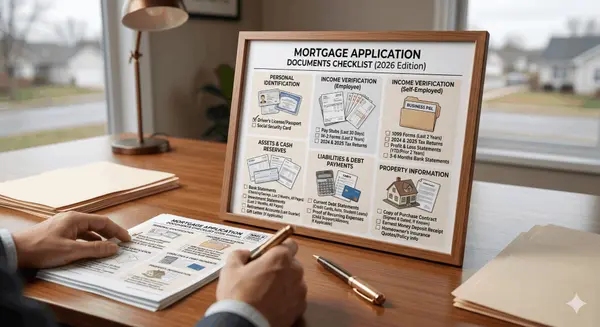
A pre-approval requires a credit pull, two years of income documentation (W-2s, pay stubs, tax returns), two months of asset statements, and identification. A licensed loan officer underwrites your file and issues a pre-approval letter that includes your maximum purchase price, interest rate range, and the loan program you qualify for. The process typically takes 24–72 hours once documents are submitted.
How do I find a good mortgage lender in Fairfax County?
Look for a licensed loan officer with an active NMLS number, local market familiarity, transparent loan estimates, and clear written communication. Ken Byrne, NMLS #187129, is a Branch Partner at ALCOVA Mortgage LLC (NMLS #40508), licensed in Virginia, Maryland, DC, and West Virginia, with deep experience in the Fairfax County market. Compare 2–3 lender loan estimates within a 14-day window for clean apples-to-apples pricing.
Is it a good time to buy a home in Fairfax County in 2026?
It depends entirely on your financial situation, not the market. If you have stable income, an emergency fund, three to six months of reserves after closing, and you plan to stay at least three to five years, today is generally a good time. Trying to time rate or price bottoms in Fairfax County is a losing game — the buyers who win here are the ones who buy when their personal numbers work.
Can I refinance later if rates drop after I buy?
Yes. There's no penalty for refinancing a standard mortgage. The general rule is that a refinance pays off when you can lower your rate by 0.75–1% or more and you'll stay in the home long enough to recoup closing costs (typically 24–36 months). Your loan officer can run a break-even analysis at any point during your loan.
Glossary
The Bottom Line for Fairfax County Buyers
Mortgage rates in 2026 will move — sometimes daily, sometimes by surprise. The buyers who win in Fairfax County aren't the ones who time the market; they're the ones who control what they can: their credit, their loan structure, their lender, and their lock strategy. Run the numbers at today's rate. If they work, buy. If they don't, fix the input that's broken — credit, down payment, or price range — instead of waiting for the rate environment to bail you out.
A real pre-approval — not a five-minute online soft pull, but a documented review with a licensed loan officer — is the only way to know what's actually possible for you. Ken Byrne and the team at ALCOVA Mortgage LLC have been helping Fairfax County buyers structure smart loans for years, and the conversation is free.
Disclaimer: This article is for informational purposes only and does not constitute financial or legal advice. Mortgage programs, rates, and eligibility requirements are subject to change. Contact a licensed mortgage professional for guidance specific to your situation. Ken Byrne, NMLS #187129 · ALCOVA Mortgage LLC, NMLS #40508 · Licensed in VA, MD, DC, WV.
Categories
Recent Posts






GET MORE INFORMATION

Broker Associate