
Tapping Into Home Equity in Fairfax: HELOC, Cash-Out Refi & Sale Options
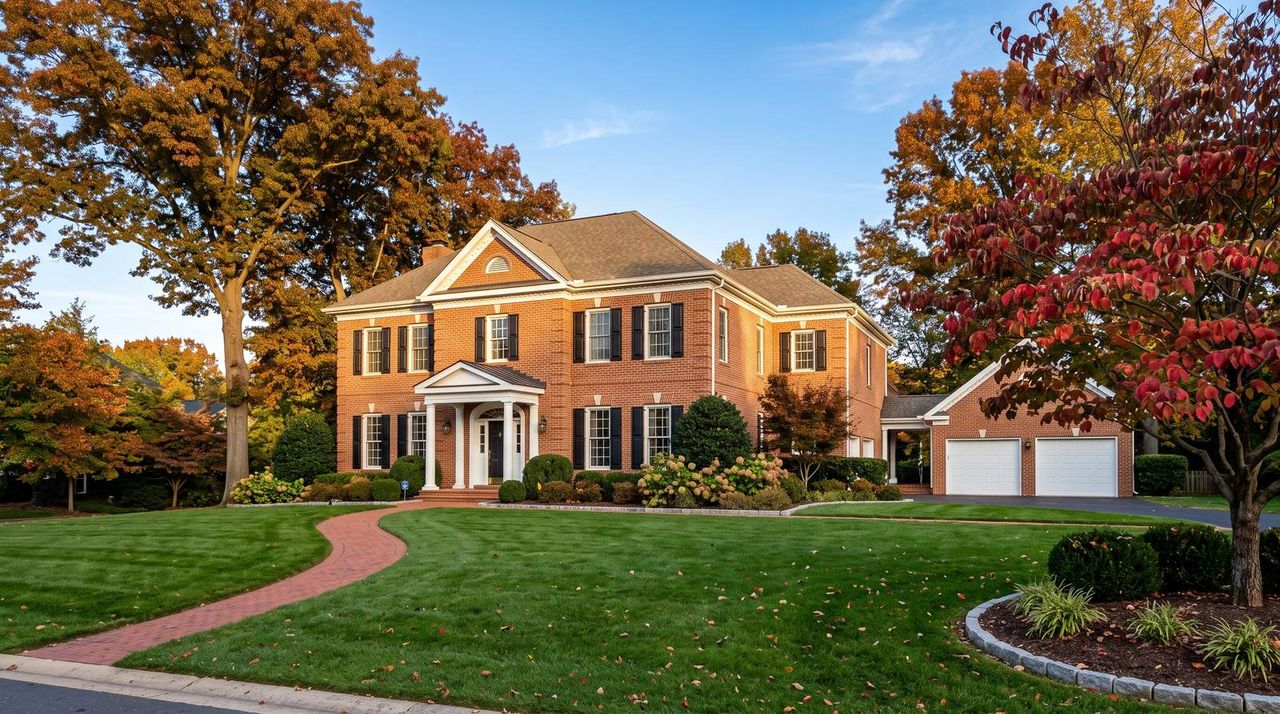
The typical Fairfax County home is worth $760,599, up 0.9 percent over the year.
Short answer: a HELOC in Virginia is the right tool for most Fairfax County homeowners in 2026, and a cash-out refinance is the expensive one. The typical Fairfax County home is worth $760,599, and at the 80 percent ceiling lenders use, a homeowner with $400,000 still owed can reach about $208,479 of it. How you reach it matters more than most people expect. Pulling $100,000 through a cash-out refinance costs about $923 a month more than keeping a 3.25 percent first mortgage and adding a line of credit behind it, and $907 of that is pure penalty for repricing money you had already borrowed. If your first mortgage is from 2020 or 2021, protect it.
By Ken Byrne, NMLS #187129 · ALCOVA Mortgage LLC, NMLS #40508 · Updated September 2026
Fairfax County households are sitting on more equity than at any point in the last decade and reaching it badly is the most expensive avoidable mistake in this market. Below is what the typical homeowner can actually borrow, what each of the four routes costs per month on the same house, and the one number that decides it. If you want the three structures priced against each other on your own balance, the Ken Byrne at JB Financing desk will do it the same day.
What a Fairfax homeowner is actually sitting on
Fairfax County home values have effectively stopped climbing, which changes the calculation for anyone thinking about borrowing against them. The typical home is worth $760,599, up 0.9 percent over the year. The median sale was $773,752. Homes still go to pending in around 12 days, so the market is not soft, it has simply stopped adding equity at the pace it did between 2020 and 2023.
Source: Zillow, Fairfax County VA. Home value index as of August 31, 2026; median sale price as of July 31, 2026.
Borrowing power is not the value of the house. It is the value multiplied by the combined loan-to-value ceiling the lender will allow, minus what you still owe. For a cash-out refinance on a one-unit primary residence, Fannie Mae’s Eligibility Matrix caps LTV, CLTV and HCLTV at 80 percent. Most HELOC and second mortgage lenders work to a similar ceiling, and some will go further at a higher rate.
| On the typical Fairfax home | |
|---|---|
| Home value | $760,599 |
| 80 percent ceiling | $608,479 |
| Less a first mortgage of | $400,000 |
| Equity you can actually reach | $208,479 |
Ceiling: Fannie Mae Eligibility Matrix, cash-out refinance, one-unit principal residence, fixed rate, maximum LTV, CLTV and HCLTV 80 percent. The first mortgage figure is illustrative; substitute your own balance.
Some lenders will go past 80 percent. The price of doing so is mortgage insurance on a cash-out, or a materially higher rate on a second, and it is rarely worth it for the last slice of equity. The rules on getting mortgage insurance back off a loan are in our guide to when you can remove PMI.
What the same $400,000 balance reaches across Northern Virginia
Borrowing capacity is the house, not the borrower. Here is the identical homeowner, $400,000 still owed, in five submarkets across the region.
| Submarket | Typical home value | 80 percent of value | Reachable with $400,000 owed |
|---|---|---|---|
| Fairfax County | $760,599 | $608,479 | $208,479 |
| Alexandria city | $672,586 | $538,069 | $138,069 |
| Springfield 22150 | $671,021 | $536,817 | $136,817 |
| Lorton | $664,082 | $531,266 | $131,266 |
| Woodbridge | $504,489 | $403,591 | $3,591 |
Values are the Zillow Home Value Index: Fairfax County as of August 31, 2026; Springfield, Alexandria and Woodbridge as of July 31, 2026; Lorton as of June 30, 2026. The 80 percent figure is the combined loan-to-value ceiling Fannie Mae applies to a cash-out refinance on a one-unit primary residence. Second-lien products may allow more or less; ask before you plan around it.
The bottom row is the one to sit with. The same balance, the same borrower, the same credit file, and in Woodbridge there is effectively nothing to reach. Equity questions in this region are geography questions first. Current values by neighborhood are on our Fairfax page.
The 80 percent figure is not a law. It is the standard ceiling on a cash-out refinance. Some second-lien lenders go to 85 or 90 percent of combined value at a higher rate, and a few go further on strong credit files. That extra room is real, and it is also the point at which a modest fall in value puts you underwater on the second lien. Reach for it deliberately, not by default.
The one number that decides this in 2026
Not how much equity you have. The rate on the mortgage you already hold.
A cash-out refinance does not lend you $100,000. It replaces your entire loan with a bigger one at today’s rate. If you are holding a 3.25 percent note from 2021, that means the $400,000 you had already borrowed gets repriced to 6.95 percent along with the $100,000 you actually wanted.
| What happens to the money you already owed | Monthly principal and interest |
|---|---|
| $400,000 left alone at 3.25 percent | $1,741 |
| $400,000 repriced to 6.95 percent | $2,648 |
| Cost of repricing, per month | $907 |
| Cost of repricing, over ten years | $108,836 |
30 year fixed at 6.95 percent, the Freddie Mac Primary Mortgage Market Survey average for the week ending September 17, 2026, against a 3.25 percent note. Principal and interest only.
That is the whole decision in one table. You are not comparing a HELOC rate against a mortgage rate. You are deciding whether reaching $100,000 is worth voluntarily giving up a rate that no longer exists.

Interest is deductible only where the borrowed money goes back into the house.

“Send me your balance, your rate and how much you are trying to pull out. I will price the HELOC, the fixed second and the cash-out side by side on your actual numbers and tell you which one I would take.”
Arslan Jamil, Broker Associate
Loans originated by Ken Byrne, NMLS ID# 187129 · ALCOVA Mortgage LLC, NMLS ID# 40508. Equal Housing Lender.
The four options, priced against each other
Same homeowner throughout: $760,599 house, $400,000 owed at 3.25 percent, wants $100,000.
| Route | What you pay monthly | What changes |
|---|---|---|
| Keep the first, add a HELOC at prime plus one | $1,741 first plus $646 interest only, total $2,387 | First mortgage untouched. HELOC rate floats with prime. |
| Keep the first, add a fixed second | $1,741 plus a fixed second mortgage payment | First mortgage untouched. Second is fixed, so the payment does not move. |
| Cash-out refinance to $500,000 at 6.95 percent | $3,310 | Whole loan repriced. Clock restarts at 30 years. |
| Sell | Nothing | You realize all of it, and you buy at today’s rates. |
HELOC figure is $100,000 drawn at the bank prime loan rate of 6.75 percent, the Federal Reserve H.15 figure as of September 15, 2026, plus a one point margin, on an interest only draw. Margins are set per borrower, so treat the margin as the number to negotiate. Fixed second rates are quoted per borrower and are not estimated here.
The gap between the first row and the third is $923 a month on identical cash in hand. Over five years that is $55,380, which is considerably more than the closing costs anyone is trying to save by choosing one route over another.
HELOC: the default for most Fairfax homeowners right now
A line of credit sits behind your first mortgage and leaves it alone. You draw what you need when you need it, and during the draw period you generally pay interest only on the drawn balance. Undrawn money costs nothing.
The rate is the trade. HELOCs are priced off the bank prime loan rate, which the Federal Reserve put at 6.75 percent as of September 15, 2026, plus a margin set by the lender. That makes them variable: if prime moves, your payment moves with it. Ask for the margin and the lifetime cap in the same sentence, because the margin is what you are actually negotiating.
A HELOC suits a staged renovation, a tuition schedule, or a cash reserve you want available but do not intend to draw. It is a poor fit for a single large purchase you will carry for fifteen years, which is what a fixed second is for. The head-to-head against a cash-out sits in our cash-out refinance versus HELOC comparison.
Cash-out refinance: two rules people find out about too late
There is a case for a cash-out refinance. If your existing rate is at or above today’s, or your balance is small enough that repricing it costs little, folding everything into one fixed payment is clean and the rate is usually lower than a second mortgage.
Two Fannie Mae requirements catch people out. The existing first mortgage must be, in the Selling Guide’s words, “at least 12 months old at the time of refinance, as measured by the note date of the existing loan to the note date of the new loan.” And at least one borrower must have been on title for at least six months before the new loan disburses. Recent buyers and anyone who has just added or removed a name from the deed should check both dates before starting.
The ceiling is 80 percent of value for a one-unit primary residence, and unlike a HELOC the whole balance is repriced from day one whether you draw the cash or not. Whether the rate move makes sense on its own terms is the subject of our 2026 refinance guide.
Fixed second mortgage, and when selling beats all three
The fixed second
A home equity loan is a lump sum at a fixed rate over a set term, sitting behind your first. It gives you the HELOC’s central advantage, which is leaving the first mortgage alone, without the variable rate. You take the whole amount at closing and start amortizing immediately, so it only makes sense when you know the number you need.
Selling
Worth pricing honestly rather than treating as a last resort. Selling realizes the entire equity position rather than 80 percent of it, and it carries a tax advantage that borrowing does not. The IRS allows you to exclude up to $250,000 of gain, or up to $500,000 filing jointly, provided you owned the home for at least 24 of the last 60 months and lived in it for at least 24 of the last 60 months.
For a Fairfax household that bought before 2015, that exclusion is frequently the largest single tax benefit available to them, and no form of borrowing touches it. The obvious objection is that you then have to buy something at today’s rates. That is real, and it is the calculation in our guide to using equity to buy the next home, which covers the sequencing when you want both.
The part of a HELOC nobody reads: what happens in year eleven
A HELOC has two lives. During the draw period, commonly ten years, you can take money out, put it back, and take it out again, and the minimum payment is usually interest only on the drawn balance. At the end of the draw period the line closes and the repayment period begins, commonly twenty years, and the balance amortizes.
| On a $100,000 balance at 7.75 percent | Monthly payment |
|---|---|
| Draw period, interest only | $646 |
| Repayment period, 20 year amortization | $821 |
| Repayment period, 15 year amortization | $941 |
| The jump at conversion, 20 year | $175 more per month |
7.75 percent is the bank prime loan rate of 6.75 percent as of September 15, 2026 per the Federal Reserve H.15 release, plus a one point margin. The rate is variable, so the actual repayment period payment depends on prime at that time. Terms vary by lender; ten and twenty is the common shape, not a rule.
A $175 step up is manageable. The reason this section exists is that the step is bigger when the balance is bigger, and it arrives ten years after anyone thought about it. Two habits prevent the problem entirely: pay some principal during the draw period even though the minimum does not require it, and know your conversion date the way you know your mortgage maturity date.
The rate is variable in both directions. A HELOC drawn at prime plus one today is priced off 6.75 percent. If prime falls, so does your payment, with no refinance and no cost. That is the mirror image of the risk, and it is why a HELOC can be the right answer for someone who expects to repay within a few years.
What a lender actually checks on a second lien
Second-lien underwriting is lighter than a purchase but not trivial, and the items that hold files up are predictable.
| What is checked | What matters |
|---|---|
| Combined loan-to-value | First mortgage plus the new line, against value. This is the binding constraint for most applicants. |
| Credit score | Second liens are priced in tiers. The difference between tiers is usually larger than on a first mortgage. |
| Debt-to-income ratio | Calculated on the fully drawn line, not on what you intend to draw. A large undrawn line still counts against you. |
| Occupancy | Primary residence pricing is materially better than second home or investment pricing. |
| Valuation | Often an automated valuation rather than a full appraisal, which is faster and cheaper. A disputed value usually means ordering the full appraisal. |
| Lien position | The new loan sits behind your first. If the first lender will not allow it, nothing else matters. |
The debt-to-income line surprises people most often. Open a $200,000 line and draw nothing, and many lenders will still count the payment on the full line when you next apply for anything. If you are buying another property in the next year, size the line to what you will use.
The valuation line is worth a sentence of its own. An automated valuation is free and instant, and it is also the reason a file occasionally comes back with less borrowing room than the owner expected, because the model has not seen the renovation. If your house is meaningfully better than its neighbors on paper, ask for a full appraisal at the start rather than arguing with a number afterwards. You can pressure-test the payment on any of these structures with our refinance calculator before you apply for anything.
Subordination, and why it matters later
If you put a HELOC behind your first mortgage and then refinance the first, the HELOC lender has to agree to stay in second position. That agreement is called a subordination, it is not automatic, and it takes weeks rather than days. Lenders occasionally decline it, which leaves you paying off the line in order to refinance.
This is not a reason to avoid a HELOC. It is a reason to raise it at the start if a refinance of the first mortgage is anywhere in your thinking, because the sequence matters: refinancing first and adding the line afterwards avoids the problem completely. That sequencing question is worth working through with whoever will actually be doing the refinance, before the line is opened rather than after.
The tax rule that catches almost everyone
“Interest on home equity loans and lines of credit are deductible only if the borrowed funds are used to buy, build, or substantially improve the taxpayer’s home that secures the loan.”
IRS Publication 936
Read that twice. Borrow $100,000 against the house to renovate the kitchen and the interest is potentially deductible. Borrow the same $100,000 against the same house to consolidate credit cards, buy a car or pay tuition, and it is not, no matter that the loan is secured by your home.
The total debt ceiling also applies. For debt incurred after December 15, 2017, interest is deductible on up to $750,000 filing jointly, or $375,000 filing separately. Debt from before December 16, 2017 keeps the older $1,000,000 and $500,000 limits. In Fairfax County those are live constraints rather than theoretical ones, and they are worth raising with a tax adviser before you choose the structure. If the money is going into the house anyway, our renovation financing guide covers the products built for that.
We are not tax advisers and this is not tax advice. The rule is quoted above so you know to ask the question.
How to choose, in four questions
| Ask yourself | If yes |
|---|---|
| Is my current first mortgage below about 5 percent? | Do not refinance it. A HELOC or a fixed second keeps it intact. |
| Do I know the exact amount I need, today? | A fixed second. If you do not, a HELOC, so you only pay for what you draw. |
| Is the money going into this house? | The interest may be deductible under IRS Publication 936. If it is going anywhere else, it is not, and that changes the real cost. |
| Am I likely to leave within five years? | Selling may beat all three, especially if the gain is inside the $250,000 or $500,000 exclusion. |
Most Fairfax homeowners who ask about this in 2026 land on the same answer, and it is the first row that gets them there. The equity is worth reaching. The rate on the loan you already have is worth more.
Want these three priced against each other on your actual house?
Arslan Jamil, Broker Associate
Send me the balance, the rate on your first mortgage and the amount you need. You get the HELOC payment, the fixed second payment and the full cash-out payment side by side, with the repricing cost stated separately so you can see what you would be giving up.
Loans originated by Ken Byrne, NMLS ID# 187129 · ALCOVA Mortgage LLC, NMLS ID# 40508. Equal Housing Lender.
Frequently asked questions
How much equity can I borrow against in Fairfax County?
Lenders work to a combined loan-to-value ceiling, and Fannie Mae caps a cash-out refinance on a one-unit primary residence at 80 percent of value. On the typical Fairfax home at $760,599 that ceiling is $608,479, so a homeowner who still owes $400,000 can reach about $208,479.
Is a HELOC or a cash-out refinance better in 2026?
For anyone holding a first mortgage below roughly 5 percent, a HELOC almost always wins, because a cash-out reprices the entire balance. On a $400,000 loan, moving from 3.25 percent to 6.95 percent adds $907 a month to money you had already borrowed, before you touch the new $100,000.
What rate do HELOCs charge?
A HELOC is priced off the bank prime loan rate plus a lender margin, and prime was 6.75 percent as of September 15, 2026 according to the Federal Reserve. The margin is set per borrower, so that is the number to negotiate. Because it floats with prime, the payment moves when prime moves.
How soon after buying can I do a cash-out refinance?
Fannie Mae requires the existing first mortgage to be at least 12 months old, measured note date to note date, and at least one borrower must have been on title for at least six months before the new loan disburses.
Is home equity loan interest tax deductible?
Only if the money is used to buy, build or substantially improve the home that secures the loan, according to IRS Publication 936. Using it for credit card consolidation, a car or tuition does not qualify. Limits also apply: $750,000 filing jointly for debt incurred after December 15, 2017. Confirm your situation with a tax adviser.
Should I just sell instead?
It is worth pricing. Selling realizes all of your equity rather than 80 percent of it, and the IRS lets you exclude up to $250,000 of gain, or $500,000 filing jointly, if you owned and lived in the home for at least 24 of the last 60 months. The offset is that you then buy at current rates.
What is a HELOC draw period and repayment period?
The draw period, commonly ten years, is when you can take money out and the minimum payment is usually interest only. The repayment period, commonly twenty years, follows it: the line closes and the balance amortizes. On $100,000 at 7.75 percent that is a step from $646 a month to $821.
Does an unused HELOC hurt my ability to get another mortgage?
It can. Many lenders calculate your debt-to-income ratio on the fully drawn line rather than the balance you are actually carrying. If you plan to buy another property soon, size the line to what you will use rather than to what you qualify for.
Can I refinance my first mortgage if I have a HELOC?
Yes, but the HELOC lender must agree to remain in second position, which is called a subordination. It is not automatic and it takes weeks. If a refinance of the first mortgage is in your plans, do the refinance first and add the line afterwards.
How much equity can I borrow against in Woodbridge or Alexandria?
Much less than in Fairfax County, on the same balance. At the typical Alexandria value of $672,586 a homeowner owing $400,000 reaches about $138,069 at the 80 percent ceiling. At the typical Woodbridge value of $504,489 the same homeowner reaches about $3,591.
Is a home equity loan or a HELOC better in Virginia?
A fixed home equity loan if you know the exact amount you need today and will carry it for years, because the rate does not move. A HELOC if the need is staged or uncertain, because undrawn money costs nothing. Both leave your first mortgage alone, which is the decision that actually matters in 2026.
What is my Fairfax home worth right now?
Zillow put the typical Fairfax County home value at $760,599 as of August 31, 2026, up 0.9 percent year over year, with a median sale price of $773,752 in July 2026 and homes going to pending in around 12 days. A lender will use an appraisal or an automated valuation on your specific address, not a county average.
“Tell me your balance and the rate on your first mortgage and I will tell you, in one message, whether touching that first mortgage is worth what it would cost you.”
Arslan Jamil, Broker Associate
Loans originated by Ken Byrne, NMLS ID# 187129 · ALCOVA Mortgage LLC, NMLS ID# 40508. Equal Housing Lender.
This article is general information, not financial or legal advice and not a commitment to lend or an offer of credit. Loan limits, program rules, premium schedules and rates change, and individual eligibility depends on a full review of your credit, income, assets and the property. Every figure here is an illustration, not a quote, built from published sources and a weekly survey average rather than underwriting decisions. Insurance and mortgage insurance amounts are planning estimates. Confirm anything you plan to act on with a licensed mortgage professional.
Categories
Recent Posts








GET MORE INFORMATION

Broker Associate