
USDA Loans in Virginia and West Virginia: Buy a Home With Zero Down
USDA Loans in Virginia and West Virginia: Buy a Home With Zero Down (2026 Guide)
By Ken Byrne, NMLS #187129 · ALCOVA Mortgage LLC · Updated for 2026
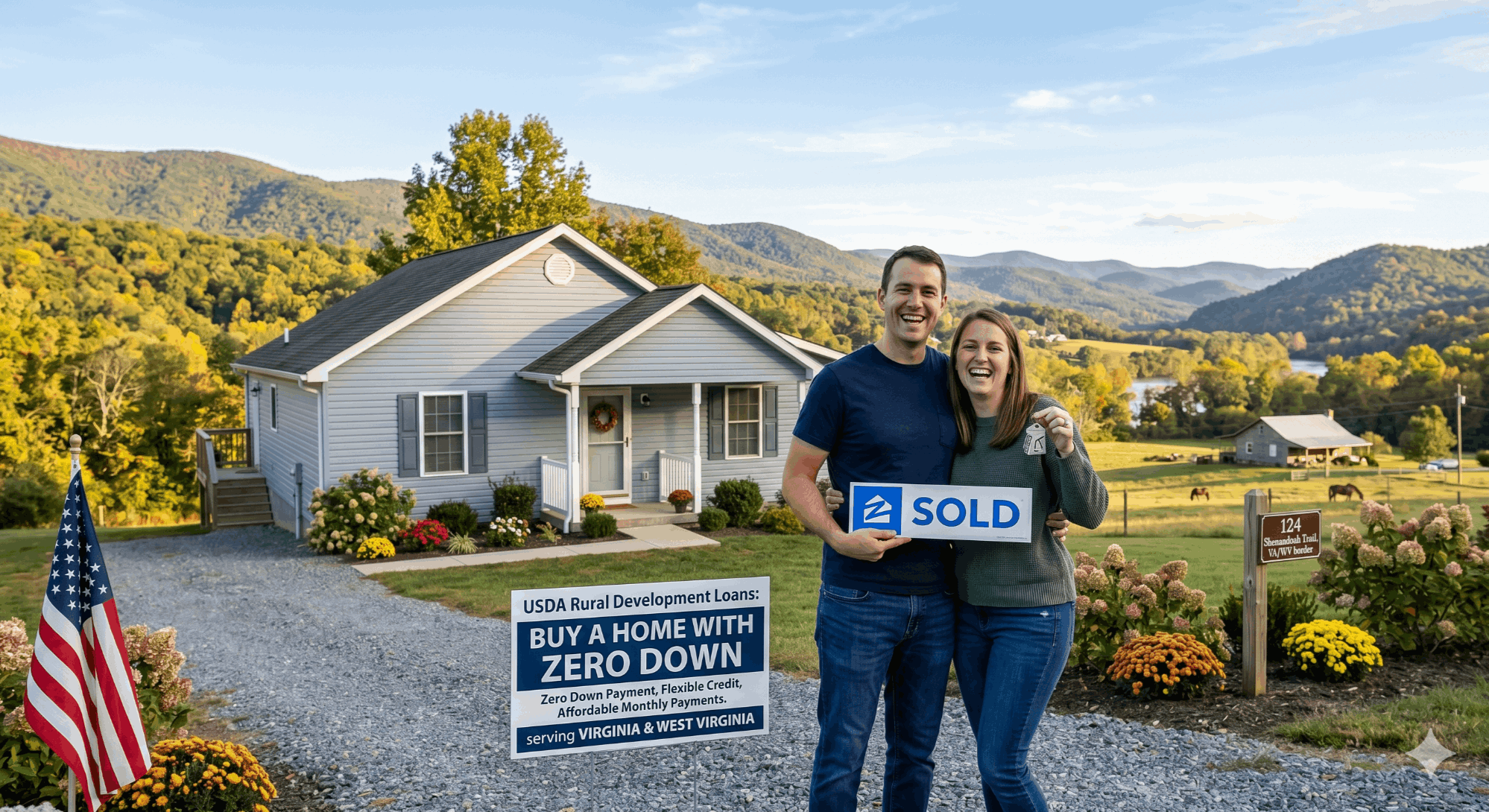
Quick Answer: A USDA loan lets qualified buyers in eligible rural and suburban areas of Virginia and West Virginia buy a home with zero down payment, no PMI, and competitive interest rates. Most of West Virginia and large parts of outer Northern Virginia, the Shenandoah Valley, Southside Virginia, and the Eastern Panhandle qualify. To use one, your household income must fall under the local USDA limit (typically around 115% of area median income), the home must be your primary residence, and the property must sit inside a USDA-eligible map area.
Key Takeaways
- 0% down payment — USDA is one of only two true zero-down loan programs in the U.S. (the other is the VA loan).
- No PMI — instead, USDA charges a 1% upfront guarantee fee and a 0.35% annual fee that is generally lower than FHA's mortgage insurance.
- Geography matters — the property must be located in a USDA-eligible area. Surprisingly, this includes parts of outer Loudoun, Fauquier, Culpeper, Spotsylvania, Stafford, and almost all of West Virginia.
- Income caps apply — your total household income generally cannot exceed roughly 115% of the area median income for the county where you're buying.
- Credit score around 640+ typically required for streamlined underwriting; lower scores may still qualify with manual underwriting.
- Primary residence only — no investment properties, no vacation homes, no flips.
Table of Contents
- What Is a USDA Loan?
- The Two Types of USDA Loans
- USDA-Eligible Areas in Virginia and West Virginia
- 2026 USDA Income Limits
- Borrower Eligibility Requirements
- Property Requirements
- USDA Costs, Fees, and the Guarantee Fee
- USDA vs. FHA vs. VA vs. Conventional
- Pros and Cons of USDA Loans
- How to Apply: Step-by-Step
- Common Mistakes to Avoid
- Frequently Asked Questions
- Glossary of USDA Loan Terms
What Is a USDA Loan?
A USDA loan is a government-backed mortgage created by the U.S. Department of Agriculture's Rural Development division. The program was designed to make homeownership accessible in rural and lower-density suburban areas, and it does that by removing the single biggest barrier most buyers face: the down payment.
If you've been priced out of inner Northern Virginia or feel locked out of the DC metro market because you can't pull together $50,000 to $100,000 in cash, a USDA loan can put you into a home in places like Lovettsville, Front Royal, Culpeper, Stafford, Spotsylvania, Berryville, Charles Town, Martinsburg, or Harpers Ferry — sometimes within 60 to 90 minutes of the Beltway — with literally no money down.
Despite the "rural" label, USDA-eligible areas include far more communities than most buyers realize. The program isn't limited to farms or remote countryside. Many suburban developments, small towns, and bedroom communities in commuting range of DC, Richmond, Roanoke, Charlottesville, and the Eastern Panhandle qualify.
The Two Types of USDA Loans
USDA Rural Development offers two distinct mortgage products. The vast majority of buyers will use the first one.
1. Section 502 Guaranteed Loan (most common)
This is what most people mean when they say "USDA loan." The loan is issued by an approved private lender — like ALCOVA Mortgage — and the USDA guarantees a portion of it, similar to how the VA backs VA loans. Income limits are higher (up to roughly 115% of area median income), and processing is faster because it goes through a regular mortgage lender, not a federal office.
2. Section 502 Direct Loan
This loan is issued directly by USDA Rural Development and is reserved for low- and very-low-income borrowers (typically below 80% of area median income). Interest rates can be subsidized down to as low as 1% in some cases through the payment assistance program. Direct loans involve a longer application process handled through your local USDA Rural Development office, not a private lender.
For the rest of this guide, we'll focus on the Section 502 Guaranteed Loan, since that's the program ALCOVA originates and the one most buyers will qualify for.
USDA-Eligible Areas in Virginia and West Virginia
The single biggest source of confusion with USDA loans is geography. The eligible-area maps don't follow county or city lines — they're drawn block by block. A house on one side of a road might qualify; a house across the street might not.
The official rule is that the property must be located in an area defined as "rural" by USDA. In practice, that includes towns of up to 35,000 people in many cases. Use the official USDA eligibility map to check any specific address before you fall in love with a house.
Generally Eligible in Virginia
- Outer Loudoun County: Lovettsville, Hillsboro, Round Hill outskirts, parts of Hamilton and Purcellville fringe areas
- Fauquier County: Most of the county outside the Warrenton town limits — Marshall, The Plains, Bealeton, Remington, Catlett
- Culpeper, Madison, Orange, Rappahannock, Greene, Louisa — broadly eligible across most rural addresses
- Stafford County: Western and southern portions outside the I-95 corridor
- Spotsylvania, Caroline, King George — large eligible footprint
- Westmoreland, Northumberland, Lancaster, Richmond County, Essex — Northern Neck almost entirely eligible
- Shenandoah Valley: Front Royal, Strasburg, Edinburg, Woodstock, New Market, broadly eligible
- Clarke and Warren counties: Berryville, Boyce, Bentonville
- Most of Southside Virginia and Southwest Virginia
Generally Eligible in West Virginia
Almost all of West Virginia qualifies. The only typically excluded zones are denser portions of Charleston, Huntington, Morgantown, and Wheeling. For DMV-area commuters, the Eastern Panhandle is the headline:
- Berkeley County: Martinsburg outskirts, Inwood, Falling Waters, Hedgesville — heavily eligible
- Jefferson County: Charles Town outskirts, Ranson outskirts, Shepherdstown, Harpers Ferry, Bolivar — most addresses qualify
- Morgan County: Berkeley Springs and surrounding — broadly eligible
- Hampshire, Hardy, Grant, Mineral, Pendleton — eligible
⚠ Verify before you offer. USDA boundary lines change periodically. Always check the official map at eligibility.sc.egov.usda.gov for any specific property address before submitting an offer, or ask your loan officer to confirm. A property that was eligible last year may not be eligible today.
Free · No Commitment
See If You Qualify for a USDA Loan
Get pre-approved with ALCOVA Mortgage and find out exactly which USDA-eligible homes you can afford. Quick, free, no obligation.
Ken Byrne NMLS #187129 · ALCOVA Mortgage LLC NMLS #40508
2026 USDA Income Limits in Virginia and West Virginia
USDA Guaranteed Loans cap household income at roughly 115% of the local area median income (AMI). Important — USDA counts everyone in the household, not just borrowers on the loan. That includes adult children, parents, or other relatives living with you, even if they aren't on the mortgage.
Limits are set by county and household size. The figures below are 2026 program approximations for the Section 502 Guaranteed Rural Housing program. Always confirm current limits with your lender or the USDA income calculator.
| County / Area | 1–4 Person Household (approx.) | 5–8 Person Household (approx.) |
|---|---|---|
| Loudoun, Fauquier, Stafford, Spotsylvania (DC MSA) | ~$148,500 | ~$196,000 |
| Culpeper, Orange, Madison, Greene | ~$112,450 | ~$148,450 |
| Frederick, Clarke, Warren, Shenandoah | ~$112,450 | ~$148,450 |
| Berkeley, Jefferson, Morgan (WV Eastern Panhandle / DC MSA) | ~$148,500 | ~$196,000 |
| Most other West Virginia counties | ~$112,450 | ~$148,450 |
| Most rural Virginia counties (non-MSA) | ~$112,450 | ~$148,450 |
Figures are program approximations only. USDA adjusts limits annually and certain counties have higher MSA-based caps. Use the USDA Income Eligibility tool or contact a licensed loan officer for the exact limit on your address.
What Counts Toward USDA Income
USDA looks at household income, not just borrower income. That means:
- Wages, salaries, bonuses, commissions, and overtime
- Self-employment net income
- Social Security, retirement, and pension income
- Disability and VA benefits
- Child support and alimony received
- Rental income
- Income from any non-borrower adult occupant of the household
Some deductions apply — childcare costs, dependents, elderly or disabled household members, and unreimbursed medical expenses for qualifying members can reduce your "adjusted" household income for USDA purposes. Talk to your loan officer about how those deductions might bring you under the cap.
Borrower Eligibility Requirements
Beyond income and geography, you need to meet these borrower-side requirements:
☑ U.S. citizen, U.S. non-citizen national, or qualified alien
☑ Credit score of 640+ for streamlined automated underwriting (lower scores possible with manual underwriting)
☑ Stable, dependable income for at least the past 24 months
☑ Debt-to-income ratio generally 41% or below (some lenders allow up to 44–46% with compensating factors)
☑ No recent bankruptcies — typically a 3-year wait after Chapter 7 discharge, 1 year after Chapter 13 with on-time payments
☑ No federal debt delinquencies — including student loans, child support, or tax liens
☑ Primary residence only — must move in within 60 days of closing
☑ Cannot own another adequate dwelling in the local commuting area
First-Time Buyer Status Not Required
A common myth: USDA loans are only for first-time buyers. Not true. Repeat buyers can use USDA loans, as long as they don't currently own another adequate home in the same commuting area. If you're relocating to a new region for work, retirement, or family — a USDA loan is on the table even if you've been a homeowner before.
Property Requirements
USDA isn't just about location. The home itself has to clear a few standards:
- Single-family residence — including new construction, existing homes, condos, townhomes, manufactured homes (with restrictions), and modular homes
- Owner-occupied as primary residence — no rentals, flips, or seasonal homes
- "Modest" in size, design, and cost for the area — though this isn't strictly enforced for the Guaranteed program
- Sound structure and major systems — appraisal must confirm the home is structurally sound, the roof has remaining useful life, HVAC works, and there are no health/safety hazards
- Functioning water and sewer — well and septic are fine, but they must be inspected and meet USDA standards
- No income-producing land — large acreage is allowed, but it can't be used commercially (no working farms, no commercial outbuildings)
- No in-ground swimming pools with the Direct Loan program (Guaranteed Loans now allow them, but USDA does not include the pool's value in the appraisal toward the loan)
USDA Costs, Fees, and the Guarantee Fee
USDA loans don't have private mortgage insurance (PMI) the way conventional loans do, but they do have a guarantee fee structure. Think of it as USDA's version of mortgage insurance — and the math usually works out cheaper than FHA over the life of the loan.
| Fee | Amount | When Charged | Can Be Financed? |
|---|---|---|---|
| Upfront Guarantee Fee | 1.00% of loan amount | At closing | Yes — rolled into loan |
| Annual Guarantee Fee | 0.35% of loan balance / yr | Paid monthly with mortgage | N/A (built into payment) |
On a $350,000 home with no down payment, that breaks down roughly like this:
- Loan amount with 1% upfront fee financed: $353,500
- Monthly annual guarantee fee: ~$103/month (0.35% ÷ 12 × $353,500)
Compare that to FHA on the same purchase: a 1.75% upfront mortgage insurance premium ($6,265 financed) plus 0.55%–0.85% annual MIP for the life of the loan. USDA's monthly fee is meaningfully lower than FHA's monthly MIP, which makes USDA the cheaper monthly option for many buyers — assuming the property and income qualify.
Closing Costs
USDA closing costs run about the same as any other loan — typically 2% to 5% of the purchase price — and include lender fees, title insurance, attorney fees, recording fees, the appraisal, and prepaid taxes and insurance. The good news: USDA allows the seller to contribute up to 6% of the purchase price toward your closing costs. That's significantly more generous than conventional financing and means many buyers can close with truly zero out of pocket.
Down Payment Comparison: USDA vs. Other Loans
Minimum down payment required, by loan type:
Run the Numbers
What Will Your USDA Payment Look Like?
Use our mortgage calculator to estimate your monthly payment for any home price in eligible Virginia or West Virginia areas.
USDA vs. FHA vs. VA vs. Conventional
Most buyers comparing zero-down options end up choosing between USDA and VA. Here's how all four major loan types stack up:
| Feature | USDA | FHA | VA | Conventional |
|---|---|---|---|---|
| Min. Down Payment | 0% | 3.5% | 0% | 3–5% |
| Min. Credit Score | 640 | 580 (3.5% down) / 500 (10% down) | 580–620 | 620+ |
| Income Limit | Yes (~115% AMI) | No | No | No |
| Geographic Limit | Yes — eligible map | No | No | No |
| PMI / MI Required? | Guarantee fee instead (lower) | Yes — life of loan | No (funding fee instead) | If <20% down (drops off) |
| Property Type | Primary only | Primary only | Primary only | Any |
| Loan Limit (DC Metro) | No fixed limit (income-based) | $1,249,125 | No fixed limit (entitlement-based) | $1,249,125 (high-cost) |
| Best For | Rural / suburban buyers, no down payment | Lower credit, low down payment | Veterans, active duty | Higher credit, larger down payment |
When to Choose USDA Over FHA
If your target home falls inside the USDA-eligible map and your household income is under the limit, USDA almost always beats FHA on monthly cost. You save on the 3.5% down payment, the upfront guarantee fee is lower than FHA's upfront MIP, and the monthly fee is lower too. The trade-off is geographic — you have to be willing to buy in a USDA-eligible area.
When to Choose VA Over USDA
If you're an eligible veteran or active-duty service member, the VA loan is almost always the better choice. VA has no income limit, no geographic restriction, no monthly mortgage insurance at all, and the funding fee can be waived entirely for service-connected disability ratings. USDA has its place, but VA is in a class of its own for those who qualify.
Pros and Cons of USDA Loans
✓ Pros
- Zero down payment
- Lower monthly fees than FHA
- No private mortgage insurance
- Competitive interest rates (often lower than conventional for same buyer profile)
- Sellers can contribute up to 6% toward closing costs
- Closing costs can be financed (if appraisal supports)
- Flexible credit requirements (640+ standard, lower with manual underwriting)
- Repeat buyers eligible
✗ Cons
- Strict geographic limits (USDA-eligible map only)
- Household income caps (not just borrower income)
- Primary residence only — no investment, no second homes
- Cannot own another adequate home in commuting area
- Annual guarantee fee runs for the life of the loan (does not drop off like conventional PMI)
- Stricter property condition standards than conventional
- Slower processing than conventional (USDA review adds days)
How to Apply for a USDA Loan: Step-by-Step
Ready to Start Your Search?
Browse Homes for Sale in Northern Virginia
Once you know your budget, explore available homes across Loudoun, Fauquier, Stafford, Spotsylvania, and the Shenandoah Valley.
Common Mistakes to Avoid
☐ Assuming "rural" means farmland. Plenty of suburban subdivisions qualify. Check the map first — don't write off USDA based on location bias.
☐ Forgetting to count non-borrower household income. An adult child or live-in parent's income still counts toward the household cap, even if they aren't on the loan.
☐ Skipping the eligibility check before making an offer. Falling in love with a home only to find out it's just outside the eligible boundary is brutal.
☐ Choosing a lender unfamiliar with USDA. USDA loans require specific documentation, an extra federal review step, and tighter property standards. An inexperienced lender slows the process and risks denials at the wire.
☐ Not negotiating seller credits. USDA allows up to 6% in seller-paid closing costs. If you don't ask, you don't get.
☐ Buying near the income cap without a buffer. If your household income drifts even slightly above the limit between application and closing — say, a bonus or overtime hours — your file can be denied. Build in cushion.
☐ Picking a home with property issues. USDA inspectors are stricter on roof condition, septic systems, peeling paint, and structural items than conventional appraisers.
Frequently Asked Questions
Can you really buy a home in Virginia or West Virginia with no money down using a USDA loan?
Yes. USDA Section 502 Guaranteed Loans require zero down payment. Combined with seller-paid closing costs (up to 6%) and a financed upfront guarantee fee, qualified buyers can close on a home with literally $0 out of pocket — provided the property is in a USDA-eligible area, household income is under the local limit, and credit and DTI requirements are met.
What credit score do I need for a USDA loan in Virginia or West Virginia?
Most USDA-approved lenders require a 640 minimum FICO score for streamlined automated underwriting. Scores below 640 may still qualify through manual underwriting, but require stronger compensating factors — a lower DTI, more reserves, or longer job stability.
How much down payment do I need for a USDA loan?
Zero. USDA Section 502 Guaranteed Loans are 100% financing. You can put more money down voluntarily, but it isn't required.
What are the closing costs on a USDA loan in Virginia?
Expect total closing costs of roughly 2% to 5% of the purchase price. In Virginia, that includes lender fees, title insurance, settlement fees, the appraisal, recordation tax, grantor tax, deed of trust tax, and prepaid taxes and insurance. USDA allows the seller to contribute up to 6% of the purchase price toward your closing costs — meaning many buyers close with no out-of-pocket cash at all.
How do I get pre-approved for a USDA loan in Northern Virginia?
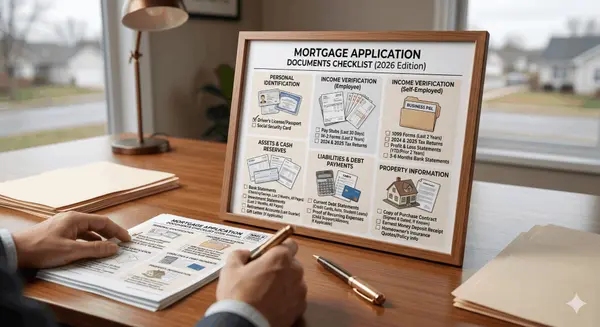
Contact a USDA-approved lender licensed in Virginia. ALCOVA Mortgage LLC (NMLS #40508), with Branch Partner Ken Byrne (NMLS #187129), originates USDA Guaranteed Loans across Virginia, West Virginia, Maryland, and DC. The pre-approval application takes about 10 minutes and you'll need pay stubs, W-2s, two years of tax returns, and two months of bank statements.
What is the USDA loan limit for Virginia and West Virginia in 2026?
USDA Guaranteed Loans don't have fixed dollar loan limits the way FHA or conforming loans do. Instead, they're capped by your repayment ability — which is essentially limited by your income, the local USDA income cap, and DTI requirements. In practice, this typically translates to maximum loan amounts in the $300,000–$450,000 range in DC-MSA-eligible counties, and $200,000–$350,000 in non-MSA rural areas, depending on income and rate environment.
Is it a good time to use a USDA loan to buy in the Eastern Panhandle of West Virginia?
For DC-area commuters priced out of inner Northern Virginia, the Eastern Panhandle of West Virginia (Berkeley, Jefferson, and Morgan counties) remains one of the most affordable USDA-eligible markets within reasonable commuting distance of the Beltway. Median home prices there sit well below comparable Virginia inventory, almost the entire region is USDA-eligible, and income limits are higher than non-MSA West Virginia counties because Berkeley and Jefferson fall under the DC MSA.
Can I use a USDA loan for a manufactured or modular home?
Modular homes built to local building codes are generally treated like any other single-family home and qualify. Manufactured homes are eligible too, but with stricter rules — they must be new (not previously titled), must be permanently affixed to a permanent foundation, and must meet HUD code. Many lenders only originate USDA on stick-built or modular construction.
Can I refinance a USDA loan?
Yes — USDA offers a Streamlined Assist Refinance for existing USDA borrowers, which doesn't require a new appraisal, credit re-qualification, or income re-verification in many cases. You can also refinance a USDA loan into a conventional loan once you've built sufficient equity, which can eliminate the annual guarantee fee.
Can I buy a fixer-upper with a USDA loan?
USDA Single Close construction-to-permanent loans exist for new construction in eligible areas. For renovations on existing homes, USDA does have repair allowances, but full renovation programs (like the FHA 203k) aren't directly available through USDA. Most USDA buyers purchase homes that are already in livable condition.
How do I find a good mortgage lender for a USDA loan in Virginia or West Virginia?
Look for these objective criteria: (1) the lender is USDA-approved (not all lenders are), (2) they're licensed in your state, (3) they originate USDA loans regularly — not as a once-a-quarter exception, (4) they're transparent about fees and timelines upfront, and (5) they have local knowledge of which Virginia and West Virginia communities are USDA-eligible. ALCOVA Mortgage LLC (NMLS #40508), with Ken Byrne (NMLS #187129) as Branch Partner, meets all five and is licensed across VA, MD, DC, and WV.
Will USDA still allow zero-down loans in 2026?
Yes. The USDA Section 502 Guaranteed Rural Housing program continues to operate in 2026 with zero down payment and active funding from Congressional appropriations. Program parameters such as income limits, the upfront guarantee fee (1.0%), and the annual fee (0.35%) are reviewed periodically, but the core zero-down structure remains intact.
Glossary of USDA Loan Terms
Section 502 Guaranteed Loan: The most common USDA loan, originated by approved private lenders (like ALCOVA) and guaranteed by the USDA.
Section 502 Direct Loan: A USDA loan issued directly by Rural Development for low- and very-low-income borrowers, with potential payment subsidies.
Upfront Guarantee Fee: A one-time fee equal to 1% of the loan amount, paid at closing or financed into the loan.
Annual Guarantee Fee: An ongoing fee equal to 0.35% of the loan balance per year, paid monthly with the mortgage payment. USDA's equivalent of mortgage insurance.
Area Median Income (AMI): The midpoint of household incomes in a given area, used as the basis for USDA's income limit calculations.
Conditional Commitment: The official approval letter from USDA confirming the loan meets program requirements, issued before closing.
Eligible Rural Area: A geographic zone defined by USDA where Section 502 loans can be used. Boundaries are mapped block-by-block, not by county.
Debt-to-Income Ratio (DTI): The percentage of your gross monthly income that goes toward debt payments, including the proposed mortgage. USDA generally caps DTI at 41%.
The Bottom Line
For the right buyer, a USDA loan is one of the best financing tools available in the United States — and most people don't even know it exists. If you're looking outside inner Northern Virginia, in the Shenandoah Valley, the Eastern Panhandle of West Virginia, or the rural counties surrounding the DC metro, USDA could mean the difference between renting another year and walking into a closing with no money out of pocket.
The eligibility checklist is short: the right address, household income under the local cap, decent credit (640+), and stable income. If those four lines up, USDA may be your single cheapest path into homeownership.
Free · No Commitment
Find Out If You Qualify Today
A 10-minute pre-approval will tell you exactly which USDA-eligible homes you can afford in Virginia or West Virginia. No pressure, no obligation — just clear answers.
Ken Byrne NMLS #187129 · ALCOVA Mortgage LLC NMLS #40508
Disclaimer: This article is for informational purposes only and does not constitute financial or legal advice. Mortgage programs, rates, and eligibility requirements are subject to change. USDA program parameters including income limits, eligible-area boundaries, and guarantee fees are reviewed and adjusted periodically. Contact a licensed mortgage professional for guidance specific to your situation. Ken Byrne, NMLS #187129 · ALCOVA Mortgage LLC, NMLS #40508 · Licensed in VA, MD, DC, WV.
Categories
Recent Posts





GET MORE INFORMATION

Broker Associate