
The Home Buying Process Steps: What Happens After Pre-Approval
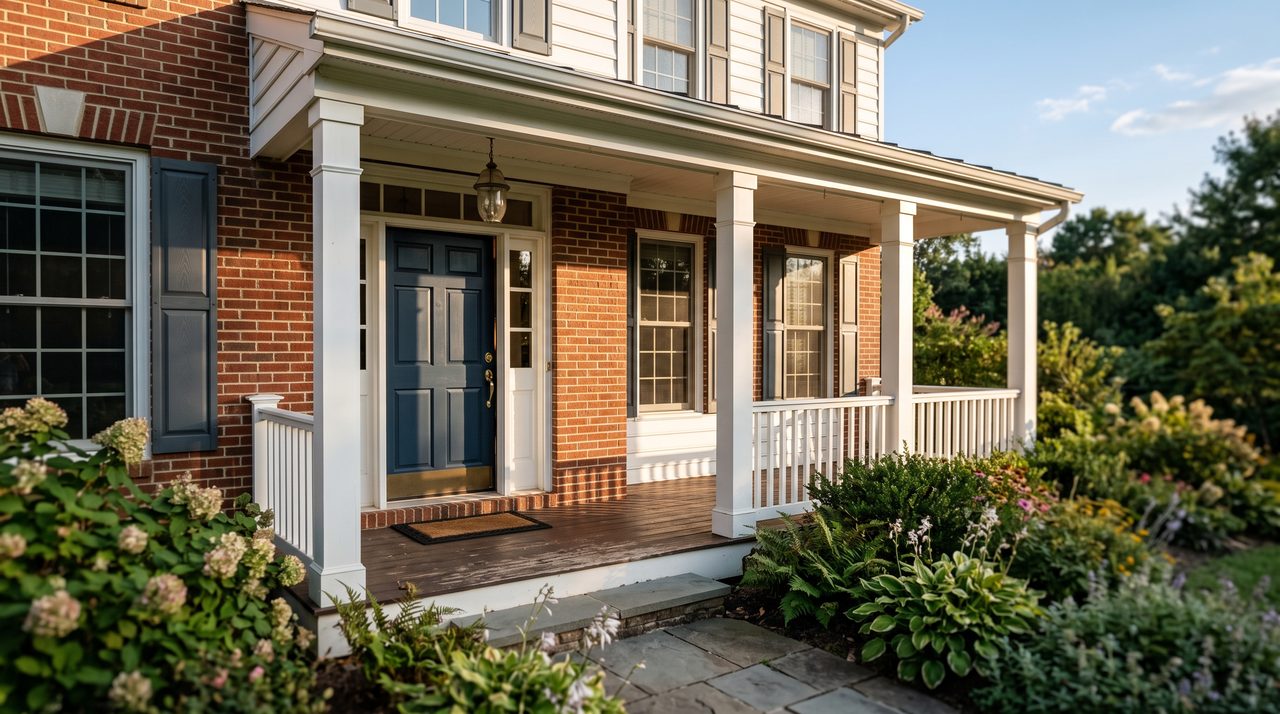
A pre-approval is the start line. Twelve steps and about 45 to 75 days sit between it and keys.
Short answer: the home buying process runs twelve steps from a pre-approval letter to keys, and in this region it takes about 45 to 75 days once you are under contract. Roughly 30 to 45 of those days are the closing period itself, which is fixed by your contract. The variable part is how long the search takes, and in Northern Virginia homes went under contract in a median of 26 days in August 2026. Almost every delay after ratification traces to one of three things: a document the lender asked for and did not get, an appraisal below the contract price, or the buyer changing something financial mid-process.
By Ken Byrne, NMLS #187129 · ALCOVA Mortgage LLC, NMLS #40508 · Updated September 2026
A pre-approval is the start line, not the finish. What follows is a sequence with a lot of moving parts, most of them running in parallel rather than one after another, and the parts that go wrong are predictable enough to plan around. Below is each step, how long it actually takes, what can stall it, and where you have leverage. If you want the version mapped onto your own timeline and county, JB Financing will walk it with you.
The home buying process steps, start to finish
| Step | What happens | Typical duration |
|---|---|---|
| 1. Connect with an agent | Representation agreement, search set up | Days |
| 2. Define criteria | Separate must-haves from preferences | Days |
| 3. Tour homes | The variable part of the whole process | 2 weeks to 6 months |
| 4. Make an offer | Price, deposit, contingencies, dates | 1 day |
| 5. Ratification | All parties sign; the contract clock starts | 1 to 5 days |
| 6. Home inspection | Inspect, then negotiate or walk | Days 1 to 10 |
| 7. Appraisal | Independent valuation ordered by the lender | Days 7 to 21 |
| 8. Processing and underwriting | Income, assets, credit and property verified | Days 7 to 28 |
| 9. Conditional approval | Outstanding conditions cleared | Days 21 to 30 |
| 10. Clear to close | Final approval, then the disclosure window | Days 25 to 35 |
| 11. Final walkthrough | Confirm condition and agreed repairs | Day before or day of |
| 12. Settlement | Sign, fund, record, get keys | 1 to 2 hours |
Durations are typical for a financed purchase in the Washington metro and are counted from ratification, not from the first showing. Steps 6 through 10 overlap substantially; the appraisal and underwriting run at the same time rather than in sequence.
The steps are not sequential and that is the main thing to understand. A buyer who pictures twelve things happening one after another will misjudge the calendar badly. Inspection, appraisal and underwriting all run concurrently in the first three weeks after ratification. The critical path is usually underwriting, and underwriting waits on documents from you.
Steps 1 to 3: the search, and the only part you fully control
House hunting is the widest variable in the whole process and the only phase with no deadline. Everything from step 4 onward runs on contract dates. This one runs on you.
The useful discipline here is separating what you must have from what you would like, in writing, before you tour anything. Buyers who skip this step tour twice as many homes and make worse decisions under time pressure, because in a market where the median home goes under contract in 26 days there is no time to work out your criteria after you have found something.
| Criterion | A must-have looks like | A preference looks like |
|---|---|---|
| Location | A commute under 45 minutes, a specific school pyramid | A particular subdivision |
| Size | Three bedrooms, two full baths | Total square footage, garage size |
| Condition | Working systems, no deferred structural work | An updated kitchen, a finished basement |
| HOA | Dues that fit inside your debt to income ceiling | A pool, a gym, lawn care included |
| Lot | A yard, if you need one | A cul-de-sac, mature trees |
The HOA row is the one that becomes a financing problem rather than a preference. Dues count in your debt to income ratio exactly like a car payment, so a $400 monthly fee can reduce what you qualify for by a meaningful amount. Ask for the figure before you fall for the house. What else varies by jurisdiction is on our Fairfax County page.

“Send me the price range and the county you are shopping and I will tell you what the payment actually looks like there, including the HOA and the county tax rate, before you start touring.”
Arslan Jamil, Broker Associate
Loans originated by Ken Byrne, NMLS ID# 187129 · ALCOVA Mortgage LLC, NMLS ID# 40508. Equal Housing Lender.
Step 4: the offer, and what each term is doing
An offer is not just a price. It is a package of terms, and in a competitive situation the terms decide the outcome as often as the number does.
| Term | What it does | What is normal here |
|---|---|---|
| Purchase price | Your headline number | At, above or below list depending on the property |
| Earnest money deposit | Demonstrates you are serious; credited to you at closing | 1 to 3 percent of the price |
| Financing contingency | Lets you exit if the loan fails | 21 to 30 days |
| Inspection contingency | Lets you inspect, renegotiate or walk | 7 to 10 days |
| Appraisal contingency | Protects you if the valuation comes in low | Standard, sometimes waived in competition |
| Closing date | When it completes | 30 to 45 days from ratification |
| Closing cost credit | Seller contribution toward your costs | Capped by loan type |
| Escalation clause | Raises your price automatically up to a cap | Common, and your letter must support the cap |
The escalation clause and the pre-approval letter have to agree. If you escalate to $820,000 and your letter says $765,000, a listing agent discounts the escalation entirely. Tell your loan officer the cap before the offer goes in, not after. That interaction is covered in our guide to getting pre approved in Northern Virginia.
Waiving a contingency is not a small decision. Waiving the appraisal contingency means that if the valuation lands below the contract price, the difference is yours to cover in cash or you lose the deposit. Waiving the inspection contingency means buying the condition as it stands. Both win offers. Both should be priced, in actual dollars you can produce, before they are offered.

Inspection, appraisal and underwriting all run at the same time, not one after another.
Step 5: ratification, and the clock that starts with it
Ratification is the moment all parties have signed. It matters more than the day your offer was accepted verbally, because every contract deadline counts from it: the inspection window, the financing contingency, the appraisal deadline and the settlement date.
Two things happen immediately. The earnest money is wired to the settlement agent, usually within a few days and always to a verified account, and your lender converts the pre-approval into a live loan file on the specific property.
Wire fraud is the real risk in this step. Criminals watch for ratifications and send convincing emails with altered wiring instructions. Call the settlement agent on a number you looked up yourself, never one from the email, and verify the details verbally before sending anything. Wired funds sent to a fraudulent account are generally not recoverable.
Step 6: inspection, and how to use it
The inspection window is typically 7 to 10 days and it is your leverage. What you do with the report matters more than what is in it, because every house has findings.
The productive approach is to separate the report into three buckets: items that are safety or structural, items that are expensive systems near end of life, and items that are maintenance. Ask on the first two. Asking on the third is how buyers lose credibility and get nothing.
Note that the inspection is separate from the appraisal and from the property standards your loan applies. FHA, VA and USDA each impose minimum property requirements, so a house can pass your inspection and still fail the loan.
Step 7: the appraisal, and the gap problem
Your lender orders an independent valuation, and it lends against the lower of the appraised value and the contract price. If the appraisal comes in below what you agreed to pay, the lender does not simply lend more.
| Outcome | What it means | What happens next |
|---|---|---|
| At or above the contract price | The valuation supports the deal | Underwriting continues |
| Below the contract price | The lender will finance only to the appraised value | Renegotiate, cover the gap in cash, dispute it, or walk |
| Disputed | New comparables submitted for reconsideration | A revision is possible within about 5 to 10 days |
An appraisal gap is the single most common reason a ratified contract falls apart in this market. If you waived the appraisal contingency, the cash is yours to find. If you kept it, you have options. Decide in advance which gap figure you could actually cover, because the decision arrives with a deadline attached.
Steps 8 and 9: underwriting, and why files stall
Underwriting is where the calendar is usually won or lost, and it is almost always waiting on paperwork rather than on judgment. An underwriter verifies income, assets, credit and the property, and issues conditions: specific items required before approval.
Conditions are normal. A file with no conditions is unusual. What is not normal is a condition sitting unanswered for four days because it went to an email nobody is watching. Answer requests the day they arrive and the timeline holds. The document list that prevents most of them is in our mortgage document checklist.
Large deposits are the condition that surprises people most. Any deposit that is not obviously payroll has to be sourced and documented, including gift funds, which need a gift letter and a paper trail. A cash deposit from a private sale can be effectively unusable because it cannot be sourced. How long the whole stage runs is broken down in our mortgage approval timeline guide.
Steps 10 to 12: clear to close, walkthrough, settlement
Clear to close and the three day rule
Clear to close means underwriting is satisfied. The Closing Disclosure then has to be in your hands at least three business days before settlement, and certain changes after it is issued restart that window. This is why a late change to your loan can move your settlement date, and why lenders resist them in the final week.
Read it against your Loan Estimate rather than reading it alone. The two documents are deliberately laid out to be compared, and the comparison is the only practical way to see what moved. Where the closing numbers come from in this state is set out in our Virginia closing costs guide.
The final walkthrough
Usually the day before or the morning of settlement. You are confirming the property is in the agreed condition, that agreed repairs were done, and that systems still work. This is the last point at which a problem is cheap to fix, because once you have signed, a broken furnace is yours.
Settlement
An hour or two of signing in Virginia, funds wired in advance, the deed and the deed of trust recorded, and keys handed over. Bring photo identification and a certified check or confirmed wire for the exact amount on the Closing Disclosure.
The home buying timeline, phase by phase
| Phase | When it runs | What is happening |
|---|---|---|
| House hunting | 2 weeks to 6 months | Touring, narrowing, offering |
| Offer to ratification | 1 to 5 days | Negotiation, signatures, deposit wired |
| Inspection | Days 1 to 10 | Inspection, then repair negotiation |
| Appraisal | Days 7 to 21 | Independent valuation |
| Underwriting | Days 7 to 28 | Income, assets, credit and property verified |
| Conditional approval | Days 21 to 30 | Conditions cleared |
| Clear to close | Days 25 to 35 | Final approval, disclosure window opens |
| Walkthrough and settlement | Days 30 to 45 | Confirm, sign, fund, record |
Counted from ratification. A cash purchase compresses this considerably because underwriting and appraisal both fall away. VA and FHA files are not inherently slower than conventional, though the property standards can add a step if the house needs work.
Buying and selling at the same time
A large share of buyers in this region are also sellers, and that turns one twelve step process into two overlapping ones. There are three ways to sequence it and each trades money against risk.
| Approach | How it works | The trade |
|---|---|---|
| Sell first, then buy | List, settle, then shop with cash in hand | Strongest offer, but you may need temporary housing |
| Buy first, then sell | Close on the new house, then list the old one | Cleanest move, but you carry two payments for weeks |
| Contingent offer | Your purchase depends on your sale closing | Cheapest, and the weakest offer on the table here |
| Post-settlement occupancy | You buy, the seller rents back briefly | Useful when the seller is also mid-move |
The contingent offer is the one to be realistic about. In a market where the median home goes under contract in 26 days, a seller comparing two similar offers will usually take the one that does not depend on a house they have never seen selling on time. It is not that contingent offers never win. It is that they win by being better on price or terms, which costs you the money you were trying to protect.
The middle option is where recasting becomes relevant. Buyers who close on the new house with a larger loan than they wanted, then receive the proceeds from the old one six weeks later, can often apply that lump sum and have the payment recalculated without refinancing. That only works on loan types that allow it, which is a decision made at application rather than afterwards, and it is worth raising with your lender before you choose the sequence.
Sequence it with your lender before you write either contract. Whether you can qualify carrying both mortgages, whether rental income from the departing residence can count, and whether your new loan can be recast later are all answerable in one conversation and all much harder to fix once you are under contract on both ends.
What actually delays a closing
| Cause | Why it happens | How to prevent it |
|---|---|---|
| Slow document returns | Conditions sit unanswered | Answer the day they arrive |
| Unsourced deposits | Any non-payroll money must be documented | Paper trail everything; gift letters up front |
| New credit during the process | A financed car changes the debt to income ratio | Change nothing financially until you have keys |
| Changing jobs | Employment is re-verified before closing | Delay the move if you can |
| Low appraisal | Valuation below contract price | Know your gap number before you offer |
| Insurance not bound | The policy must be active at closing | Start shopping at ratification, not at week four |
| Title defects | Liens, unknown heirs, boundary problems | Nothing preventive; it is why the search happens early |
| Last minute loan changes | Certain changes restart the three day window | Settle the structure before clear to close |
Six of those eight are within the buyer’s control, and the first three account for most real-world delays. The rule that covers them is the same one that applies from application onward: from the day you apply to the day you sign, change nothing financially without telling your loan officer first. Where a credit score sits in all of this is covered in our guide to credit scores and mortgages.
The remaining two, title and appraisal, are not preventable but they are foreseeable. Both are reasons to keep a contingency you were thinking of waiving, and both are easier to absorb when you knew the number in advance. Buyers across the state run into the same two, and what is specific to this market sits on our Virginia home loans page.
Under contract and want to know whether your dates are realistic?
Arslan Jamil, Broker Associate
Send me the ratification date, the settlement date and the loan type. You get an honest read on whether the timeline holds, which conditions are likely to come up on your file, and what to have ready before anyone asks for it.
Loans originated by Ken Byrne, NMLS ID# 187129 · ALCOVA Mortgage LLC, NMLS ID# 40508. Equal Housing Lender.
Frequently asked questions
What are the steps in the home buying process?
Twelve, in order: find an agent, define criteria, tour homes, make an offer, ratify the contract, inspect, appraise, underwrite, clear conditions, receive clear to close, do the final walkthrough, and settle. Steps six through ten overlap rather than running one after another.
How long does the home buying process take?
About 45 to 75 days in total once you are actively looking, of which 30 to 45 days is the closing period fixed by your contract. House hunting is the variable: anywhere from two weeks to six months. In Northern Virginia the median home went under contract in 26 days in August 2026.
What happens right after a seller accepts my offer?
The contract is ratified once everyone has signed, and that date starts every deadline in the agreement. You wire the earnest money to the settlement agent, and your lender converts the pre-approval into a live loan file against that specific property. The inspection window opens immediately.
How long does underwriting take?
Typically seven to twenty eight days from ratification, running at the same time as the appraisal rather than after it. The length depends far more on how quickly you return documents than on the lender, because underwriting issues conditions and then waits.
What is an appraisal gap and what happens if I have one?
It is the difference when a home appraises below the contract price. The lender finances only to the appraised value, so the gap is yours to cover in cash, renegotiate, dispute, or walk away from if you kept your appraisal contingency. It is the most common reason a ratified contract falls apart here.
How much earnest money do I need?
Commonly 1 to 3 percent of the purchase price in this region. It is not an extra cost: it is credited toward your down payment and closing costs at settlement. You generally lose it only by breaching the contract outside the protection of a contingency.
Can I still lose my loan after pre-approval?
Yes. A pre-approval is based on a snapshot, and underwriting re-verifies everything before closing, including a fresh credit pull and employment check. Financing a car, opening a store card, changing jobs or moving money without a paper trail can all undo it.
What is clear to close?
The point at which underwriting is fully satisfied and no conditions remain. It triggers the Closing Disclosure, which must be in your hands at least three business days before settlement. Certain changes after it is issued restart that three day window and can move your date.
Should I waive the inspection or appraisal contingency?
Only if you have priced what it would cost you. Waiving the appraisal contingency means covering any shortfall in cash. Waiving the inspection means accepting the condition as it is. Both make an offer stronger and both transfer a real risk to you, so decide the dollar figure before rather than during.
What is the final walkthrough for?
Confirming the property is in the condition agreed, that negotiated repairs were completed, and that the systems work. It is usually the day before or the morning of settlement, and it is the last moment at which a problem is the seller’s rather than yours.
How soon after clear to close can I settle?
Three business days at the earliest, because the Closing Disclosure has to sit with you for that long first. In practice settlement is already scheduled and clear to close simply confirms it will hold.
What should I bring to settlement?
Photo identification and the exact funds shown on the Closing Disclosure, as a wire confirmed in advance or a certified check. Verify wiring instructions by phone on a number you sourced yourself; altered wiring instructions are the main fraud risk in the whole transaction.
Does a VA or FHA loan take longer to close?
Not inherently. The underwriting timeline is comparable to conventional. What can add time is the property condition standards those programs apply, so a house needing work may require repairs before the loan can close, which is a property issue rather than a loan speed issue.
“Tell me where you are in the process and I will tell you what happens next, what the realistic date is, and what to have ready before the lender asks for it.”
Arslan Jamil, Broker Associate
Loans originated by Ken Byrne, NMLS ID# 187129 · ALCOVA Mortgage LLC, NMLS ID# 40508. Equal Housing Lender.
This article is general information, not financial or legal advice and not a commitment to lend or an offer of credit. Loan limits, program rules, premium schedules and rates change, and individual eligibility depends on a full review of your credit, income, assets and the property. Every figure here is an illustration, not a quote, built from published sources and a weekly survey average rather than underwriting decisions. Insurance and mortgage insurance amounts are planning estimates. Confirm anything you plan to act on with a licensed mortgage professional. Timelines are typical for a financed purchase in this region and vary by transaction; contract deadlines are set by your ratified agreement, not by this article.
Categories
Recent Posts









GET MORE INFORMATION

Broker Associate