
WVHDF Programs 2026: West Virginia First-Time Buyer Guide
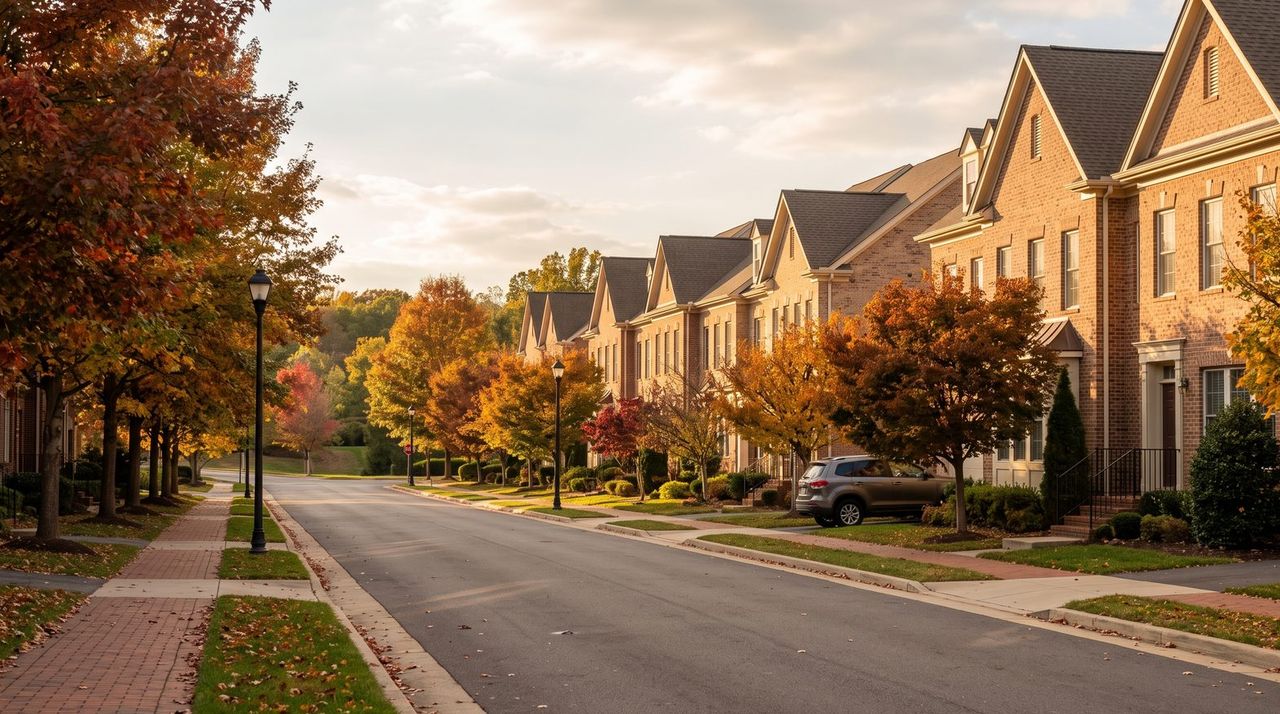
The WVHDF Homeownership rate is 5.790 percent while the market average is 6.95 percent.
Short answer: the West Virginia Housing Development Fund, WVHDF, is the state housing finance agency that funds the cheapest mortgage money available in West Virginia. Its Homeownership Program is quoting 5.790 percent with a 6.395 percent APR against a national 30 year average of 6.95 percent, which is $265 a month on a $350,000 purchase. The house price cap is $350,000 statewide, the income cap runs from $57,040 in the smallest counties to $102,100 in Jefferson County, and the Low Down Home Loan adds up to $12,000 for down payment and closing costs at 2 percent, deferred 15 years. You do not apply at WVHDF. You apply through a participating lender.
By Ken Byrne, NMLS #187129 · ALCOVA Mortgage LLC, NMLS #40508 · Updated September 2026
Almost everything written about WVHDF describes the programs without printing the numbers, which is the only part a buyer actually needs. Below are the current rates, the income and house price caps county by county, what the assistance loan really costs, and the one structural problem with the caps that nobody mentions until a file is already in underwriting. If you would rather have it worked against your own income, the Ken Byrne Team will run it the same day.
What WVHDF is, and why you cannot apply there
The West Virginia Housing Development Fund is the state housing finance agency. It issues tax exempt bonds and lends the proceeds out as below market mortgages. That bond funding is the entire reason the rate is lower than the open market, and it is also why the eligibility rules are strict: the tax exemption comes with federal conditions on who the money can reach.
The Fund does not originate loans. It never touches your application directly. A network of participating lenders underwrites the file, confirms it against WVHDF guidelines, and submits it to the Fund for program approval alongside ordinary underwriting. So the first practical question is not whether you qualify. It is whether the lender you are already talking to is in the network at all, because if they are not, none of this is available through them.
The Fund publishes a direct line. WVHDF Loan Originators can be reached at (800) 933-8511. They will confirm current limits and tell you whether a specific lender participates. That call costs nothing and settles in five minutes a question that otherwise wastes two weeks.
The four WVHDF programs, and what each one is for
| Program | Rate | Who it is for | Cap |
|---|---|---|---|
| Homeownership | 5.790% / 6.395% APR | First time buyers, and anyone buying in a targeted area | $350,000 house price |
| Movin’ Up | 7.500% / 8.144% APR | Repeat buyers. No first time requirement | $350,000 house price |
| Movin’ Up Special | 7.375% / 8.091% APR | Movin’ Up applicants at or below 80 percent of area median income | $350,000 house price |
| Low Down Home Loan | 2.000% fixed | Down payment and closing costs. A second, not a first | $12,000 |
Rates read from the WVHDF Homeownership Program page on September 18, 2026. Program rates move independently of the open market, so confirm the live figure before you rely on it. The 30 year market comparison is the Freddie Mac Primary Mortgage Market Survey average of 6.95 percent for the week ending September 17, 2026.
The gap between the first row and the second is the thing to notice. Homeownership at 5.790 percent is more than a full point below the market average. Movin’ Up at 7.500 percent is above it. A repeat buyer who assumes the state program is automatically the cheaper option is usually wrong, and the reason to look at Movin’ Up is the assistance loan attached to it, not the rate on the first mortgage.
What the Homeownership rate is actually worth
One point on a rate sounds abstract. Here is the same purchase financed at the WVHDF Homeownership rate and at the current market average, principal and interest only, over the full thirty years.
| Purchase price | At 5.790 percent | At 6.95 percent | Saved per month | Saved over 30 years |
|---|---|---|---|---|
| $175,000 | $1,026 | $1,158 | $133 | $47,774 |
| $225,000 | $1,319 | $1,489 | $171 | $61,424 |
| $275,000 | $1,612 | $1,820 | $209 | $75,073 |
| $300,000 | $1,758 | $1,986 | $227 | $81,898 |
| $350,000 (the cap) | $2,051 | $2,317 | $265 | $95,548 |
Principal and interest on a 30 year fixed loan at 100 percent of the purchase price, which the Homeownership Program permits. Property tax, homeowners insurance and any mortgage insurance sit on top of every figure and are not included here.
At the top of the range the program is worth $95,548 across the life of the loan. That is larger than the down payment most buyers are agonizing over, and it is available for the price of paperwork rather than cash.
The rate is the benefit. The assistance is the sweetener. Buyers fixate on the $12,000 second and overlook the first mortgage rate, which on these numbers is worth four to eight times more over the term. If you have to choose between a program that gives you assistance at a market rate and one that gives you a below market rate with no assistance, run both before assuming the cash wins.

“Tell me the county and your household income and I will tell you which WVHDF program you clear, what the payment looks like at the current program rate, and whether the assistance loan reaches your closing costs.”
Arslan Jamil, Broker Associate
Loans originated by Ken Byrne, NMLS ID# 187129 · ALCOVA Mortgage LLC, NMLS ID# 40508. Equal Housing Lender.
The income and house price caps, by county
This is the part that decides most files, and it is the part almost never published in full. Two separate caps apply and you must clear both: what you earn, and what the house costs.
| Where | Income cap, Homeownership | House price cap |
|---|---|---|
| Jefferson County | $102,100 | $350,000 |
| Berkeley County | $76,320 | $350,000 |
| Most other West Virginia counties | $57,040 to $78,720 | $300,000 |
| Movin’ Up, statewide | $171,120 | $350,000 |
WVHDF Programs Income and House Price Limits, effective for rate locks made on or after January 2, 2026, read from the Fund’s published limits schedule on September 18, 2026. Figures shown are the non targeted county thresholds. Targeted census tracts carry higher limits and relax the first time buyer test; a participating lender can check a specific address.
Jefferson County has the highest income limit in the state, and by a wide margin. That is not a favor to the Eastern Panhandle. It is a mechanical consequence of Jefferson sitting inside the Washington metro area, so the federal area median income used to set the cap is a Washington figure rather than a West Virginia one. The county line does the same work here that it does on conforming loan limits, which is covered in our Jefferson County lending guide.

Homebuyer education is required, and it is the step most often left until it delays a closing.
The problem with the price cap in the Eastern Panhandle
Here is the structural issue that costs Panhandle buyers the most time. Jefferson County has the highest income cap in the state, which suggests the program was built for a more expensive market. The house price cap did not follow. It is $350,000, the same as everywhere else.
The typical Charles Town home is worth $433,150. The program does not reach it. A household earning $100,000 in Jefferson County can clear the income test comfortably and still be unable to use the program on a typical house in their own town, because the ceiling sits $83,150 below the median.
Charles Town home value: Zillow Home Value Index, read September 18, 2026.
What that means in practice. In Jefferson County the program works on condos, townhomes, smaller single family homes and anything needing work, and does not work on the typical detached house. That is not a reason to skip it. It is a reason to shape the search around the cap from day one rather than discovering it after an offer is accepted. Berkeley County, where prices run lower, has the opposite problem: the houses fit and the $76,320 income cap is what binds.
Anyone shopping across the Panhandle should price both counties before narrowing rather than assuming the cheaper county is the easier approval. The local market detail sits on our Martinsburg page.
The same caps, the same four programs and the same participating lender requirement apply in every other county in the state, from Morgantown to the Kanawha Valley. What changes county to county is only the income cap and, outside the Panhandle, a $300,000 price cap instead of $350,000. The wider picture is on our West Virginia page.
The Low Down Home Loan, which is not what most guides say it is
This is the most commonly misdescribed program in West Virginia, including in the previous version of this article. The Low Down Home Loan is not a first mortgage and it is not a separate conventional product with cheaper mortgage insurance. It is the down payment and closing cost assistance second.
| Feature | Detail |
|---|---|
| What it is | A second mortgage recorded behind your WVHDF first |
| Maximum | $12,000 |
| Rate | 2 percent fixed |
| Term | 15 years |
| When it is available | Only when the loan to value on the first mortgage is at or above 80 percent |
| What it pairs with | Only a WVHDF Homeownership or Movin’ Up first mortgage |
| On a refinance | Must be paid off. The Fund will not subordinate it. |
Low Down Home Loan terms read from wvhdf.com on September 18, 2026.
Two of those rows matter more than the rest. The 80 percent loan to value condition means the assistance is only available to buyers who are genuinely putting little down; a buyer with 25 percent saved cannot take the $12,000 as a bonus. And the refusal to subordinate means that if you later refinance the first mortgage, the $12,000 comes due in full at that moment. Budget for that before you treat a future refinance as a free option.
Eligibility, in the Fund’s own terms
The first time buyer test
In a non targeted county you must not have held an ownership interest in a principal residence at any point in the three years ending on the closing date. Not three years from application. Three years from closing, which is a different date and has caught files at the last minute. In a targeted census tract the test is waived entirely.
Credit
The Fund’s published position is that generally a score in the low to mid 600s can be acceptable, and it states plainly that several factors affect qualification. That is softer than the hard 640 floor most articles quote, including the earlier version of this one. The underlying loan product sets its own floor on top, so an FHA backed WVHDF loan and a conventional one will not behave the same way at the same score.
Property rules that are easy to trip over
The property must be in West Virginia. Under the Homeownership Program the lot must be five acres or smaller, a rule that quietly disqualifies a lot of rural listings. Movin’ Up has no acreage limit. Manufactured housing is eligible only as a post 1976 doublewide; singlewides are not eligible at all. Cosigners are not permitted on the Homeownership Program.
Homebuyer education
Required. On conventionally insured or uninsured loans the Fund sets the requirement itself; on FHA, VA and USDA loans you follow the insuring agency’s rules instead. Take it during pre approval rather than after, because a missing certificate stops a closing and the course takes several hours.
Stacking WVHDF on top of a federal loan
WVHDF programs are not an alternative to FHA, VA, USDA or conventional financing. They sit on top of one. You still choose an underlying product, and that choice drives the down payment, the mortgage insurance and the property standards.
| Underlying product | Down payment | What it brings | What it costs |
|---|---|---|---|
| VA | 0 percent | No monthly mortgage insurance at all | A one time funding fee unless you are exempt |
| USDA | 0 percent | Works across most of the state | Upfront and annual guarantee fees |
| FHA | 3.5 percent | The most forgiving credit treatment | Upfront premium plus an annual premium that usually never cancels |
| Conventional | 3 percent | Mortgage insurance cancels at 20 percent equity | Pricing is sharply tied to credit score |
For an eligible veteran the VA route is almost always the strongest combination available in this state: no down payment, no monthly mortgage insurance, and a below market WVHDF rate on top. The product detail is on our FHA loans page for the FHA side.
USDA covers more of West Virginia than most buyers assume
USDA eligibility is set address by address against the Rural Development maps rather than by town, and outside the Charleston, Huntington, Morgantown and Wheeling cores the majority of the state qualifies. Parts of Berkeley and Jefferson Counties qualify as well, despite sitting in the Washington metro for loan limit purposes. Because eligibility turns on the parcel, the only reliable answer comes from checking the exact address before an offer goes in. How the income and eligibility tests work is set out on our USDA loans page.
What you will actually pay at closing
The assistance loan covers down payment, closing costs, prepaid items and discount points. It does not cover everything, and the gap is where budgets go wrong.
West Virginia closing costs generally run in the low single digits as a percentage of the purchase price, and the components, the state transfer stamps and who customarily pays what are broken down in our West Virginia closing costs guide. On a purchase at the $350,000 cap, a $12,000 assistance loan will usually cover the down payment on a conventional or FHA structure or the closing costs on a VA or USDA one, but rarely both at once.
Ask for the levy rate, not an estimate. West Virginia assesses residential property at 60 percent of appraised value and then applies the county levy rate to that smaller figure. An escrow estimate built on a full market value, which is how out of state lenders usually build it, comes out close to double the real number. Ask which assessed value and which district were used.
How the application actually runs
| Step | What happens |
|---|---|
| 1. Confirm the lender participates | Ask directly, or call the Fund on (800) 933-8511. Nothing else matters until this is settled. |
| 2. Get fully underwritten | Pay stubs, W-2s, returns, bank statements, credit pull. The lender establishes which program you clear. |
| 3. Take homebuyer education | Several hours. Do it now, not later. Keep the certificate. |
| 4. Shop inside the caps | Both caps. The price cap is absolute; one dollar over disqualifies the loan. |
| 5. Offer, appraisal, inspection | The underlying product sets the property condition standards, so a fixer may not clear FHA, VA or USDA minimums. |
| 6. Lender submits to WVHDF | Program approval runs alongside ordinary underwriting rather than after it. |
| 7. Clear to close | Closing disclosure at least three business days before settlement. |
The whole process is ordinary except for step one and step six, and step one is where most of the wasted time happens. A buyer who spends three weeks with a lender outside the network has to start the file again elsewhere.
What actually sinks a WVHDF file
| Mistake | Why it breaks the loan |
|---|---|
| Assuming a hard 640 credit floor | It costs people who would have qualified. The Fund is softer than that; the underlying product may not be. |
| Counting three years from application | The ownership test runs to the CLOSING date. A sale that was three years ago last month may not be far enough back. |
| Shopping above the price cap | There is no tolerance. Over is over. |
| Treating a future refinance as free | The assistance second is not subordinated. Refinance and it comes due. |
| A lot over five acres | Disqualifies the Homeownership Program even when everything else fits. |
| A singlewide | Not eligible. Doublewide, post 1976, only. |
| Leaving education to the end | The certificate is a condition of closing, not a formality. |
| New credit during underwriting | A financed car between application and closing can move the debt to income ratio out of range. |
Not sure whether your county cap or your income is the binding constraint?
Arslan Jamil, Broker Associate
Send me the county, your household income and the price range you are shopping. You get the exact limits for that county, which of the four programs you clear, what the payment is at the current program rate, and an honest answer on whether the assistance reaches your closing costs.
Loans originated by Ken Byrne, NMLS ID# 187129 · ALCOVA Mortgage LLC, NMLS ID# 40508. Equal Housing Lender.
Frequently asked questions
What is WVHDF?
WVHDF is the West Virginia Housing Development Fund, the state housing finance agency. It issues tax exempt bonds and uses the proceeds to fund below market mortgages and down payment assistance for West Virginia buyers. It does not lend directly; a network of participating lenders originates the loans and submits them to the Fund for approval.
What rate does the WVHDF Homeownership Program charge?
5.790 percent with an APR of 6.395 percent as published on September 18, 2026. Against the Freddie Mac 30 year average of 6.95 percent that is more than a full point, worth $265 a month on a $350,000 purchase and $95,548 across the term. Program rates move independently of the market, so confirm the current figure before relying on it.
What are the WVHDF income limits?
They vary by county. Jefferson County is the highest in the state at $102,100, Berkeley County is $76,320, and most other counties fall between $57,040 and $78,720. The Movin’ Up Program runs to $171,120 statewide. These are the non targeted figures effective for locks made on or after January 2, 2026.
How much down payment assistance does West Virginia offer?
Up to $12,000 through the Low Down Home Loan, at 2 percent fixed over 15 years, recorded as a second mortgage. It is available only alongside a WVHDF Homeownership or Movin’ Up first mortgage, and only where the loan to value on that first mortgage is at or above 80 percent.
Do I have to repay the West Virginia down payment assistance?
Yes. It is a loan at 2 percent, not a grant and not forgivable. It also cannot be subordinated, so if you refinance the first mortgage the balance becomes due at that point rather than carrying on behind the new loan.
What credit score do I need for a WVHDF loan?
The Fund’s published position is that generally a score in the low to mid 600s can be acceptable, with several factors affecting qualification. The underlying loan product applies its own floor on top, so the practical minimum depends on whether the loan is FHA, VA, USDA or conventional.
What is the maximum house price under WVHDF programs?
$350,000 for the Homeownership Program in Jefferson and Berkeley Counties and for Movin’ Up statewide. Most other counties carry a $300,000 cap. There is no tolerance: a purchase price one dollar above the cap disqualifies the loan.
Can I use WVHDF in Charles Town?
Yes, but the $350,000 cap does not reach the typical house. The Charles Town home value index sits at $433,150, so the program works on condos, townhomes and smaller single family homes there rather than on the median detached house. Shape the search around the cap from the start.
Am I a first time buyer for WVHDF purposes?
In a non targeted county, only if you have not held an ownership interest in a principal residence at any time in the three years ending on the closing date. Note that the clock runs to closing, not to application. In a federally designated targeted census tract the test does not apply at all.
Can I use a WVHDF program if I am not a first time buyer?
Yes, through Movin’ Up, which has no first time buyer requirement, an income limit of $171,120 and the same $350,000 price cap. Be aware that the Movin’ Up rate of 7.500 percent is currently above the market average, so the reason to use it is the attached assistance loan rather than the rate.
Can I combine WVHDF with a VA or USDA loan?
Yes, and for an eligible veteran that is usually the strongest structure in the state: zero down from VA, no monthly mortgage insurance, a below market WVHDF rate on the first mortgage, and the assistance loan toward closing costs. USDA pairs the same way across the large majority of West Virginia that qualifies as rural.
Does manufactured housing qualify?
Only a doublewide built after 1976, on a permanent foundation meeting the Fund’s titling and foundation requirements. Singlewides are not eligible under any WVHDF program.
How do I find a WVHDF participating lender?
Ask any lender directly whether they are in the network, or call the Fund’s loan originator line on (800) 933-8511 and ask. Doing this before you submit documents is the single biggest time saver in the process, because a file built with a non participating lender cannot be converted and has to be started again.
“Give me the county and the price you are looking at and I will tell you which WVHDF program reaches it, what the real payment is with the county levy rate applied, and whether the assistance loan covers your closing costs.”
Arslan Jamil, Broker Associate
Loans originated by Ken Byrne, NMLS ID# 187129 · ALCOVA Mortgage LLC, NMLS ID# 40508. Equal Housing Lender.
This article is general information, not financial or legal advice and not a commitment to lend or an offer of credit. Loan limits, program rules, premium schedules and rates change, and individual eligibility depends on a full review of your credit, income, assets and the property. Every figure here is an illustration, not a quote, built from published sources and a weekly survey average rather than underwriting decisions. Insurance and mortgage insurance amounts are planning estimates. Confirm anything you plan to act on with a licensed mortgage professional. Program rates, income limits and house price limits are set by the West Virginia Housing Development Fund and change without notice; every WVHDF figure here was read from the Fund on September 18, 2026 and should be confirmed with a participating lender before it is relied on in an offer.
Categories
Recent Posts





GET MORE INFORMATION
Broker Associate