
DC's HPAP Program Explained: Up to $202,000 in Down Payment Assistance
DC's HPAP Program Explained: Up to $202,000 in Homebuyer Assistance
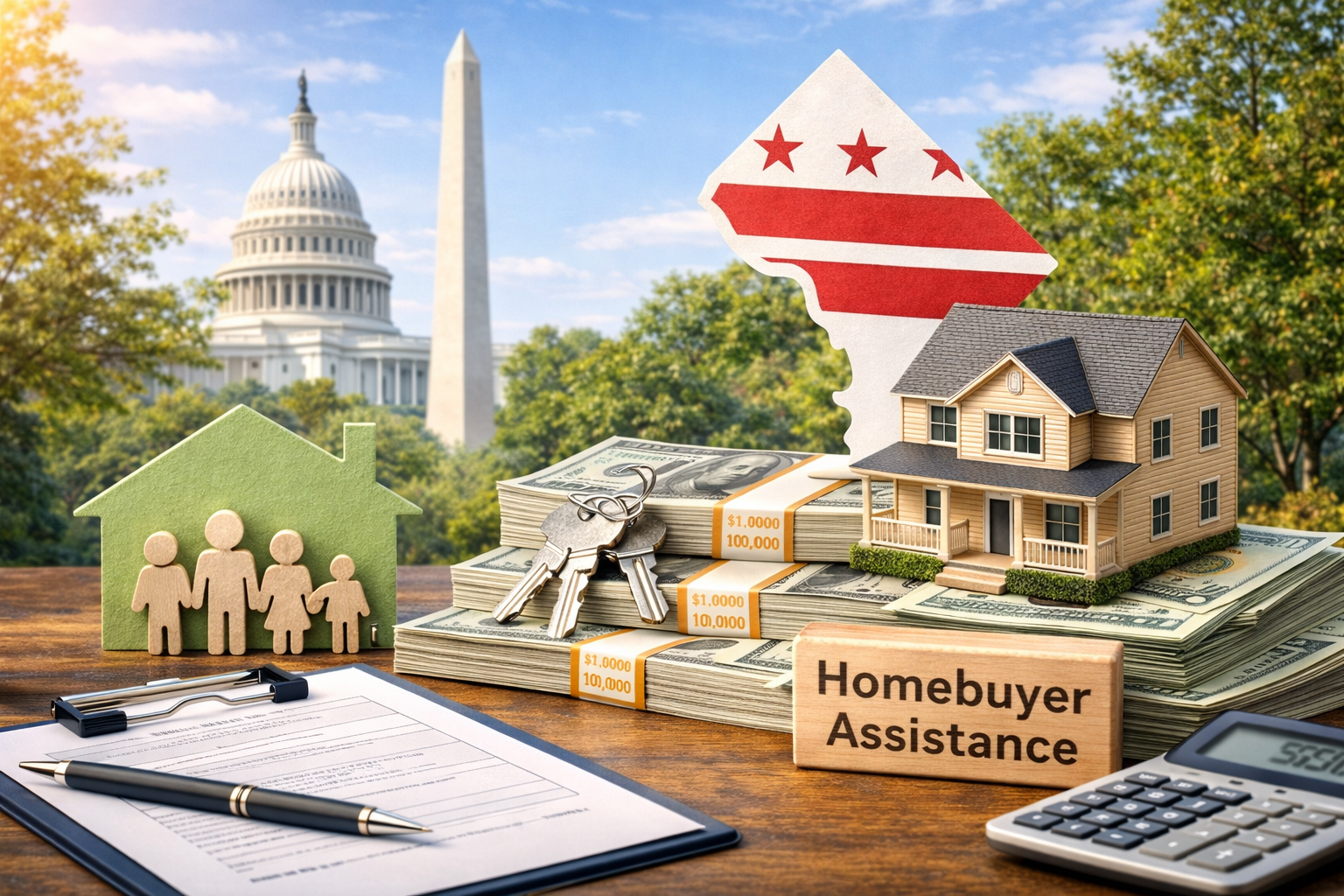
Washington DC's Home Purchase Assistance Program — better known as HPAP — is one of the most powerful homebuyer assistance programs in the entire country. For qualified first-time buyers in DC, HPAP can provide up to $202,000 in down payment and closing cost assistance, making homeownership achievable even in one of the most expensive housing markets in the United States.
If you earn a low-to-moderate income, live in Washington DC, and have never owned a home — or haven't owned one in the last three years — HPAP could be the key that unlocks the door to your first home. This guide explains exactly how the program works, how much you can receive, who qualifies, and how to apply step by step.
⚡ Quick Answer
DC's HPAP program provides interest-free, deferred down payment loans of up to $202,000 (for very low-income buyers) or up to $70,000 (for low-income buyers), plus up to $4,000 in closing cost assistance. The loan does not require monthly payments — it becomes due only when you sell, refinance, or move out of the home. Applicants must be DC residents, first-time buyers, and meet income limits based on household size.
🔑 Key Takeaways
- HPAP can provide up to $202,000 in down payment assistance for very low-income DC buyers
- The assistance comes as a deferred, 0% interest loan — no monthly payments required
- You must have been a DC resident for at least 12 consecutive months
- An additional $4,000 in closing cost assistance is available alongside HPAP
- Income limits apply — calculated as a percentage of DC's Area Median Income (AMI)
- HPAP can be combined with FHA, conventional, or VA loans
- Application is processed through DC's Department of Housing and Community Development (DHCD)
📋 Table of Contents
- What Is the HPAP Program?
- How Much Assistance Can You Receive?
- HPAP Eligibility Requirements
- 2026 HPAP Income Limits
- How the HPAP Loan Works
- How to Apply for HPAP: Step-by-Step
- Can You Combine HPAP With Other Programs?
- HPAP vs. DC Open Doors: Which Is Right for You?
- Common Mistakes to Avoid
- Frequently Asked Questions
- Glossary
What Is the HPAP Program?
The Home Purchase Assistance Program (HPAP) is a down payment and closing cost assistance program administered by Washington DC's Department of Housing and Community Development (DC DHCD). It was created to help low-to-moderate income District residents become homeowners by bridging the gap between what they can afford and what the market demands.
Unlike many state DPA programs that offer a few thousand dollars, HPAP is in a league of its own. The program can provide tens — or even hundreds — of thousands of dollars in assistance, structured as a deferred second mortgage with zero interest for the lowest-income tiers. You don't make monthly payments on this loan. Instead, repayment is triggered only when you sell, refinance, or permanently move out of the home.
HPAP is widely regarded as one of the most generous first-time homebuyer programs in the United States, which is a critical advantage given that Washington DC's median home price routinely exceeds $600,000.
Who Administers HPAP?
HPAP is funded and managed by DC DHCD. However, you do not apply directly through DHCD. Instead, you apply through one of DHCD's approved Designated Nonprofit Partners — organizations like Manna Inc., the Latino Economic Development Center (LEDC), the Marshall Heights Community Development Organization (MHCDO), and others. These nonprofits provide housing counseling, help you gather documents, and submit your HPAP application on your behalf.
Working with a knowledgeable mortgage lender who understands the HPAP process is just as important — your lender must be able to coordinate with the nonprofit partner and structure your loan correctly to accept HPAP funds.
Ready to Start the Pre-Approval Process?
Getting pre-approved is the first step to using HPAP. Know your buying power before you apply for assistance — it makes the whole process smoother and faster.
Get Pre-Approved Today →How Much Assistance Can You Receive?
The amount of HPAP assistance you qualify for depends on your household income relative to DC's Area Median Income (AMI). DC divides eligible households into three income tiers, each with a different maximum benefit:
| Income Tier | % of AMI | Max Down Payment | Interest Rate | Closing Cost Add-On |
|---|---|---|---|---|
| Very Low Income | ≤ 40% AMI | Up to $202,000 | 0% | Up to $4,000 |
| Low Income | 41–80% AMI | Up to $70,000 | Simple interest (low) | Up to $4,000 |
| Moderate Income | 81–110% AMI | Up to $40,000 | Simple interest (low) | Up to $4,000 |
Source: DC DHCD. Amounts and tiers subject to change. Consult a DHCD-approved nonprofit for current figures.
In addition to the down payment loan, all HPAP recipients may also receive up to $4,000 in closing cost assistance, which is provided as a separate grant or deferred loan depending on your income tier. This can cover appraisals, title insurance, lender fees, and other settlement costs — expenses that often catch first-time buyers off guard.
📊 HPAP Assistance at a Glance
Plus up to $4,000 in closing cost assistance for all tiers.
HPAP Eligibility Requirements
HPAP has a clear set of eligibility requirements. Meeting all of them is essential — the application process involves document verification, and missing any requirement can result in denial or significant delays.
| Requirement | Details |
|---|---|
| First-Time Homebuyer | Must not have owned a principal residence in the last 3 years. Exceptions may apply for displaced homemakers and single parents. |
| DC Residency | Must have been a DC resident for at least 12 consecutive months immediately prior to applying. |
| Income Limits | Must fall within 110% of DC's Area Median Income (AMI) for your household size. |
| Property Location | The home being purchased must be located within Washington DC city limits and used as a primary residence. |
| Property Type | Single-family homes, condos, co-ops, and townhomes are generally eligible. Investment properties are not. |
| Housing Counseling | Must complete a DHCD-approved homebuyer education course prior to purchase. |
| Mortgage Requirement | Must obtain a first mortgage from a DHCD-approved lender. HPAP funds are used alongside — not instead of — a primary mortgage. |
| Minimum Contribution | Buyers must contribute a minimum of $500 of their own funds toward the purchase (subject to income tier). |
What About DC Government Employees?
DC government employees have access to a related program called the Employer-Assisted Housing Program (EAHP). EAHP provides a matching down payment — up to $10,000 — plus a deferred loan of up to $80,000. Eligible DC government employees may be able to stack EAHP with HPAP for even greater assistance. Check with your agency's HR department and a DHCD-approved nonprofit for current availability.
2026 HPAP Income Limits
DC's AMI is updated annually by HUD. The income limits below are based on the most recently published DC metro AMI figures. Always verify current limits through DC DHCD or a DHCD-approved nonprofit partner, as they are updated each year.
| Household Size | 40% AMI (Very Low) | 80% AMI (Low) | 110% AMI (Moderate) |
|---|---|---|---|
| 1 Person | ~$38,200 | ~$76,400 | ~$104,900 |
| 2 People | ~$43,650 | ~$87,300 | ~$119,900 |
| 3 People | ~$49,100 | ~$98,200 | ~$134,800 |
| 4 People | ~$54,550 | ~$109,100 | ~$149,800 |
| 5 People | ~$58,950 | ~$117,850 | ~$161,700 |
| 6 People | ~$63,300 | ~$126,600 | ~$173,700 |
Figures are approximate, based on 2024–2025 HUD AMI data for the DC metro area. Confirm current limits at dhcd.dc.gov or with a DHCD-approved nonprofit. Subject to change annually.
How the HPAP Loan Works
Understanding the structure of the HPAP loan is essential before you apply. This is not a grant — it is a deferred second mortgage that must eventually be repaid. But the terms are far more favorable than any conventional second mortgage.
No Monthly Payments
HPAP is a deferred loan, meaning you make zero monthly payments while you live in the home. The loan balance sits in the background — it does not appear on your monthly budget and does not affect your debt-to-income ratio in the same way a regular mortgage payment would.
When Does Repayment Happen?
The HPAP loan becomes due and payable in full when any of the following events occurs:
- You sell the property
- You refinance (though exceptions may apply)
- You no longer occupy the home as your primary residence
- You transfer title to another party
In most cases, repayment happens at closing — you repay DHCD from the proceeds of a future sale or refinance. The 0% interest rate for very low-income borrowers means the amount you repay equals exactly what you originally borrowed, with no added interest cost over the life of the loan.
Interest Rates by Income Tier
| Income Tier | Interest Rate | Notes |
|---|---|---|
| Very Low (≤40% AMI) | 0% | No interest ever accrues |
| Low (41–80% AMI) | Simple interest (low rate) | Interest accrues but no monthly payment due |
| Moderate (81–110% AMI) | Simple interest (low rate) | Interest accrues but no monthly payment due |
Exact interest rates for low and moderate tiers — confirm with DHCD or an approved nonprofit partner.
📊 Estimate Your Monthly Payment With HPAP
Use our free mortgage calculator to see how your payment changes when HPAP assistance reduces your first mortgage balance.
Try the Mortgage Calculator →How to Apply for HPAP: Step-by-Step
The HPAP application process involves multiple parties and typically takes 60–90 days from start to close. Starting early and staying organized is the single biggest factor in whether your timeline stays on track.
Get Pre-Approved for a First Mortgage
Before applying to HPAP, connect with a DHCD-approved lender to obtain a mortgage pre-approval. This confirms the loan amount you qualify for, which informs how much HPAP assistance you may need. Your lender must also be experienced in coordinating HPAP transactions.
Enroll with a DHCD-Approved Nonprofit Partner
Select a DHCD-approved Designated Nonprofit Partner. These organizations include Manna Inc., LEDC, MHCDO, and others. Your nonprofit partner will guide you through the process, provide required homebuyer counseling, and submit your HPAP application on your behalf.
Complete Homebuyer Education
You must complete an approved homebuyer education course before HPAP assistance can be issued. This covers budgeting, mortgage basics, and the responsibilities of homeownership. Most nonprofit partners can direct you to qualifying courses.
Submit Your HPAP Application and Documents
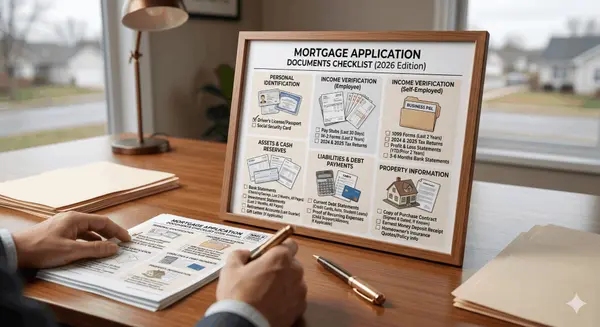
Your nonprofit partner submits your HPAP application to DHCD along with supporting documentation. Required documents typically include: proof of DC residency (12 months), income verification (pay stubs, tax returns, W-2s), bank statements, government-issued ID, and your signed purchase contract.
DHCD Reviews and Issues a Commitment Letter
DHCD reviews the application and issues a commitment letter specifying your approved assistance amount. Review times can vary — having all documents in order before submission is critical for avoiding delays.
Close on Your Home
At closing, HPAP funds are disbursed directly to the settlement attorney or title company and applied toward your down payment and closing costs. You sign the HPAP deed of trust in addition to your first mortgage documents, and become a homeowner.
📁 HPAP Document Checklist
- Government-issued photo ID
- Proof of DC residency for 12+ consecutive months (utility bills, lease, ID)
- Last 2 years of federal tax returns
- Last 2 months of pay stubs for all household members
- Last 2 months of bank statements (all accounts)
- Signed purchase contract (once you have one)
- Homebuyer education completion certificate
- Mortgage pre-approval letter from a DHCD-approved lender
Can You Combine HPAP With Other Programs?
Yes — and doing so strategically can dramatically reduce or even eliminate your out-of-pocket costs. HPAP is designed to work alongside a first mortgage, and there are several programs that stack well with it.
HPAP + FHA Loan
This is the most common pairing. An FHA loan requires 3.5% down with a 580+ credit score. HPAP can cover some or all of that down payment depending on your income tier, leaving you responsible for a minimal personal contribution ($500 minimum). The FHA loan handles the bulk of the purchase price while HPAP covers what your savings can't.
HPAP + DC Open Doors
DC Open Doors is a separate DHCD program offering a forgivable down payment loan equal to 3.5% of the purchase price, and access to below-market first mortgage rates. It has higher income limits (up to 130% AMI) and broader eligibility. In some cases, borrowers can combine HPAP and Open Doors — but this requires approval and careful coordination. Your nonprofit partner and lender will help determine if this stacking is available for your situation.
HPAP + Conventional Loan
Conventional loans (including Fannie Mae's HomeReady and Freddie Mac's Home Possible) require as little as 3% down and are compatible with HPAP assistance. Borrowers who qualify may benefit from lower mortgage insurance costs compared to FHA, making this worth exploring with your lender.
HPAP vs. DC Open Doors: Which Is Right for You?
Two of DC's most popular homebuyer programs serve different income ranges and use cases. Here's how they compare side by side:
| Feature | HPAP | DC Open Doors |
|---|---|---|
| Max Assistance | Up to $202,000 | 3.5% of purchase price |
| Income Limit | Up to 110% AMI | Up to 130% AMI |
| Repayment | Deferred (at sale/refi) | Forgivable after 5 years |
| Interest Rate | 0% (very low income) | 0% (forgivable) |
| DC Residency Required? | Yes — 12 months | Not required |
| First-Time Buyer Only? | Yes | Yes (generally) |
| Best For | Low/very low income DC residents with significant cash gap | Moderate-income buyers or non-DC residents buying in DC |
🏠 Thinking About Buying Near DC in Northern Virginia?
The Jamil Brothers team specializes in helping buyers find the right home in Arlington and Alexandria — just across the DC border, where your dollar may go further. Get a personalized buyer strategy session today.
Get a Buyer Strategy Session →Common Mistakes to Avoid With HPAP
First-time buyers often lose time, money, or their HPAP eligibility by making avoidable errors. Here are the most frequent mistakes and how to sidestep them:
- Not working with a HPAP-experienced lender. Not all lenders are familiar with HPAP coordination requirements. Choosing a lender who hasn't processed HPAP transactions before can lead to delays or disqualification.
- Starting the property search before the application. DHCD review takes time. If you fall in love with a home before your HPAP application is approved, you may lose it while waiting.
- Missing the 12-month DC residency window. If you moved to DC less than a year ago, you are not yet eligible. Mark your eligibility date and plan accordingly.
- Underestimating document requirements. HPAP requires thorough income and residency documentation. Having gaps — like missing tax returns or inconsistent addresses — can delay your application significantly.
- Assuming HPAP covers everything. HPAP covers your down payment and may partially cover closing costs, but you still need to account for prepaid items (insurance, taxes), inspection fees, and your required $500 minimum contribution.
- Forgetting about the deferred loan at resale. HPAP will reduce your net proceeds when you sell. Factor this into your long-term financial planning and run a net proceeds estimate before accepting any purchase offer in the future.
- Not considering nearby Virginia or Maryland options. If you've been a DC resident for less than a year, or earn slightly above 110% AMI, look into Northern Virginia or Maryland programs — some have less stringent residency rules or higher income caps.
Frequently Asked Questions About HPAP
1. What is the maximum HPAP assistance available in 2026?
The maximum HPAP down payment loan for very low-income households (at or below 40% AMI) is $202,000. An additional $4,000 in closing cost assistance is available to all eligible tiers. Low-income households (41–80% AMI) may receive up to $70,000, while moderate-income households (81–110% AMI) may receive up to $40,000. Amounts are subject to change annually based on DC DHCD program updates.
2. Does HPAP have to be repaid?
Yes. HPAP is a deferred second mortgage, not a grant. You do not make monthly payments while living in the home, but the loan balance must be repaid in full when you sell, refinance, or permanently move out of the property. For very low-income recipients, the loan carries 0% interest, meaning you repay exactly what you borrowed with no interest cost.
3. Can I use HPAP if I lived outside DC for part of the past year?
No. HPAP requires 12 consecutive months of DC residency immediately prior to your application date. If there is any gap in DC residency during that period, you will not qualify. You would need to wait until you meet the continuous residency requirement before applying.
4. Can I combine HPAP with an FHA loan?
Yes. FHA loans are among the most commonly used first mortgages alongside HPAP. HPAP funds can cover all or most of the 3.5% down payment required by FHA (for buyers with 580+ credit scores), leaving you responsible for only the $500 minimum personal contribution in many cases. Work with a DHCD-approved lender to structure the financing correctly.
5. Is the HPAP property required to be in Washington DC?
Yes. HPAP assistance can only be applied toward properties located within Washington DC city limits. The property must also be used as your primary residence — it cannot be used for investment or rental purposes. If you are considering homes in Northern Virginia or Maryland, separate DPA programs are available for those jurisdictions.
6. How long does the HPAP process take?
The full HPAP process — from contacting a nonprofit partner to closing — typically takes 60 to 90 days. DHCD review times can vary based on application volume and document completeness. Beginning the process before you start house hunting (or at least before going under contract) is strongly recommended to avoid timeline complications.
7. What credit score do I need for HPAP?
HPAP itself does not set a minimum credit score — that requirement comes from your first mortgage. If you use an FHA loan, the minimum is typically 580 (for 3.5% down). Conventional loan minimums vary by lender and program. JB Financing's team can evaluate your credit profile and help you identify the best loan pairing for your situation.
8. Can DC government employees get extra assistance beyond HPAP?
Yes. DC government employees may qualify for the Employer-Assisted Housing Program (EAHP), which can provide a matching contribution of up to $10,000 and a deferred loan of up to $80,000. In some cases, EAHP can be used alongside HPAP for significantly larger combined assistance. Contact your agency's HR department and a DHCD-approved nonprofit to explore eligibility.
9. What types of properties are eligible for HPAP?
HPAP generally covers single-family homes, condominiums, cooperatives, and townhomes in Washington DC, provided the property will be your primary residence. New construction homes may also be eligible. Investment properties, vacation homes, and multi-unit properties (where you will not occupy a unit) are not eligible.
10. How do I choose a mortgage lender for HPAP?
Choose a lender who is DHCD-approved, experienced with HPAP transactions, and willing to coordinate closely with your nonprofit partner throughout the process. JB Financing (ALCOVA Mortgage LLC, NMLS #40508) has experience working with DC homebuyer programs. Ken Byrne, Branch Partner (NMLS #187129), can be reached at (703) 927-4456 or kbyrne@alcova.com to discuss your specific situation and how HPAP fits with the mortgage options available to you.
11. Can I use HPAP if I earn above 80% AMI?
Yes. If your income falls between 81% and 110% of DC's AMI, you qualify for the moderate-income tier, which provides up to $40,000 in HPAP down payment assistance. The loan carries a simple interest rate (not 0%), but remains deferred until sale, refinance, or move-out. You also remain eligible for the $4,000 closing cost assistance add-on.
12. What happens to HPAP if I refinance my first mortgage?
A refinance is one of the events that can trigger repayment of the HPAP deferred loan. However, in some cases — particularly for rate-and-term refinances where you are not extracting equity — DHCD may allow the HPAP lien to be subordinated rather than repaid in full. This is evaluated on a case-by-case basis and requires DHCD approval. Always notify DHCD and your lender before refinancing if you have an active HPAP loan.
Glossary of Key Terms
| Term | Definition |
|---|---|
| Area Median Income (AMI) | The midpoint income for a given area, as calculated by HUD. Used to determine income eligibility thresholds for housing assistance programs. |
| Deferred Loan | A loan that does not require monthly payments. Repayment is postponed until a specific triggering event, such as a sale or refinance. |
| DHCD | DC Department of Housing and Community Development — the agency that administers HPAP and other DC homebuyer programs. |
| Down Payment Assistance (DPA) | Financial assistance provided to homebuyers to help cover the upfront down payment required to purchase a home. May take the form of a grant, forgivable loan, or deferred loan. |
| Deed of Trust | A legal document that secures a loan against a property. HPAP recipients sign a second deed of trust in addition to their first mortgage, giving DHCD a lien on the property until the HPAP loan is repaid. |
| Lien Subordination | An agreement by a junior lien holder (like DHCD) to remain in a lower priority position when a first mortgage is refinanced, allowing the refinance to proceed without triggering full HPAP repayment. |
| Simple Interest | Interest calculated only on the original loan principal — not on previously accrued interest. HPAP uses this method for low and moderate income tiers (not 0% like very low income). |
Conclusion: Is HPAP the Right Program for You?
For income-qualifying DC residents, HPAP is one of the most powerful tools available for bridging the affordability gap in one of America's most competitive housing markets. With up to $202,000 in deferred, interest-free assistance available to the lowest-income tier, the program can turn homeownership from a distant dream into a concrete near-term goal.
The key is preparation. The HPAP process involves multiple parties — a nonprofit partner, DHCD, and your lender — and coordination takes time. Starting early, gathering your documents, and working with an experienced mortgage team can mean the difference between a smooth closing and a frustrating experience.
If you're a DC resident who hasn't owned a home in the past three years and your income falls within the program limits, the next step is simple: connect with a DHCD-approved lender and a nonprofit partner to begin the process. There's no cost to apply, and the potential benefit can be life-changing.
And if your search extends into Northern Virginia — where many DC residents also consider homes in Arlington County or Alexandria — be sure to ask about Virginia's separate down payment assistance options, which may also offer meaningful support.
Ready to Take the Next Step Toward Homeownership?
Whether you're exploring HPAP, need a pre-approval letter to begin the process, or simply want to understand what you qualify for — our team is here to help. Contact Ken Byrne at (703) 927-4456, email kbyrne@alcova.com, or get pre-approved online today.
Get Pre-Approved Now →Selling your home? The Jamil Brothers team lists homes for just 1.5% commission — full service, no compromises. Learn about the 1.5% listing program →
Written by the JB Financing Team | ALCOVA Mortgage LLC, NMLS #40508
Ken Byrne, Branch Partner, NMLS #187129 | (703) 927-4456 | kbyrne@alcova.com
JB Financing | ALCOVA Mortgage LLC | NMLS #40508 | Equal Housing Lender. This content is for informational purposes only and does not constitute financial, legal, or tax advice. Loan approval is subject to qualification. Program details are subject to change — verify current HPAP terms at dhcd.dc.gov.
Categories
Recent Posts





GET MORE INFORMATION

Broker Associate