
How Much House Can I Afford in Maryland? (With Calculator)
How Much House Can I Afford in Maryland? (With Calculator)
By Ken Byrne, NMLS #187129 · ALCOVA Mortgage LLC, NMLS #40508 · Updated May 2026

Quick Answer: In Maryland, most lenders use the 28/36 rule, meaning your monthly mortgage payment should stay below 28% of your gross monthly income and your total debt should stay below 36%. On a $100,000 household income with average debts, you can typically afford a home priced between $340,000 and $420,000 in Maryland, depending on your down payment, credit score, and which county you're buying in.
Key Takeaways
- The 28/36 rule is the foundation of Maryland mortgage affordability — keep housing costs under 28% of gross income and total debt under 36%.
- Home prices vary widely by county — Montgomery County medians sit around $650,000 while Frederick and Prince George's offer entry points under $475,000.
- Down payment assistance is real money — the Maryland Mortgage Program (MMP) and SmartBuy 3.0 can cover up to $20,000 in student debt plus down payment help.
- Loan type changes everything — FHA, VA, and conventional loans each shift how much home you qualify for at the same income.
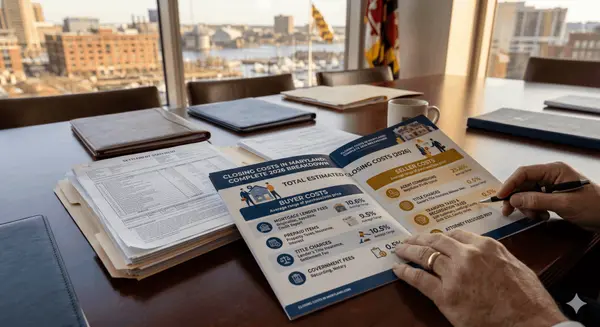
- Closing costs in Maryland typically run 3% to 5% of the purchase price, including state recordation and transfer taxes.
- Pre-approval is the only accurate number — every calculator estimates; a lender review tells you exactly what you'll qualify for.
Table of Contents
- The 28/36 Rule: How Maryland Lenders Decide What You Can Afford
- Maryland Affordability by Income: $75K, $100K, $125K, $150K Examples
- Maryland Home Prices by County
- What Goes Into Your Monthly Payment (PITI Breakdown)
- Loan Options That Change Your Maryland Affordability
- Maryland Down Payment Assistance Programs
- Closing Costs in Maryland: What to Budget
- Six Steps to Determine Your True Maryland Budget
- Your Maryland Homebuying Roadmap
- Frequently Asked Questions
- Glossary of Maryland Mortgage Terms
If you're shopping for a home in Maryland, the first question that needs a real answer isn't "how much will my dream home cost?" — it's "how much will a lender actually let me borrow?" Those two numbers are almost never the same, and the gap between them is where most first-time buyers in Maryland get stuck.
Maryland is a fascinating market because affordability swings wildly by county. A $500,000 budget makes you a serious buyer in Frederick or Baltimore County but barely gets you a townhouse in Bethesda. On top of that, Maryland has some of the most aggressive down payment assistance programs in the country — including student debt relief through SmartBuy 3.0 — which can reshape what you qualify for entirely.
This guide walks you through the exact math lenders use, real income-to-price examples, and the Maryland-specific programs and costs that determine your true budget. By the end, you'll know how to calculate your maximum affordable home price — and the steps to get a precise, lender-verified number.
The 28/36 Rule: How Maryland Lenders Decide What You Can Afford
Every Maryland mortgage lender — including ALCOVA Mortgage and every major bank — uses some version of the 28/36 rule to determine how much you can borrow. It works like this:
- Front-end ratio (28%): Your total monthly housing payment — principal, interest, taxes, insurance, and HOA — should stay below 28% of your gross monthly income.
- Back-end ratio (36%): Your total monthly debt payments, including the new mortgage, should stay below 36% of your gross monthly income.
The back-end number is what lenders actually call your debt-to-income ratio (DTI). Different loan programs allow different maximums — conventional loans can stretch to 45% DTI, FHA loans sometimes to 50% with compensating factors, and VA loans use a residual income test alongside DTI. Maryland lenders don't write their own rules; they follow Fannie Mae, Freddie Mac, FHA, and VA guidelines.
Here's why this matters: your income alone doesn't determine what you can afford. Two buyers earning the same $100,000 can qualify for very different loan amounts based on car payments, student loans, and credit card balances.
Maryland Affordability by Income: $75K, $100K, $125K, $150K Examples
The tables below show estimated maximum home prices in Maryland at common income tiers. These assume a 5% down payment, average debt load ($400/month in other debts), 720+ credit score, and 30-year fixed financing. Actual rates and qualifying amounts vary by lender and market conditions.
| Gross Annual Income | Max Monthly Housing Payment | Estimated Max Home Price | Maryland County Fit |
|---|---|---|---|
| $75,000 | ~$1,750 | $255,000 – $310,000 | Baltimore City, Cecil, Washington Co. |
| $100,000 | ~$2,335 | $340,000 – $420,000 | Frederick, Harford, Prince George's |
| $125,000 | ~$2,920 | $425,000 – $525,000 | Anne Arundel, Baltimore Co., Carroll |
| $150,000 | ~$3,500 | $510,000 – $630,000 | Howard, Montgomery, Charles |
Estimates are illustrative and assume average property tax, homeowner's insurance, and current interest rate environment. Your actual maximum depends on credit, debts, down payment, and program. Contact a licensed mortgage professional for a personalized analysis.
Run the Numbers
What Will Your Monthly Payment Be?
Use our mortgage calculator to estimate your monthly payment for any home price in Maryland — including taxes, insurance, and HOA.
Maryland Home Prices by County
The same income buys dramatically different homes across Maryland. Here's where median single-family home prices sit in early 2026 — the bar lengths visualize relative price levels.
For buyers in the DC metro counties — Montgomery, Prince George's, Frederick, Charles, and Calvert — the 2026 conforming loan limit is $1,249,125 for a single-family home. The FHA loan limit in those counties is $1,249,125. For the rest of Maryland, the standard conforming limit applies.
What Goes Into Your Monthly Payment (PITI Breakdown)
When lenders calculate that 28% housing ratio, they don't just count principal and interest. Your monthly payment in Maryland includes four components — collectively called PITI:
- Principal: The portion of your payment that pays down the loan balance.
- Interest: The cost of borrowing, set by your rate.
- Taxes: Maryland property taxes vary by county and city — Baltimore City has some of the highest rates statewide, while Talbot and Worcester counties are among the lowest.
- Insurance: Homeowner's insurance, plus mortgage insurance if you put down less than 20% on a conventional loan or use FHA financing.
In communities with an HOA — common across Montgomery, Howard, and Anne Arundel — that monthly dues figure also counts toward your housing ratio. A $250/month HOA can reduce your maximum home price by roughly $40,000 to $50,000 on a conventional loan.
Example: $400,000 Maryland Home, 5% Down, 30-Year Fixed
| Principal & Interest (illustrative) | ~$2,425 |
| Property Taxes (est. 1.0% annual) | ~$335 |
| Homeowner's Insurance | ~$95 |
| Mortgage Insurance (PMI/MIP) | ~$220 |
| Estimated Total Monthly Payment | ~$3,075 |
Illustrative example. Actual figures vary by rate, taxes, insurance, and loan program.
Loan Options That Change Your Maryland Affordability
The loan type you choose can shift your maximum affordable price by tens of thousands of dollars — sometimes by allowing a smaller down payment, sometimes by accepting higher DTI, sometimes by eliminating mortgage insurance entirely.
| Loan Type | Min. Down | Min. Credit | Loan Limit (DC Metro MD) | Best For |
|---|---|---|---|---|
| Conventional | 3% | 620 | $1,249,125 | Strong credit, can drop PMI |
| FHA | 3.5% | 580 | $1,249,125 | Lower credit, higher DTI flexibility |
| VA | 0% | 580–620 typical | No cap (full entitlement) | Veterans, active duty, surviving spouses |
| USDA | 0% | 640 | Income-based | Eligible rural MD areas (Carroll, Cecil) |
A buyer with 720 credit and $100,000 income looking at a $400,000 home will see meaningfully different qualifying numbers between FHA (3.5% down, higher MIP) and conventional (5% down, PMI removable at 20% equity). Your loan officer can model both side by side.
Free · No Commitment
See What You Qualify For Today
Get pre-approved in minutes and know exactly how much home you can afford in Maryland. No cost, no obligation.
Ken Byrne NMLS #187129 · ALCOVA Mortgage LLC NMLS #40508
Maryland Down Payment Assistance Programs
Maryland has one of the more generous down payment assistance landscapes in the country. These programs can directly raise the home price you can afford by covering down payment and closing costs you'd otherwise pay out of pocket.
Maryland Mortgage Program (MMP)
Administered by the Maryland Department of Housing and Community Development (DHCD), MMP offers competitive 30-year fixed financing combined with down payment and closing cost assistance. Assistance is typically structured as a no-interest deferred loan or a deferred second mortgage, with income and purchase price limits varying by county.
Maryland SmartBuy 3.0
SmartBuy 3.0 targets buyers carrying student loan debt. The program can help pay off up to $20,000 of qualifying student debt as part of buying a home in Maryland, alongside an MMP first mortgage. For buyers whose DTI is being throttled by student loans, this is one of the most powerful affordability levers in the country.
MHP Flex 5000
A $5,000 down payment and closing cost grant tied to an MMP loan, designed for buyers who need a lighter assistance package without the structure of a deferred second.
Baltimore City Live Near Your Work
Employer-matched down payment assistance for employees of participating Baltimore institutions — universities, hospitals, and other major employers — who buy a home in designated city neighborhoods.
Closing Costs in Maryland: What to Budget
Maryland is one of the more expensive states for closing costs because of state and county-level transfer and recordation taxes. Plan on 3% to 5% of the purchase price in addition to your down payment.
| Closing Cost | Typical Amount | Notes |
|---|---|---|
| State Transfer Tax | 0.25% – 0.5% | First-time buyers get a reduced rate |
| County Transfer Tax | Up to 1.5% | Varies by county |
| Recordation Tax | $5 – $12 per $1,000 | County-specific rates |
| Lender Fees | $1,500 – $3,500 | Origination, underwriting, appraisal |
| Title Insurance | $1,200 – $3,000 | Owner's + lender's policies |
| Prepaid Taxes & Insurance | 2–6 months | Funds the escrow account at closing |
First-time buyers in Maryland may qualify for reduced transfer tax rates — a quiet but meaningful savings on a $400,000 home that can be $1,000+ back in your pocket at closing.
Six Steps to Determine Your True Maryland Budget
Add up all qualifying income — base salary, regular bonus history, self-employment net income, rental income. Lenders use a two-year average for variable income.
Car loans, student loans, minimum credit card payments, child support, personal loans. Anything that shows up on your credit report counts toward DTI.
Multiply gross monthly income by 0.28 to get your maximum housing payment; by 0.36 to get your maximum total debt. Subtract existing debts from the 36% number — what remains is your housing ceiling.
More down means lower monthly payment but less cash for emergencies and closing costs. Keep 2–3 months of mortgage payments in reserves after closing.
A $400,000 home in Baltimore City carries a very different tax bill than one in Talbot County. Pull the actual tax history for any home you're seriously considering.
A calculator gives you a ballpark. A lender pulling credit and reviewing documentation gives you the actual number — and a letter that makes Maryland sellers take your offer seriously.
Ready to Start Your Search?
Browse Homes for Sale in Maryland
Once you know your budget, explore available homes across Montgomery, Howard, Anne Arundel, Frederick, and surrounding Maryland counties.
Your Maryland Homebuying Roadmap
Knowing how much house you can afford in Maryland comes down to three numbers: your income, your debts, and your down payment. The 28/36 rule gives you the framework, county-level home prices tell you where your budget will go furthest, and Maryland's down payment assistance programs — especially SmartBuy 3.0 for student loan borrowers — can stretch that budget further than buyers usually realize.
The next move is pre-approval. Working with a licensed Maryland mortgage professional turns rough estimates into a precise number you can shop with — and a letter that gets your offers taken seriously in competitive Maryland markets like Howard, Montgomery, and Anne Arundel. If you're also planning to sell a home as part of this move, exploring full-service listing options can free up additional cash for your purchase.
Buying & Selling?
Sell Your Current Home for Just 1.5%
If you're selling a home to buy your next one in Maryland, keep more of your equity with a 1.5% listing commission program. Full service, lower cost.
Frequently Asked Questions
How much house can I afford in Maryland on a $100,000 salary?
With average debts, good credit, and a 5% down payment, a $100,000 household income typically supports a home price between $340,000 and $420,000 in Maryland. Final qualifying amounts depend on your total debt, credit score, property taxes in your county, and loan type.
What credit score do I need to buy a house in Maryland?
FHA loans accept scores as low as 580 with 3.5% down. Conventional loans typically require 620. VA loans usually look for 580–620. Higher scores (720+) qualify you for better rates and lower mortgage insurance.
How much down payment do I need to buy a house in Maryland?
Conventional loans start at 3% down, FHA at 3.5%, and VA and USDA at 0% down for eligible borrowers. Maryland Mortgage Program (MMP) assistance and the MHP Flex 5000 grant can reduce out-of-pocket down payment significantly.
What are the closing costs to buy a house in Maryland?
Plan for 3% to 5% of the purchase price. Maryland has state transfer tax, county transfer tax, recordation tax, lender fees, title insurance, and prepaid taxes and insurance. First-time buyers may qualify for a reduced state transfer tax rate.
What is the conforming loan limit in Maryland for 2026?
In DC metro Maryland counties (Montgomery, Prince George's, Frederick, Charles, Calvert), the 2026 conforming loan limit is $1,249,125 for a single-family home, and the FHA limit is $1,249,125. Other Maryland counties follow the standard national conforming limit.
How do I get pre-approved for a mortgage in Maryland?
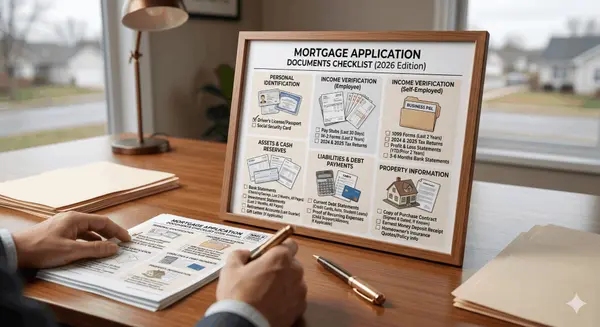
You'll submit recent pay stubs, two years of W-2s and tax returns, two months of bank statements, and ID. The lender pulls credit and issues a pre-approval letter showing your maximum loan amount. Most pre-approvals can be completed within 24–72 hours.
Does the Maryland SmartBuy 3.0 program really pay off student loans?
Yes. SmartBuy 3.0 can pay off up to $20,000 of qualifying student loan debt for buyers who finance through the Maryland Mortgage Program and meet income and purchase price limits. The funds go directly to the student loan servicer at closing.
How does DTI (debt-to-income ratio) affect what I can afford?
DTI is your total monthly debt — including the new mortgage — divided by gross monthly income. Conventional loans typically cap DTI at 45%, FHA can go to 50% with compensating factors, and VA uses a residual income test. Lower DTI means more home you can qualify for at the same income.
Is it a good time to buy a house in Maryland in 2026?
Maryland's market in 2026 features steady demand, tight inventory in core counties like Montgomery and Howard, and more selection in Frederick, Harford, and Cecil. The "right time" is when your finances, job stability, and timeline align — not when rates hit a magic number.
How do I find a good mortgage lender in Maryland?
Look for a lender licensed in Maryland with experience in MMP, SmartBuy, FHA, VA, and conventional loans. Verify NMLS credentials on the NMLS Consumer Access site. Ken Byrne (NMLS #187129) with ALCOVA Mortgage LLC (NMLS #40508) is licensed across VA, MD, DC, and WV and works with all major Maryland assistance programs.
Should I get pre-approved before I start house hunting in Maryland?
Yes. Pre-approval defines your real budget, identifies any credit issues early, and gives Maryland sellers confidence in your offer. Many listing agents in competitive counties won't even schedule showings without a pre-approval letter attached.
What if I have student loans — can I still afford a home in Maryland?
Absolutely. Student loans count toward DTI, but Maryland SmartBuy 3.0 was built specifically for borrowers in this situation — paying off up to $20,000 of qualifying debt to free up DTI capacity for the mortgage. Talk to a lender who knows the program.
Glossary of Maryland Mortgage Terms
- 28/36 Rule: The lending guideline that caps housing costs at 28% of gross monthly income and total debt at 36%.
- DTI (Debt-to-Income Ratio): Your total monthly debt payments divided by gross monthly income, expressed as a percentage.
- PITI: Principal, Interest, Taxes, and Insurance — the four components of a full monthly mortgage payment.
- PMI (Private Mortgage Insurance): Insurance required on conventional loans when down payment is less than 20%. Removable at 20% equity.
- MIP (Mortgage Insurance Premium): FHA's version of mortgage insurance, typically required for the life of the loan unless 10%+ is put down.
- MMP (Maryland Mortgage Program): The state's primary affordable financing program offering first mortgages and down payment assistance through DHCD.
- Conforming Loan Limit: The maximum loan size eligible for Fannie Mae/Freddie Mac backing — higher in DC metro Maryland counties.
- Pre-Approval: A lender's conditional commitment to finance up to a specific loan amount, based on verified income, credit, and assets.
Disclaimer: This article is for informational purposes only and does not constitute financial or legal advice. All payment examples, loan limits, program details, and affordability figures are illustrative and subject to change. Mortgage programs, rates, and eligibility requirements vary by lender and applicant. Contact a licensed mortgage professional for guidance specific to your situation. Ken Byrne, NMLS #187129 · ALCOVA Mortgage LLC, NMLS #40508 · Licensed in VA, MD, DC, WV.
Categories
Recent Posts






GET MORE INFORMATION

Broker Associate