
How Much Is a Mortgage on a $600,000 House? Monthly Payment in 2026
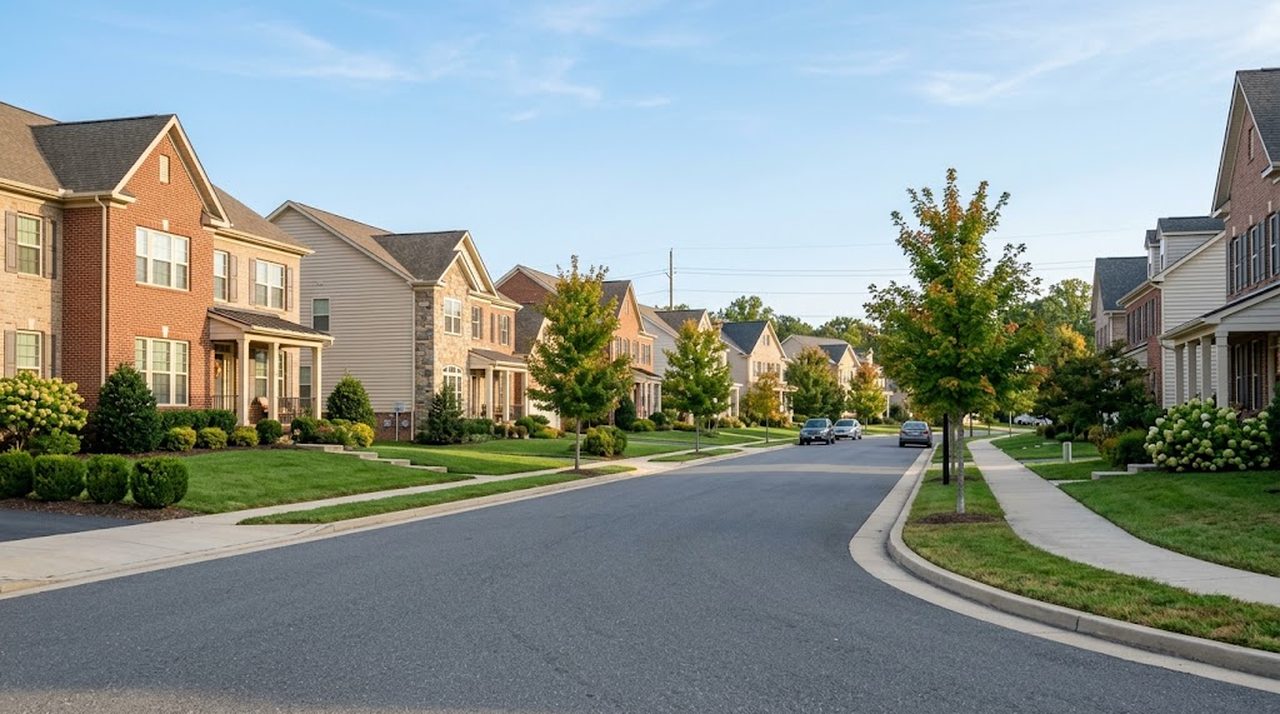
The same $600,000 house costs $223 a month more in Fairfax County than in Montgomery County, before anyone looks at your rate.
Short answer: at the current 30 year fixed average of 6.95 percent, a $600,000 house costs about $3,177 a month in principal and interest with 20 percent down, $3,575 with 10 percent down, $3,773 with 5 percent down and $3,853 with 3 percent down. County property tax adds $337 to $560 a month depending on which side of the river you buy on, and mortgage insurance, homeowners insurance and any HOA dues sit on top of that. The rate is the number everyone shops. The county line is the one that quietly moves the payment by more than a quarter point of rate.
By Ken Byrne, NMLS #187129 · ALCOVA Mortgage LLC, NMLS #40508 · Updated September 2026
Every payment calculator will give you principal and interest on a $600,000 house in about four seconds. What it will not tell you is that the same house carries a $223 a month spread in property tax across the DMV, that at this exact price an FHA loan stops working in most of Virginia, or that Virginia charges you recordation tax twice on the way in. This guide gives you the payment at every down payment level, the county tax calculated rather than estimated, the loan type comparison with real fees in it, and the income you need to carry it. If you want it run on a specific address, JB Financing, the Ken Byrne Team at ALCOVA Mortgage will do it the same day.
Monthly payment on a $600,000 house by down payment
Principal and interest only, 30 year fixed, calculated at 6.95 percent. This is the part of the payment that never changes for the life of the loan.
| Down payment | Cash down | Loan amount | Principal and interest | Difference from 20 percent |
|---|---|---|---|---|
| 3 percent | $18,000 | $582,000 | $3,853 | $676 more |
| 5 percent | $30,000 | $570,000 | $3,773 | $596 more |
| 10 percent | $60,000 | $540,000 | $3,575 | $398 more |
| 20 percent | $120,000 | $480,000 | $3,177 | baseline |
Calculated on a 30 year fixed at 6.95 percent, the Freddie Mac Primary Mortgage Market Survey average for the week ending September 17, 2026. Principal and interest only. Figures rounded to the nearest dollar. This is an illustration, not a rate quote.
The first $102,000 of down payment buys less than you expect. Going from 3 percent to 20 percent is $102,000 of cash and saves $676 a month in principal and interest. The mortgage insurance you also stop paying is what makes the gap meaningful, not the principal and interest on its own. Judge the trade on the full payment, not on this table alone.
The county decides more of your payment than you think
Property tax is the second largest line in the payment and it is the only one that changes purely because of where the house sits. On a $600,000 assessment, here is what each DMV jurisdiction collects, calculated from the published rate.
| Jurisdiction | Rate per $100 | Tax per year | Per month in escrow |
|---|---|---|---|
| Fairfax County, VA | $1.12 | $6,720 | $560 |
| Arlington County, VA | $1.053 plus $268 fee | $6,586 | $549 |
| Prince George's County, MD | $1.00 | $6,000 | $500 |
| Prince William County, VA | $0.865 | $5,190 | $432 |
| Washington DC, Class 1A | $0.85 after homestead | $4,360 | $363 |
| Loudoun County, VA | $0.805 | $4,830 | $403 |
| Montgomery County, MD | $0.6742 | $4,045 | $337 |
Rates as published by each jurisdiction. Fairfax is the base county rate before district levies, which some areas add. Arlington includes the flat $268 stormwater utility fee. The District figure applies the $87,050 homestead deduction to the assessed value before the rate. Maryland figures are the county rate only and exclude any municipal rate.
That spread is worth $33,700 of house. Fairfax at $560 a month against Montgomery at $337 is a $223 monthly difference on an identical $600,000 assessment. At 6.95 percent, $223 a month services about $33,700 of additional loan. So a buyer qualifying on payment alone can afford a materially more expensive house in Montgomery County than in Fairfax, on the same income, with the same rate. Nobody shops for a mortgage this way and almost everybody should.
The Virginia counties are the widest spread of the group. Fairfax and Loudoun sit next to each other and are $157 a month apart on the same assessment. If you are already deciding between two counties on commute or schools, this belongs in the comparison. We keep the full jurisdiction-by-jurisdiction breakdown in our guide to Northern Virginia property tax rates by county.
Half a point of rate moves less than the county line does
This is the cleanest way to see why the tax table above matters. Here is the same $600,000 house at five different rates, against the $223 a month that separates the cheapest and most expensive jurisdictions in the DMV.
| Rate | Principal and interest, 20 percent down | Change from 6.95 percent | Price you could buy for the same $3,177 |
|---|---|---|---|
| 6.45 percent | $3,018 | $159 less | $631,577 |
| 6.70 percent | $3,097 | $80 less | $615,432 |
| 6.95 percent | $3,177 | baseline | $599,934 |
| 7.20 percent | $3,258 | $81 more | $585,050 |
| 7.45 percent | $3,340 | $162 more | $570,751 |
All figures at a 20 percent down payment on a $600,000 house, 30 year fixed, calculated. The right-hand column solves backwards for the loan that produces the same $3,177 payment at each rate, then grosses it up to a purchase price at 80 percent loan to value.
A half point of rate is worth $159 a month. The county line is worth $223. Buyers will refresh rate pages daily and chase an eighth of a point, then pick between Fairfax and Montgomery on commute alone and never look at the tax. The second decision is the larger one and it is fixed for as long as you own the house, while the rate can be refinanced.

“Send me two addresses you are choosing between and I will send back both full payments with the actual county tax in them, not a national average.”
Arslan Jamil, Broker Associate
Loans originated by Ken Byrne, NMLS ID# 187129 · ALCOVA Mortgage LLC, NMLS ID# 40508. Equal Housing Lender.
Payment by loan type on a $600,000 house
The four programs do not just differ on down payment. Each one adds its own fee, and two of them add it to the loan rather than to your closing costs, which means you pay interest on it for 30 years.
| Loan type | Down payment | What is financed | Principal and interest | The fee you are paying |
|---|---|---|---|---|
| Conventional, 20 percent down | $120,000 | $480,000 | $3,177 | None, and no mortgage insurance |
| Conventional, 5 percent down | $30,000 | $570,000 | $3,773 | Private mortgage insurance, monthly, cancelable |
| FHA, 3.5 percent down | $21,000 | $589,132 | $3,900 | 1.75 percent up front, financed, plus 0.55 percent a year |
| VA, no down payment, first use | $0 | $612,900 | $4,057 | 2.15 percent funding fee, financed, no monthly insurance |
| VA, no down payment, repeat use | $0 | $619,800 | $4,103 | 3.30 percent funding fee, financed |
FHA figures: base loan $579,000 plus the 1.75 percent up-front premium of $10,133 financed (Mortgagee Letter 2012-4), with the annual premium at 0.55 percent of the base loan, about $265 a month (Mortgagee Letter 2023-05). VA funding fee rates from the Department of Veterans Affairs, effective for loans closed on or after April 7, 2023, and waived for veterans receiving or entitled to compensation for a service-connected disability. All principal and interest at 6.95 percent.
The VA rows are worth reading twice. A repeat VA borrower putting nothing down finances a $19,800 funding fee, which is $46 a month of the payment forever and roughly $16,500 of interest over 30 years on the fee alone. Putting 5 percent down drops that fee to 1.5 percent. The arithmetic is in our breakdown of the VA funding fee.
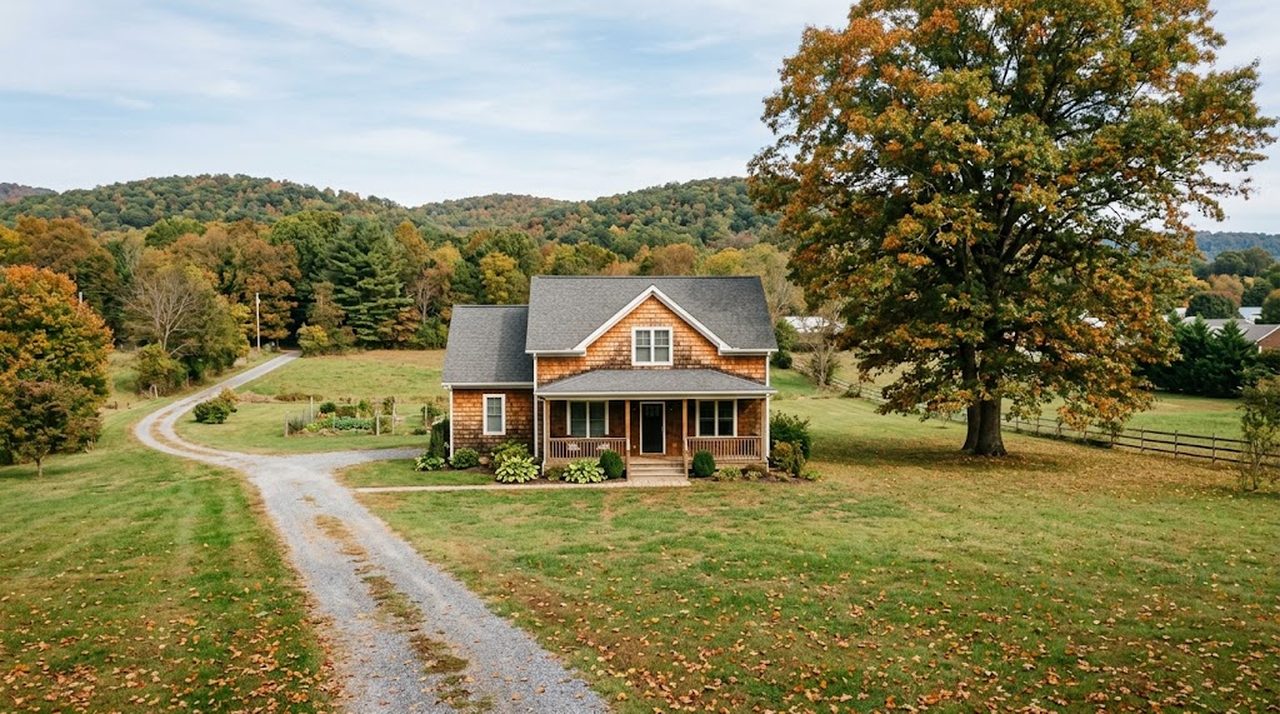
At 3.5 percent down the FHA base loan on a $600,000 house is $579,000, which is above the FHA limit everywhere in Virginia outside the metro areas.
The FHA problem at exactly this price
This is the part that catches people, and $600,000 is almost exactly where it starts. At 3.5 percent down the FHA base loan on a $600,000 house is $579,000. Now compare that to the 2026 FHA limit where you are buying.
| Where the house is | 2026 FHA one-unit limit | Is a $579,000 base loan allowed? |
|---|---|---|
| The 17 Northern Virginia jurisdictions | $1,249,125 | Yes, with a lot of room |
| Virginia Beach, Chesapeake, Norfolk | $757,850 | Yes |
| Richmond metro | $707,250 | Yes |
| Charlottesville metro | $598,000 | Yes, just |
| Everywhere else in Virginia | $541,287 | No. Over the limit by $37,713 |
HUD 2026 areas-at-ceiling and areas-above-floor lists, and Mortgagee Letter 2025-23 for the national floor of $541,287. Limits apply to case numbers assigned on or after January 1, 2026.
In most of Virginia you cannot buy a $600,000 house with an FHA loan at 3.5 percent down. The maximum purchase price at the Virginia floor, with the minimum down payment, is about $561,000. To get to $600,000 on FHA outside a metro area you would need roughly $59,000 down, which is 9.8 percent, at which point conventional is almost certainly the better loan. Inside Northern Virginia none of this applies, which is exactly why the metro tier exists.
This is also the price band where the difference between the two Virginias shows up most sharply, because $600,000 sits above the floor limit and far below the ceiling. The full four-tier picture is in our guide to FHA loans in Virginia.
Cash to close on a $600,000 house, and the Virginia tax nobody budgets
The down payment is not the cash you need. Closing costs are a separate number, and in Virginia one of them is charged twice on the same purchase.
| Down payment | Buyer recordation on the deed | Buyer recordation on the deed of trust | Total buyer recordation |
|---|---|---|---|
| 3 percent | $2,000 | $1,940 | $3,940 |
| 5 percent | $2,000 | $1,900 | $3,900 |
| 10 percent | $2,000 | $1,800 | $3,800 |
| 20 percent | $2,000 | $1,600 | $3,600 |
Virginia Code 58.1-801 charges 25 cents per $100 on the deed and 58.1-803 charges the same on the deed of trust, with 58.1-814 adding a local share of one third of the state amount. That works out to about $3.33 per $1,000, applied to the price and again to the loan. The grantor tax under 58.1-802 is a seller charge by default.
The thing national calculators miss is the second charge. Virginia records the deed and the deed of trust, and taxes both. An estimate that only counts the deed understates your recordation bill by roughly half. Notice too that a smaller down payment slightly increases this line, because the loan is larger. Our full breakdown of what Virginia buyers pay at closing sets out the rest of the sheet.
Want the real cash-to-close number on a $600,000 offer?
Arslan Jamil, Broker Associate
I will put the down payment, the recordation, the lender charges, the prepaid tax and insurance and the escrow setup on one page, for the specific county you are buying in, so you know what has to be in the account before you write the offer.
Loans originated by Ken Byrne, NMLS ID# 187129 · ALCOVA Mortgage LLC, NMLS ID# 40508. Equal Housing Lender.
What income do you need for a $600,000 house?
There is no single answer, because the number falls out of your debt-to-income ratio and the ceiling on that depends on the loan and on whether an automated system approved you. Here is the arithmetic with 20 percent down and the Fairfax County tax, at the ratios lenders actually work to.
| Back-end DTI | No other monthly debt | With $500 a month of other debt |
|---|---|---|
| 36 percent, conservative manual conventional | $124,578 | $141,245 |
| 43 percent | $104,298 | $118,252 |
| 45 percent, manual conventional maximum | $99,663 | $112,996 |
| 50 percent, the Desktop Underwriter ceiling | $89,696 | $101,696 |
Household income required per year, calculated from $3,177 principal and interest plus $560 of Fairfax County property tax, divided by the ratio. Homeowners insurance, mortgage insurance and HOA dues are not included and would raise every figure. Fannie Mae Selling Guide B3-6-02 sets the 50 percent Desktop Underwriter ceiling and the 36 to 45 percent manual range.
The spread is the point. The same house needs $124,578 or $89,696 of income depending entirely on which ratio your file is underwritten to, and that is before anyone touches the rate. If you are trying to work out whether you qualify, the ratio is the lever, not the price. We go through every program ceiling in our guide to the maximum debt-to-income ratio by loan type.
What these numbers deliberately leave out
Being straight about this matters more than a bigger headline figure, because the missing lines are real money and no honest source can put a national number on them.
| Line | Why it is not in the tables above | What to do about it |
|---|---|---|
| Homeowners insurance | No government body publishes premiums, and they vary by carrier, roof age, claims history and coverage | Get an actual quote before you write the offer, not after |
| Private mortgage insurance | Rates are set by private insurers off credit score and loan to value and are not published as a public table | Ask your lender for the specific factor on your file |
| HOA or condo dues | Set by the association, not by any rule | Read the resale package; in parts of Northern Virginia this is several hundred a month |
| Special district levies | Some Fairfax and other districts add a levy on top of the county rate | Check the parcel, not the county average |
| Utilities and maintenance | Not part of the mortgage payment but part of owning | Budget separately |
Where mortgage insurance does have a published number, we used it. The FHA premiums in the loan type table are HUD figures and are exact. Private mortgage insurance on the conventional rows is not, which is why no dollar amount is shown for it. We would rather leave a line blank than print a plausible-looking number you might plan around. Our guide to what mortgage insurance costs and when it ends explains how the factor is set.
One more piece of context on the price point itself. At $600,000 you are comfortably inside the 2026 conforming loan limit of $832,750, so this is ordinary conventional territory rather than jumbo, and you have the full range of programs available. If you are looking higher, the arithmetic changes shape again around the conforming line, and our payment breakdown on a $700,000 house picks it up from there.
Frequently asked questions
How much is a mortgage on a 600k house?
At the current 30 year fixed average of 6.95 percent, principal and interest on a $600,000 house is about $3,177 a month with 20 percent down and $3,773 with 5 percent down. County property tax adds roughly $337 to $560 a month across the DMV, and homeowners insurance, mortgage insurance and any HOA dues sit on top of that.
What is the monthly payment on a 600k mortgage?
A $600,000 loan at 6.95 percent on a 30 year fixed is about $3,972 a month in principal and interest. Note the difference from the question above: a $600,000 loan is not the same as a $600,000 house, because the house figure is reduced by your down payment.
How much do you need to make to afford a $600,000 house?
Between roughly $90,000 and $125,000 a year with 20 percent down and no other debt, depending on the debt-to-income ratio your loan is underwritten to. At the 50 percent Desktop Underwriter ceiling it is about $89,700. At a conservative 36 percent it is about $124,600. Other monthly debts raise both figures.
How much is the down payment on a $600,000 house?
$18,000 at 3 percent, $21,000 at the FHA minimum of 3.5 percent, $30,000 at 5 percent, $60,000 at 10 percent and $120,000 at 20 percent. Every one of those is calculated on the lesser of the purchase price or the appraised value, so paying over appraisal adds the gap in cash on top.
Can you buy a $600,000 house with an FHA loan?
In Northern Virginia, Maryland and DC, yes. In most of the rest of Virginia, not at the minimum down payment. The 3.5 percent base loan is $579,000 and the FHA limit outside the metro areas is $541,287, so you would need about 9.8 percent down to fit under it, at which point conventional is usually the better loan anyway.
How much are closing costs on a $600,000 house in Virginia?
Buyer recordation tax alone is about $3,600 to $3,940 depending on your loan size, because Virginia charges it on the deed and again on the deed of trust. Lender charges, title, the appraisal, prepaid taxes and insurance and the escrow setup are on top of that.
Is 20 percent down worth it on a $600,000 house?
It saves $676 a month in principal and interest against 3 percent down, and it removes mortgage insurance entirely on a conventional loan. Whether that is worth $102,000 of cash depends on what else the money would do and on whether you would be left with reserves after closing. Lenders look at what remains, not only at what you bring.
Which DMV county has the lowest property tax on a $600,000 house?
Of the jurisdictions in the table above, Montgomery County, Maryland is the lowest at about $337 a month on a $600,000 assessment, and Fairfax County, Virginia is the highest at about $560. The $223 gap is worth roughly $33,700 of borrowing power at the current rate.
Does a bigger down payment lower my property tax?
No. Property tax is charged on the assessed value of the house, not on your loan. The down payment changes your principal, interest and mortgage insurance. It does not change the tax line at all, which is why the county you buy in matters regardless of how you finance.
What rate were these figures calculated at?
6.95 percent, the Freddie Mac Primary Mortgage Market Survey 30 year fixed average for the week ending September 17, 2026. That is a national weekly average and not a quote. Your rate depends on your credit, loan to value, loan type, points and the day you lock.
“Give me a price, a county and roughly what you have for a down payment, and I will send back the full payment with the real county tax in it, the cash to close, and the income the file will actually need.”
Arslan Jamil, Broker Associate
Loans originated by Ken Byrne, NMLS ID# 187129 · ALCOVA Mortgage LLC, NMLS ID# 40508. Equal Housing Lender.
This article is general information, not financial or legal advice and not a commitment to lend or an offer of credit. Loan limits, program rules, premium schedules and rates change, and individual eligibility depends on a full review of your credit, income, assets and the property. Every figure here is an illustration, not a quote, built from published sources and a weekly survey average rather than underwriting decisions. Insurance and mortgage insurance amounts are planning estimates. Confirm anything you plan to act on with a licensed mortgage professional. Rates, property tax rates, loan limits, premium schedules and recordation rates cited here are published by Freddie Mac, the named jurisdictions, HUD and the Code of Virginia, and all of them change. County rates are set annually and some areas add district levies not shown here. Nothing here is a rate quote or a commitment to lend.
Categories
Recent Posts







GET MORE INFORMATION

Broker Associate