
DC Housing Market 2026: Is Now a Good Time to Buy in the DMV?
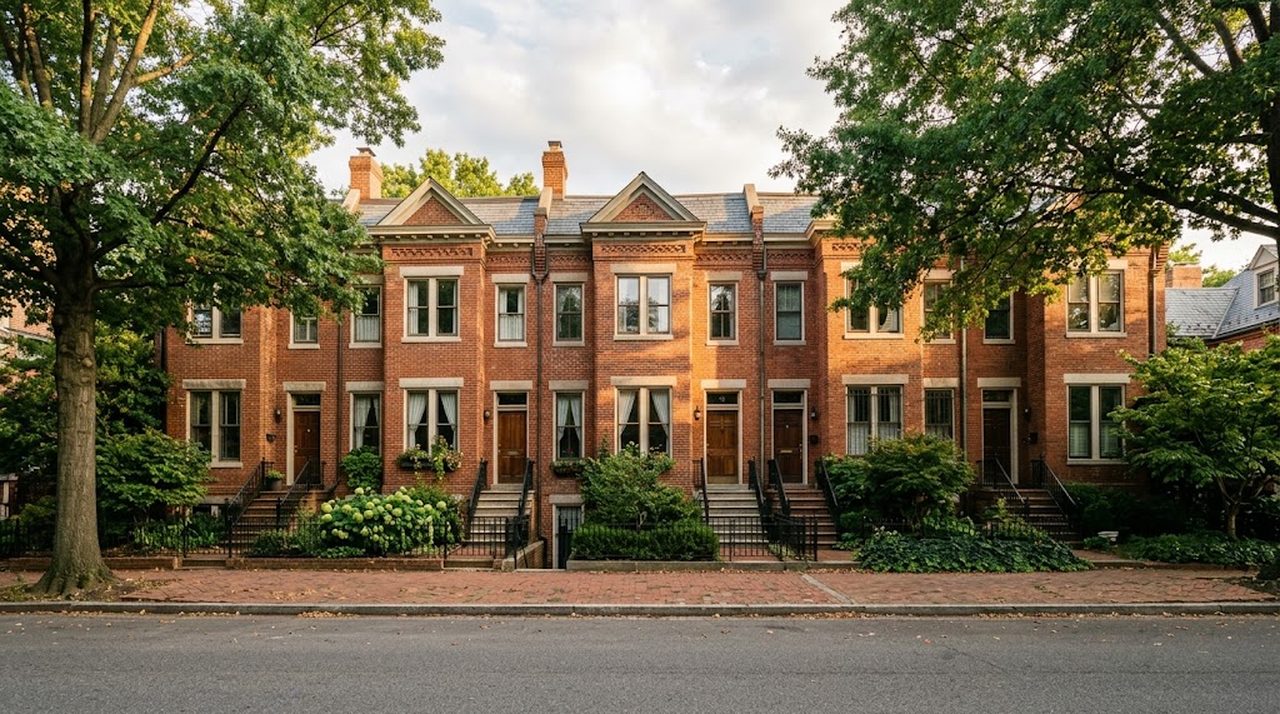
One median price hides two markets. In the DC area this fall, condo buyers and detached home buyers are not negotiating from the same position.
Short answer: it depends far more on what you are buying than on when. The DC housing market in August 2026 had a median sold price of $640,000, up 2.4 percent on a year earlier, with active listings up 11.3 percent and new pending sales down 11.5 percent. But that average is made of two different markets. Condos sit on 4.3 months of supply and their median price fell 5.7 percent. Single family homes sit on 2.15 months, and detached prices barely moved. If you are buying a condo or a townhouse, you have real leverage this fall. If you are buying a detached house in Northern Virginia, you are still in a seller’s market, just a slower one.
By Ken Byrne, NMLS #187129 · ALCOVA Mortgage LLC, NMLS #40508 · Updated September 2026
Every fall the same question comes in: is now a good time to buy a home in the DMV? The honest answer is that nobody can time a housing market, and anyone who tells you prices will fall next spring is guessing. What we can do is read the numbers that are actually published, month by month, and show what they mean for the kind of home you want and the payment you can carry. That is what this update does, using the August 2026 figures released in September. If you want your own numbers run against it, Ken Byrne at JB Financing can do that the same day.
The DC housing market in August 2026, in numbers
The broadest view comes from Bright MLS, which covers the whole Washington metro area. Its August report, published on September 10, is the most recent full month available.
| Measure, Washington DC metro | August 2026 | Change on August 2025 |
|---|---|---|
| Median sold price | $640,000 | Up 2.4 percent |
| Closed sales | 3,872 | Down 9.2 percent |
| New pending sales | Not stated as a count | Down 11.5 percent |
| Active listings at month end | 11,280 | Up 11.3 percent |
| New listings | Not stated as a count | Down 3.8 percent |
| Median days on market | 19 | Unchanged |
| Showings | Not stated as a count | Down 7.3 percent |
Bright MLS August 2026 Housing Market Report, Washington D.C. Metro Area, released September 10, 2026. Closed sales and the active listing count as reported by UrbanTurf from the same Bright MLS report on the same day.
Read together, those figures describe a market that is slowing without breaking. Fewer people are buying: closed sales and new contracts are both down by around a tenth. Fewer people are listing too, which is why prices have not fallen. Inventory is rising mainly because homes that do come on are not being absorbed as quickly, not because owners are rushing to sell. Bright MLS’s chief economist, Lisa Sturtevant, put the cause plainly: some buyers "are simply hitting an affordability ceiling."
Nineteen days is still fast. A median of 19 days on market means half of the homes that sold in August went under contract in under three weeks. That is not a buyer’s market by any normal definition. The shift is at the margin, and it is much larger in some property types than others.
Two markets under one median: condos and detached homes
The single most useful fact in this fall’s data is the split by property type. The same Bright MLS report showed condo listings up 28 percent on a year earlier. The result is two markets moving in different directions.
| Washington DC metro, August 2026 | Condos | Single family homes |
|---|---|---|
| Months of supply | 4.3 months | 2.15 months |
| Median price | $386,500, down 5.7 percent | $835,000 for detached homes, essentially flat |
| Who has the leverage | Increasingly the buyer | Still the seller |
Bright MLS August 2026 data as reported by UrbanTurf, September 10, 2026.
Months of supply is how long the current listings would last at the current pace of sales if nothing new came on. Many in the industry treat about six months as a balanced market. Condos are moving toward that line. Detached homes are nowhere near it.
Northern Virginia shows the same split even more sharply. In the Northern Virginia Association of Realtors area, detached home listings in August were down 8.5 percent on a year earlier, while condo listings were up 44.8 percent and townhouse listings up 29.9 percent.
| Northern Virginia active listings, August 2026 | Units | Change on August 2025 |
|---|---|---|
| Detached homes | 998 | Down 8.5 percent |
| All attached homes | 1,934 | Up 39.7 percent |
| Of which condos | 1,325 | Up 44.8 percent |
| Of which townhouses | 609 | Up 29.9 percent |
Northern Virginia Association of Realtors, August 2026 housing market report. The NVAR area covers Fairfax and Arlington counties, the cities of Alexandria, Fairfax and Falls Church, and the towns of Vienna, Herndon and Clifton. It does not include Loudoun or Prince William.
What this means in practice. A condo buyer this fall can often ask for seller credits toward closing costs or a rate buydown, write an inspection contingency, and take time to decide. A buyer of a detached single family house in Fairfax or Arlington is still likely to meet competition on the well priced ones. The same headline market, two very different negotiations.

“Tell me what you are looking at, condo, townhouse or detached, and roughly where. I will tell you what the payment looks like at today’s rate and how much room there is to negotiate on that kind of home right now.”
Arslan Jamil, Broker Associate
Loans originated by Ken Byrne, NMLS ID# 187129 · ALCOVA Mortgage LLC, NMLS ID# 40508. Equal Housing Lender.
Northern Virginia housing market: slower, still tight
Northern Virginia is slowing from a very tight starting point. The NVAR August report put the median sold price at $765,000, up 2.0 percent, with 1,324 closed sales, down 8.0 percent, and 2,932 active listings, up 18.5 percent. Homes averaged 26 days on the market, unchanged.
Even after that rise in listings, NVAR reported 2.08 months of supply in August, against 4.9 months nationally. Inventory growing by nearly a fifth sounds dramatic, but it is growth from a very low base, and most of it is in condos and townhouses.
Home values across the region tell a related story. On Zillow’s Home Value Index, which uses one method everywhere and so is useful for comparing places, the Virginia side edged up over the past year while the District and the Maryland suburbs edged down.
| Jurisdiction | Typical home value | Change over 12 months |
|---|---|---|
| Arlington County, VA | $806,890 | Up 0.8 percent |
| Loudoun County, VA | $795,391 | Up 1.4 percent |
| Fairfax County, VA | $760,599 | Up 0.9 percent |
| Montgomery County, MD | $611,206 | Down 0.6 percent |
| Prince William County, VA | $581,036 | Up 1.1 percent |
| Washington, DC | $570,082 | Down 1.0 percent |
| Prince George’s County, MD | $425,252 | Down 1.0 percent |
Zillow Home Value Index, updated August 31, 2026. A typical value is not a sale price and will differ from the MLS medians above, which measure only the homes that sold that month.
None of those moves is large. A one percent change in either direction is noise in a single year. The point is the direction: outside the condo segment, nowhere in the DMV is showing the kind of fall that would reward waiting on price alone. If you are weighing whether to keep renting instead, our rent versus buy analysis for Northern Virginia runs the break even by county.
What rates are doing to the payment
The bigger change over the past year is not price. It is the rate. Freddie Mac’s Primary Mortgage Market Survey put the 30 year fixed average at 6.95 percent for the week of September 17, 2026, up from 6.76 percent the week before and from 6.26 percent a year earlier. The 15 year fixed averaged 6.26 percent, against 5.41 percent a year earlier.
Here is what that difference does to principal and interest on the typical homes in this report.
| Home | Price | Down payment | P&I at 6.95 percent | P&I at 6.26 percent | Difference a month |
|---|---|---|---|---|---|
| DC metro median | $640,000 | 10 percent | $3,813 | $3,550 | $263 |
| DC metro median | $640,000 | 20 percent | $3,389 | $3,156 | $233 |
| Northern Virginia median | $765,000 | 10 percent | $4,558 | $4,244 | $314 |
| DC metro condo median | $386,500 | 10 percent | $2,303 | $2,144 | $159 |
| DC metro detached median | $835,000 | 20 percent | $4,422 | $4,117 | $304 |
Calculated on a 30 year fixed loan. 6.95 percent is the Freddie Mac PMMS average for the week of September 17, 2026; 6.26 percent is the same survey a year earlier. Principal and interest only. Property tax, homeowners insurance, mortgage insurance and any HOA or condo fee are excluded and would add to every figure.
That is the affordability ceiling in plain numbers. On the typical DC area home, the rise in rates over twelve months cost more each month than the rise in price did. What your own budget reaches depends on income and debts as much as rate; our guide to how much house you can afford in Northern Virginia works through it.
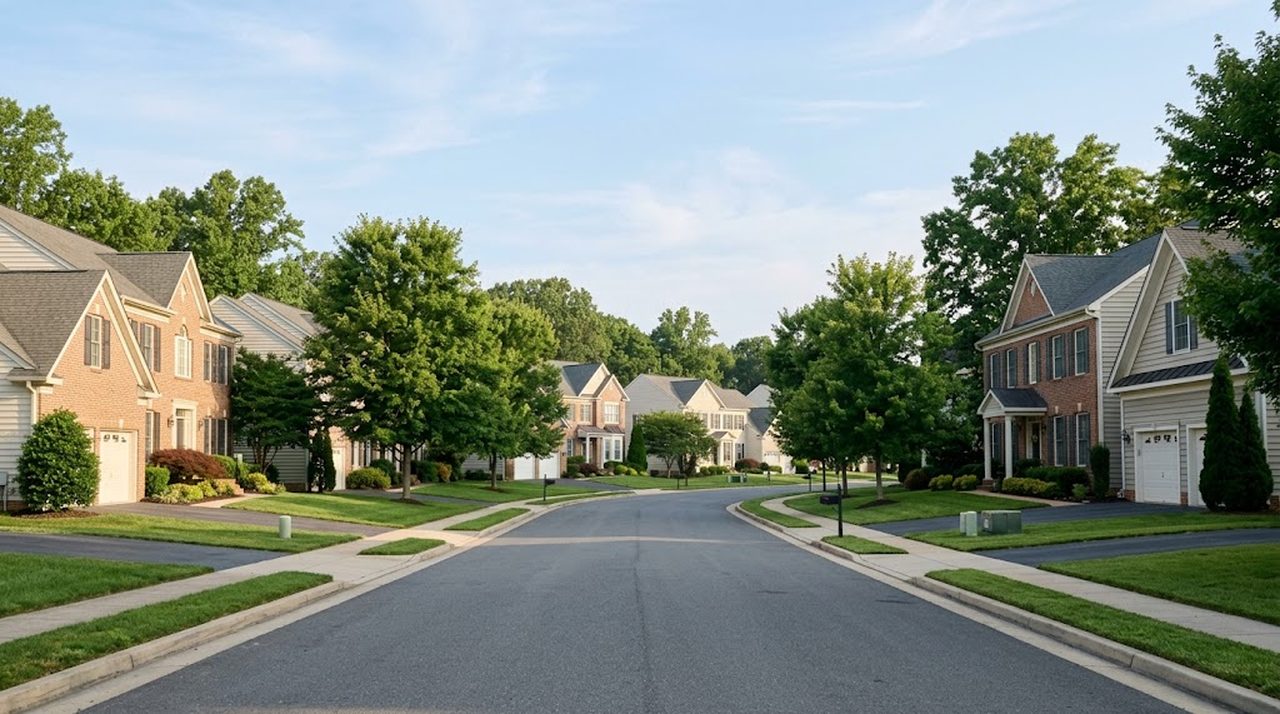
On the typical DC area home, the rise in mortgage rates over the past year added more to the monthly payment than the rise in price.
Is waiting for lower rates the better bet?
Waiting has a cost as well as a possible benefit, and you can put a number on the trade off without forecasting anything. Take the metro median of $640,000 with 10 percent down at 6.95 percent: principal and interest of $3,813 a month.
Now suppose you wait a year and prices rise by the same 2.4 percent they rose over the last twelve months. The same home costs $655,360. For your payment to stay at $3,813, the rate would have to fall to about 6.72 percent. Any rate above that and waiting cost you money; any rate below it and waiting paid off.
| If, a year from now | Price of the same home | Rate needed to match today’s payment |
|---|---|---|
| Prices rise 2.4 percent, as they did this year | $655,360 | About 6.72 percent |
| Prices are flat | $640,000 | 6.95 percent, no change needed |
| Prices fall | Below $640,000 | Today’s rate or somewhat higher |
Calculated. 10 percent down, 30 year fixed, principal and interest only. Illustration, not a forecast.
There is also an asymmetry worth knowing. If you buy now and rates fall meaningfully, you can refinance into the lower rate, subject to qualifying and closing costs. If you wait and prices rise, there is no equivalent way to buy back the lower price. When a refinance is actually worth the cost is set out in our guide on whether to refinance in 2026.
A refinance is an option, not a plan. Buy a payment you can carry at today’s rate for as long as you might have to. Treat any future refinance as a bonus if it comes, never as the thing that makes the purchase affordable.
Some buyers split the difference with an adjustable rate, taking a lower starting rate in exchange for the risk that it resets higher. Whether that suits you depends mostly on how long you expect to keep the loan; our comparison of fixed and adjustable rate mortgages covers the reset rules.
Buy now or wait?
Arslan Jamil, Broker Associate
I can run your own version of the table above: your price range, your down payment, today’s rate, and the rate you would need next year to come out even. It usually settles the question faster than any forecast.
Loans originated by Ken Byrne, NMLS ID# 187129 · ALCOVA Mortgage LLC, NMLS ID# 40508. Equal Housing Lender.
The federal jobs question
No DMV market update in 2026 is complete without the federal workforce. According to Bureau of Labor Statistics data reported by WJLA in July 2026, federal employment in the region fell from about 375,800 jobs to 312,500. Across all sectors, the Washington metro area had 73,200 fewer nonfarm jobs in July 2026 than a year earlier, a 2.2 percent drop, the BLS reported.
That is a real loss, and it helps explain the fall in pending sales. But the unemployment rate for the Washington metro area was 4.0 percent in July 2026, not seasonally adjusted, compared with 4.4 percent nationally, so the job losses have not translated into a regional unemployment rate above the national one.
On prices, the Center for Washington Area Studies reached a measured conclusion in its 2026 State of the Capital Region report: "we see no indication of a substantial and immediate price collapse at the metro level." The effect so far shows up as more listings in neighborhoods with high federal employment, not as falling values across the region.
If your own job is federal, the question that matters for a mortgage is not the regional trend but your own income history and how a lender will document it, which we cover in our guide for federal employees.
Who should buy now, and who should wait
Put the numbers together and the answer stops being about the market and starts being about you. These are the questions that decide it.
| Question | Leans toward buying now | Leans toward waiting |
|---|---|---|
| How long will you stay? | Five years or more | Under three years |
| What are you buying? | Condo or townhouse, where buyers have leverage | A detached house you can only just afford |
| Is your income stable? | Steady, documented, not at obvious risk | Mid job change or in a role under review |
| Can you carry the payment at today’s rate? | Yes, without counting on a refinance | Only if rates fall |
| Do you have reserves after closing? | Several months of payments set aside | The down payment would empty your savings |
A buyer who plans to stay, buys a type of home where sellers are negotiating, and can carry the payment at 6.95 percent has little reason to wait for a better month that may not come. A buyer stretching for a detached house in a tight submarket, on an income that might change, is better served by building reserves and watching the condo and townhouse data for another season.
Where you buy matters as much as when. Maryland and the District have different transfer taxes, assistance programs and price levels from Virginia; our Maryland affordability guide covers the other side of the river.
For buyers looking inside the District itself, local programs and the city’s own tax rules change the math again, and our Washington DC home loans page sets out what is available.
Frequently asked questions
Is now a good time to buy a house in the DMV?
It depends mainly on what you are buying. In August 2026 condos had 4.3 months of supply and falling prices, which favors buyers. Single family homes had 2.15 months and detached prices were flat, which still favors sellers. If you can carry the payment at today’s rate and plan to stay five years or more, waiting for a better market is a guess, not a plan.
What is the median home price in the DC area right now?
Bright MLS reported a median sold price of $640,000 for the Washington DC metro area in August 2026, up 2.4 percent from August 2025. In the Northern Virginia Association of Realtors area it was $765,000.
Are home prices dropping in the DC area?
Not across the region. The metro median rose 2.4 percent over the year. Condo prices fell 5.7 percent to a median of $386,500, and on Zillow’s index the District and Prince George’s County each dipped about 1 percent. Detached home prices were essentially flat.
Is the DC housing market a buyer’s market?
For condos it is moving that way, with 4.3 months of supply. For single family homes it is still a seller’s market at 2.15 months. Many in the industry treat about six months of supply as balanced.
What is happening in the Northern Virginia housing market?
Slower but still tight. NVAR reported 1,324 closed sales in August 2026, down 8.0 percent, a median of $765,000, up 2.0 percent, and 2.08 months of supply against 4.9 nationally. Nearly all the new inventory is condos and townhouses; detached listings fell.
What are mortgage rates right now?
Freddie Mac’s survey put the 30 year fixed average at 6.95 percent and the 15 year fixed at 6.26 percent for the week of September 17, 2026. A year earlier they were 6.26 percent and 5.41 percent. Your own rate depends on credit, down payment, loan type and points.
Should I wait for mortgage rates to drop before buying?
Only if you can say how far they need to fall. On a $640,000 home with 10 percent down, if prices rise 2.4 percent over a year, rates would need to fall to about 6.72 percent just to keep the same payment. Buying now and refinancing later is possible if rates fall, but you should be able to afford the payment without it.
How have federal job cuts affected DC home prices?
The region lost 73,200 nonfarm jobs between July 2025 and July 2026, and federal employment fell sharply. The effect so far has been fewer sales and more listings in some neighborhoods rather than falling prices across the metro area. Unemployment was 4.0 percent in July, below the national 4.4 percent.
Is it better to buy a condo or a house in the DC area right now?
As a negotiation, condos are easier this fall: more supply, falling prices, more room for seller credits. Check the condo fee and the building’s finances carefully, since the fee counts in your debt to income ratio and can change what you qualify for.
Will home prices in the DMV go down in 2027?
Nobody knows, and no published data supports a confident forecast either way. What the data does show is prices rising slowly, sales falling, and inventory rising mostly in condos and townhouses. Plan around a payment you can carry, not a prediction.
“Send me the kind of home you want, the area and the price range. I will send back the payment at today’s rate, what you would qualify for, and the rate you would need next year to make waiting worth it.”
Arslan Jamil, Broker Associate
Loans originated by Ken Byrne, NMLS ID# 187129 · ALCOVA Mortgage LLC, NMLS ID# 40508. Equal Housing Lender.
This article is general information, not financial or legal advice and not a commitment to lend or an offer of credit. Loan limits, program rules, premium schedules and rates change, and individual eligibility depends on a full review of your credit, income, assets and the property. Every figure here is an illustration, not a quote, built from published sources and a weekly survey average rather than underwriting decisions. Insurance and mortgage insurance amounts are planning estimates. Confirm anything you plan to act on with a licensed mortgage professional. Market figures are from Bright MLS (including as reported by UrbanTurf), the Northern Virginia Association of Realtors, Zillow, the Bureau of Labor Statistics (including as reported by WJLA) and the Center for Washington Area Studies as published for August 2026 or the latest month available, and rates are from the Freddie Mac Primary Mortgage Market Survey. Payment figures are illustrations on stated assumptions, not a quote. Nothing here is a forecast of future prices or rates.
Categories
Recent Posts







GET MORE INFORMATION

Broker Associate