
Jumbo vs Conforming Loan: When DMV Buyers Need a Jumbo (2026)
Jumbo vs Conforming Loan: When DMV Buyers Need a Jumbo (2026 Guide)
By Ken Byrne, NMLS #187129 · ALCOVA Mortgage LLC, NMLS #40508 · Updated May 2026
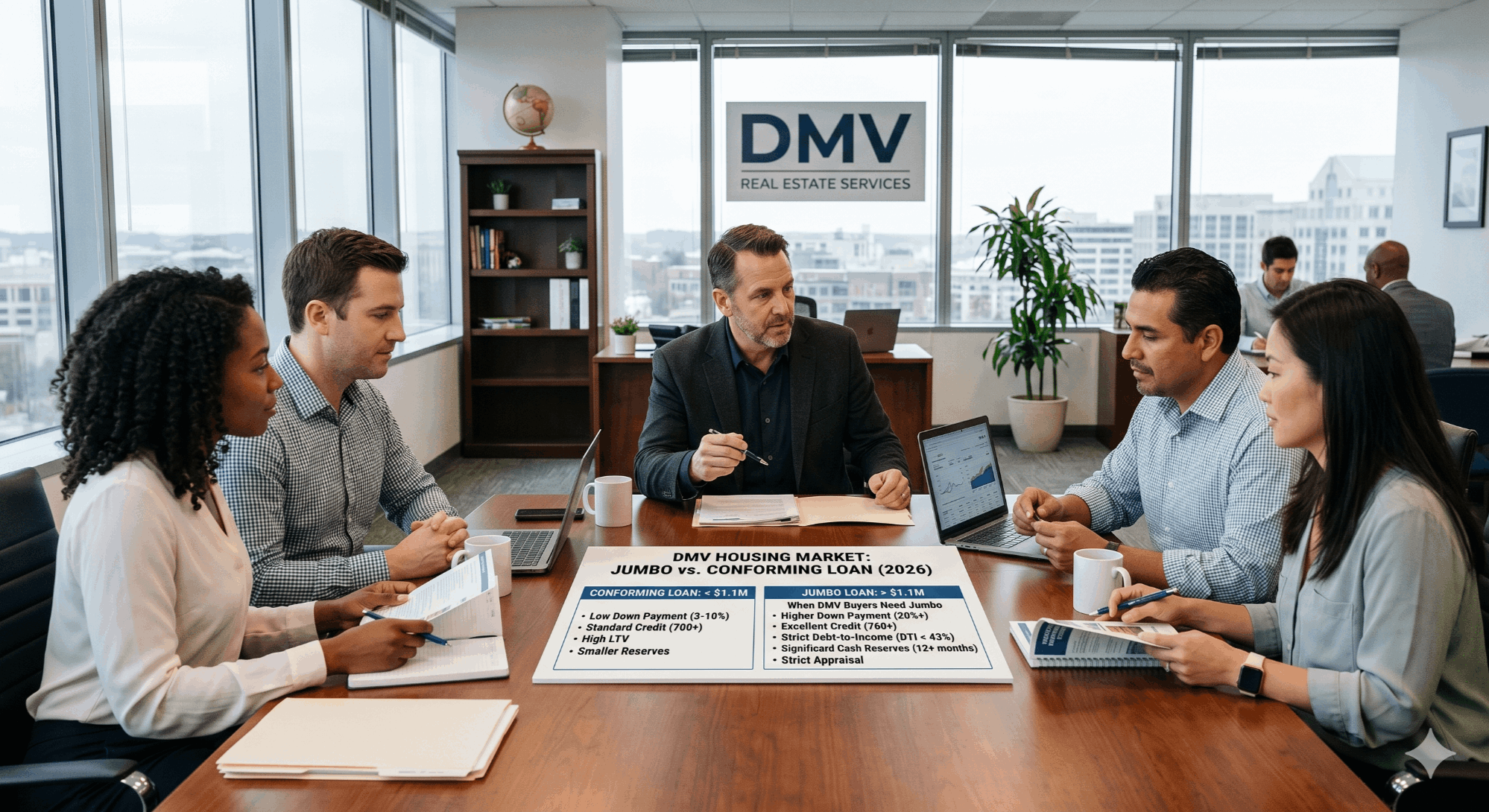
Quick Answer: In 2026, the conforming loan limit in the high-cost DC metro area is $1,249,125 for a single-family home — well above the $832,750 national baseline. You need a jumbo loan only when the amount you finance exceeds that $1,249,125 ceiling, which in the DMV typically happens with luxury homes, large lot purchases, or buyers making small down payments on $1.3M+ properties. Most Northern Virginia, suburban Maryland, and DC buyers stay within conforming limits and never need a jumbo at all.
Key Takeaways
- The 2026 DC metro conforming limit is $1,249,125 for one unit — many national sites quote the wrong figure.
- A loan is "jumbo" only above that limit — the home price can be higher if your down payment keeps the loan amount under the ceiling.
- Jumbo loans have stricter underwriting: higher credit scores, larger reserves, and lower DTI tolerance than conforming.
- Most DMV buyers never need a jumbo — even in Arlington, Falls Church, or McLean, a moderate down payment often keeps you conforming.
- Smart strategies like a larger down payment, a piggyback second, or applying sale proceeds can keep you in the lower-cost conforming lane.
- Local expertise matters — DC metro high-cost rules differ from the rest of the country.
Table of Contents
- What Is a Conforming Loan?
- What Is a Jumbo Loan?
- 2026 Conforming Loan Limits in the DC Metro
- Jumbo vs Conforming: Side-by-Side
- When Do DMV Buyers Actually Need a Jumbo?
- Jumbo Loan Requirements: Credit, Down Payment, Reserves
- The Jumbo Application Process, Step by Step
- Pros and Cons of Jumbo Loans
- Strategies to Avoid a Jumbo Loan
- Jumbo Loan Mistakes to Avoid
- How to Choose a Lender for a Jumbo Loan
- The Bottom Line for DMV Buyers
- Frequently Asked Questions
- Glossary
If you're shopping for a home in Northern Virginia, suburban Maryland, or Washington DC, you've probably heard the words "jumbo loan" and felt a small jolt of anxiety. The term sounds expensive and intimidating — and in some markets it genuinely is. But here's what most buyers in the DMV don't realize: because we live in one of the highest-cost housing regions in the country, the federal government sets a much higher conforming loan limit here than almost anywhere else in America.
That single fact changes everything. A $1.1 million home in Loudoun County might still be financed with a standard conforming loan, while the exact same price in a low-cost rural county would push you into jumbo territory. Understanding where that line sits in 2026 — and how to stay on the favorable side of it — can save DMV buyers thousands of dollars and a great deal of paperwork.
This guide breaks down exactly what separates a conforming loan from a jumbo, the precise 2026 limits for the DC metro area, when buyers in our region truly need a jumbo, and the practical strategies you can use to avoid one if you'd rather not deal with the stricter underwriting. Everything here is written in plain English, with the local detail that national sites simply can't provide.
What Is a Conforming Loan?
A conforming loan is a conventional mortgage that meets the funding criteria set by the Federal Housing Finance Agency (FHFA) and can therefore be purchased by Fannie Mae or Freddie Mac. The single most important of those criteria is the loan amount: it must fall at or below the annual conforming loan limit for the county where the property sits.
Because Fannie Mae and Freddie Mac stand behind conforming loans, lenders can offer them with competitive interest rates, more flexible down payment options, and standardized underwriting. The 2026 baseline conforming limit for most of the country is $832,750 for a one-unit home. But in designated high-cost areas — and the entire DC metro qualifies — that limit is raised to a "high-cost" ceiling of $1,249,125 for a single-family property.
In practical terms, "conforming" is the default lane for the vast majority of homebuyers. It comes with the broadest set of products: low-down-payment options, gift-fund flexibility, and the most predictable approval path. The phrase "conventional loan" is often used interchangeably, though strictly speaking a conventional loan can also be non-conforming if it exceeds limits — which is precisely where jumbo loans come in.
What Is a Jumbo Loan?
A jumbo loan is any mortgage with a loan amount that exceeds the conforming limit for the county. In the DC metro, that means a loan above $1,249,125 in 2026. Because these loans are too large to be sold to Fannie Mae or Freddie Mac, lenders either hold them on their own books or sell them to private investors. That added risk for the lender translates into stricter qualifying standards for you.
A crucial nuance: the "jumbo" label attaches to the loan amount, not the home price. A buyer purchasing a $1.5 million home in McLean who puts down $300,000 would finance $1.2 million — comfortably under the DC metro ceiling and therefore conforming. The same home with only 5% down would push the loan to roughly $1.43 million and become a jumbo. Your down payment, not just the sticker price, determines which side of the line you land on.
Jumbo loans aren't inherently bad. They make high-value purchases possible and, in a competitive rate environment, jumbo pricing can sometimes be very close to conforming. The trade-off is documentation: expect deeper income verification, larger cash reserve requirements, and tighter credit and debt-to-income standards.
2026 Conforming Loan Limits in the DC Metro
This is where DMV buyers gain a real advantage that national articles consistently get wrong. The Washington–Arlington–Alexandria metropolitan area is classified as a high-cost area, so the 2026 conforming limit here is far above the national baseline. Here are the figures that matter:
| Loan Category (Single-Family) | 2026 Limit | Applies To |
|---|---|---|
| National baseline conforming limit | $832,750 | Most U.S. counties |
| DC metro high-cost conforming limit | $1,249,125 | VA, MD & DC counties in the DC metro |
| DC metro FHA loan limit | $1,249,125 | FHA-insured purchases in the DC metro |
| Anything above $1,249,125 | Jumbo | Private / portfolio underwriting |
The high-cost limit applies across the DC metro counties — including Fairfax, Loudoun, Prince William, Arlington, and Alexandria in Virginia; Montgomery, Prince George's, and Frederick in Maryland; and the District of Columbia itself. If you read a national source claiming the conforming limit is around $832,750, that figure simply does not apply to your purchase here. The correct number for a one-unit home in our market is $1,249,125.
Free · No Commitment
See What You Qualify For Today
Get pre-approved in minutes and find out whether your purchase falls under the conforming limit or into jumbo territory in the DC metro market. No cost, no obligation.
Ken Byrne NMLS #187129 · ALCOVA Mortgage LLC NMLS #40508
Jumbo vs Conforming: Side-by-Side
The clearest way to understand the difference is to put the two loan types next to each other. The table below summarizes how conforming and jumbo loans typically compare in the DMV market. Exact terms vary by lender and borrower profile, so treat these as general guidance rather than guarantees.
| Feature | Conforming Loan | Jumbo Loan |
|---|---|---|
| Loan amount (DC metro, 2026) | Up to $1,249,125 | Above $1,249,125 |
| Backed by Fannie/Freddie | Yes | No |
| Typical minimum credit score | 620+ | 700–740+ |
| Typical minimum down payment | 3%–5% | 10%–20%+ |
| Cash reserve requirement | Often minimal | 6–12+ months common |
| Debt-to-income tolerance | More flexible | Tighter (often ≤43%) |
| Documentation | Standard | More extensive |
| Interest rate | Varies — generally competitive | Varies — can be close to conforming |
When Do DMV Buyers Actually Need a Jumbo?
Because of the elevated $1,249,125 ceiling, far fewer DMV buyers need a jumbo than they assume. To require a jumbo loan, your financed amount — not your purchase price — has to exceed that figure. Here are the situations where it genuinely comes into play in our market:
Luxury and estate purchases
Higher-end neighborhoods — think parts of McLean, Great Falls, Potomac, and select pockets of NW DC — regularly trade above $1.5 million. With a typical 20% down payment on a $1.6 million home, the loan would be roughly $1.28 million, just over the limit and therefore jumbo.
Low down payment on a high-priced home
A buyer purchasing a $1.35 million home with only 5% down would finance about $1.28 million, crossing into jumbo even though the price isn't extreme by DMV standards. The smaller your down payment on an expensive property, the more likely you'll need a jumbo.
Buyers stretching budget in top-tier counties
In the most expensive submarkets — Falls Church City, Arlington's premium corridors, and parts of Montgomery County — move-up buyers targeting larger homes can land just over the line. Often a modest adjustment to the down payment is all it takes to stay conforming.
For the typical first-time or move-up buyer in Loudoun, Prince William, Frederick County MD, or most of Fairfax, home prices and loan amounts comfortably stay under the conforming ceiling. A jumbo is the exception, not the rule, in the DMV.
Jumbo Loan Requirements: Credit, Down Payment, Reserves
Because jumbo loans aren't backed by Fannie Mae or Freddie Mac, lenders apply more conservative standards. The exact bar varies by lender and by your overall financial picture, but the visuals below show typical ranges compared with conforming.
Typical Minimum Credit Score
Typical Minimum Down Payment
Cash reserves
Jumbo lenders commonly want to see six to twelve months — sometimes more — of mortgage payments held in reserve after closing. This demonstrates you can weather an income disruption on a large loan. Reserves can often include retirement and brokerage accounts at a discounted value.
Income and documentation
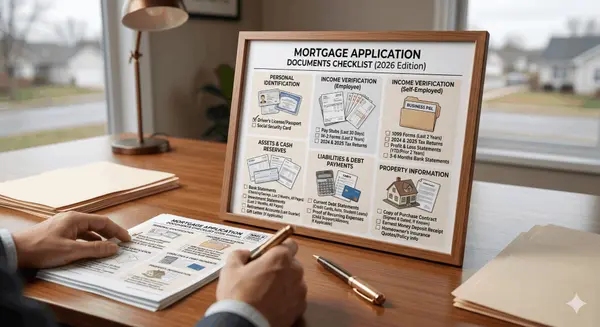
Expect thorough verification: two years of tax returns, recent pay stubs, W-2s or 1099s, and detailed asset statements. Self-employed and commission-based borrowers should anticipate additional scrutiny of income stability. A clean, well-documented file moves a jumbo through underwriting far more smoothly.
Run the Numbers
What Will Your Monthly Payment Be?
Use our mortgage calculator to estimate your monthly payment for any home price in Virginia, Maryland, or DC — and see how a larger down payment can keep you conforming.
The Jumbo Application Process, Step by Step
A jumbo application follows the same general arc as any mortgage, with a few extra checkpoints. Here's the typical path from start to closing in the DMV.
Pre-approval. Submit income, asset, and credit documentation so a lender can confirm your true purchasing power and whether you'll need a jumbo.
Home search & offer. Shop within your verified budget and submit a competitive offer with a strong pre-approval letter attached.
Full application. Lock in your loan type, provide complete documentation, and disclose all assets and reserves.
Appraisal. Jumbo loans sometimes require two appraisals on very high-value homes to confirm the property supports the loan amount.
Underwriting. Expect deeper review of income stability, reserves, and credit. Respond quickly to documentation requests.
Clear to close. Final approval is issued, you review closing figures, and you sign at settlement — typically with a Virginia, Maryland, or DC title company.
Pros and Cons of Jumbo Loans
| Advantages | Trade-offs |
|---|---|
| Finance high-value homes that exceed conforming limits | Stricter credit and income standards |
| A single loan instead of stacking multiple mortgages | Larger down payment usually required |
| Competitive pricing in many rate environments | Significant cash reserves expected |
| Fixed and adjustable structures available | More documentation and longer underwriting |
Strategies to Avoid a Jumbo Loan
If you'd rather keep the simpler underwriting of a conforming loan, several approaches can keep your financed amount at or below the $1,249,125 DC metro ceiling.
Increase your down payment
The most direct lever. On a $1.4 million home, bringing roughly $151,000 (about 11%) to closing keeps the loan right at the conforming limit. Even shifting a few percentage points can move you across the line into conforming territory.
Use a piggyback (80/10/10) structure
A first mortgage at the conforming limit paired with a smaller second mortgage and a down payment can cover a higher purchase price while keeping the primary loan conforming. This adds complexity, so weigh the combined cost carefully with your loan officer.
Apply proceeds from selling your current home
For move-up buyers, equity from your existing home is often the cleanest path to a larger down payment — and a larger down payment is exactly what keeps you conforming. If you're selling and buying at the same time, working with a licensed real estate professional who can coordinate timing helps you put as much of that equity toward the new purchase as possible, and full-service listing options at a reduced commission can keep more of your proceeds in your pocket.
Selling & Buying at Once?
Keep More of Your Home Equity
If you're selling a home to fund your next purchase, a full-service listing at a 1.5% commission can preserve more equity for your down payment — which can help you stay in the conforming lane.
Negotiate the purchase price
In a balanced market, a successful negotiation that brings a $1.27 million asking price down to the conforming range can shift you out of jumbo underwriting entirely. Your agent's pricing strategy can directly affect which loan type you qualify for.
Jumbo Loan Mistakes to Avoid
- Assuming "expensive home = jumbo." Your down payment determines the loan amount and therefore the loan type — not the sticker price alone.
- Using the wrong loan limit. Don't apply the $832,750 national baseline here; the DC metro limit is $1,249,125.
- Underestimating reserve requirements. Spending down savings on the down payment without leaving reserves can derail a jumbo approval.
- Opening new credit before closing. A new car loan or credit line can push DTI out of range on a tightly underwritten jumbo.
- Skipping the pre-approval. Without a verified picture of your numbers, you won't know if a small down payment adjustment could save you from jumbo underwriting.
- Not comparing structures. A piggyback or larger down payment is sometimes cheaper overall than a single jumbo — run the comparison.
How to Choose a Lender for a Jumbo Loan
Jumbo lending rewards local expertise. Because high-cost limits and DMV market dynamics differ from the national norm, the right lender should be able to do these things well:
- Confirm whether your specific purchase actually requires a jumbo, or whether a small structural change keeps you conforming.
- Explain reserve and documentation requirements clearly before you write an offer.
- Offer both conforming and jumbo products so you can compare side by side.
- Be reachable and responsive during the time-sensitive underwriting window.
Locally, Ken Byrne (NMLS #187129) with ALCOVA Mortgage LLC (NMLS #40508) works with DMV buyers across Virginia, Maryland, DC, and West Virginia and can walk you through both conforming and jumbo scenarios for your specific price point. You can reach him at (703) 927-4456 or kbyrne@alcova.com. Whatever lender you choose, prioritize someone who knows the high-cost rules of this region rather than applying generic national figures.
The Bottom Line for DMV Buyers
The takeaway is reassuring: most DMV buyers never need a jumbo loan. With the 2026 DC metro conforming limit at $1,249,125 — far above the national baseline — even fairly expensive homes in Northern Virginia, suburban Maryland, and DC can be financed conventionally with the right down payment. A jumbo becomes necessary only when your financed amount climbs above that ceiling, which is the exception rather than the norm here.
If your purchase does push into jumbo territory, it's entirely manageable with strong credit, adequate reserves, and clean documentation. And if you'd prefer to stay conforming, a larger down payment, a piggyback structure, or applying sale proceeds from your current home can often keep you there. The single best first step is a pre-approval that tells you exactly where you stand for your target price.
Free · No Commitment
Find Out If You Need a Jumbo — Before You Shop
Get pre-approved and know exactly whether your DMV purchase falls under the conforming limit or into jumbo territory. No cost, no obligation.
Ken Byrne NMLS #187129 · ALCOVA Mortgage LLC NMLS #40508
Frequently Asked Questions
When do DMV buyers actually need a jumbo loan?
You need a jumbo only when your financed loan amount exceeds the 2026 DC metro conforming limit of $1,249,125 for a single-family home. Because that limit is so high here, most buyers stay conforming unless they're purchasing luxury property or making a small down payment on a $1.3M+ home.
What is the conforming loan limit in the DC metro for 2026?
For 2026, the conforming loan limit in the high-cost DC metro area is $1,249,125 for a one-unit home — significantly above the $832,750 national baseline. National articles frequently quote the wrong figure for our region.
What credit score do I need for a jumbo loan in Virginia?
Jumbo lenders typically look for a credit score of about 700–740 or higher, compared with roughly 620 for many conforming loans. Exact requirements vary by lender and depend on your down payment, reserves, and overall profile.
How much down payment do I need for a jumbo loan in Northern Virginia?
Jumbo down payments commonly start around 10% and often run 20% or more, versus 3%–5% for many conforming loans. A larger down payment can also keep your loan amount under the conforming limit and avoid jumbo underwriting entirely.
Is a jumbo loan more expensive than a conforming loan?
Not necessarily. Jumbo pricing can be very close to conforming in many rate environments, though it depends on the lender and your profile. Rates vary, so compare current options with your lender rather than assuming jumbo is always costlier.
Can I avoid a jumbo loan if my home costs more than the limit?
Often yes. Increasing your down payment, using an 80/10/10 piggyback structure, or applying proceeds from selling your current home can keep the primary loan at or below $1,249,125 and conforming, even on a higher-priced home.
What are the closing costs for a jumbo loan in Virginia?
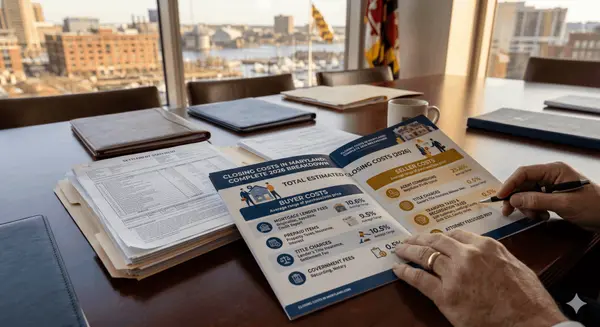
Jumbo closing costs include the same Virginia items as other loans — recordation tax, grantor tax, title fees, and lender charges — scaled to the larger loan amount. Because the loan is bigger, percentage-based costs are higher in dollar terms, so request a detailed estimate early.
How do I get pre-approved for a jumbo loan in the DMV?
Submit your income documentation, asset and reserve statements, and authorize a credit check with a licensed lender. You can start a free, no-obligation pre-approval online and a loan officer will confirm whether your target purchase requires a jumbo or stays conforming.
Do jumbo loans require two appraisals?
On very high-value properties, some jumbo lenders require two independent appraisals to confirm the home supports the loan amount. Whether a second appraisal is needed depends on the lender and the loan size.
How many months of reserves do jumbo lenders want?
Six to twelve months of mortgage payments in reserve after closing is common for jumbo loans, and some programs ask for more. Retirement and brokerage accounts can often count toward reserves at a discounted value.
Is it a good time to buy a higher-priced home in Northern Virginia?
Market conditions shift, so the right time depends on your finances, timeline, and the specific submarket. Getting pre-approved first tells you what you can afford and whether you'd be conforming or jumbo, which is the most useful starting point regardless of timing.
How do I find a good mortgage lender for a jumbo loan in the DMV?
Look for a licensed lender who knows the high-cost DC metro rules, offers both conforming and jumbo products, explains reserve requirements clearly, and is responsive during underwriting. Ken Byrne (NMLS #187129) with ALCOVA Mortgage LLC (NMLS #40508) serves buyers across VA, MD, DC, and WV and can compare both loan types for your situation.
Glossary
Conforming loan: A conventional mortgage that meets FHFA criteria — including a loan amount at or below the county limit — and can be bought by Fannie Mae or Freddie Mac.
Jumbo loan: A mortgage with a loan amount above the conforming limit ($1,249,125 in the 2026 DC metro), underwritten privately rather than through Fannie/Freddie.
High-cost area: A region where local home prices justify a conforming limit above the national baseline. The DC metro is a high-cost area.
Cash reserves: Liquid funds left after closing, measured in months of mortgage payments, that lenders require to ensure you can absorb a financial shock.
Debt-to-income (DTI) ratio: The share of your monthly gross income that goes toward debt payments. Jumbo lenders typically apply tighter DTI limits.
Piggyback (80/10/10): A financing structure pairing a first mortgage, a smaller second mortgage, and a down payment to keep the primary loan within conforming limits.
FHFA: The Federal Housing Finance Agency, which sets annual conforming loan limits and oversees Fannie Mae and Freddie Mac.
Disclaimer: This article is for informational purposes only and does not constitute financial or legal advice. Mortgage programs, rates, and eligibility requirements are subject to change. Contact a licensed mortgage professional for guidance specific to your situation. Ken Byrne, NMLS #187129 · ALCOVA Mortgage LLC, NMLS #40508 · Licensed in VA, MD, DC, WV.
Categories
Recent Posts







GET MORE INFORMATION

Broker Associate