
Mortgage Pre-Approval vs. Pre-Qualification: What's the Real Difference?
Mortgage Pre-Approval vs. Pre-Qualification: What's the Real Difference?
By Ken Byrne, NMLS #187129 · ALCOVA Mortgage LLC, NMLS #40508 · Updated for 2026
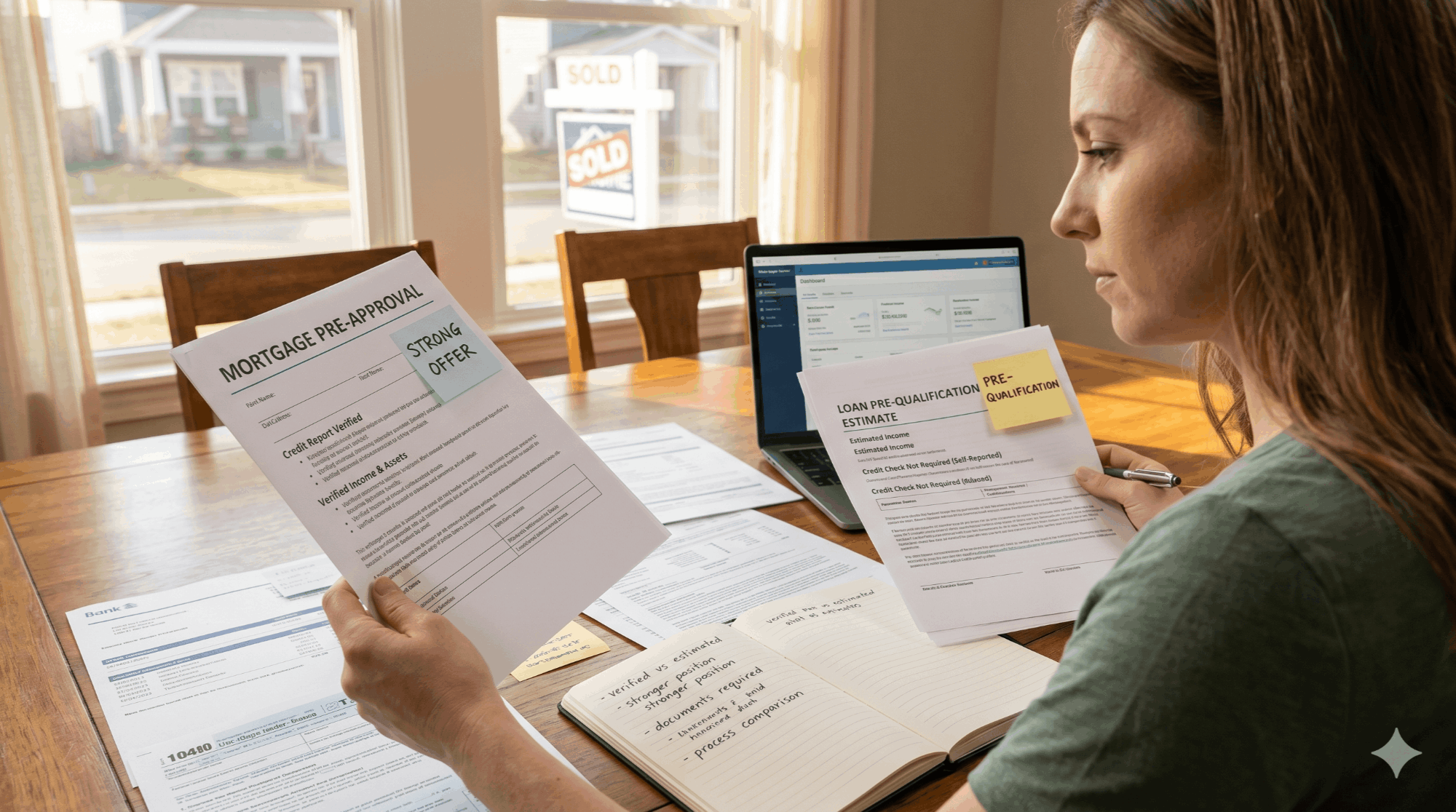
Quick Answer: A mortgage pre-qualification is a quick, informal estimate of how much you might be able to borrow, based on self-reported income, assets, and debt — no documents required. A pre-approval is a formal, verified loan commitment after a lender pulls your credit and reviews your pay stubs, tax returns, and bank statements. In the competitive DC metro market, sellers expect a pre-approval letter — not a pre-qualification — to take your offer seriously.
Key Takeaways
- Pre-qualification is a back-of-the-envelope estimate based on what you tell the lender. It usually takes minutes and requires no documents.
- Pre-approval is a verified conditional loan commitment based on a credit pull and full document review. It typically takes 1–3 business days at ALCOVA Mortgage.
- In Northern Virginia, Maryland, and DC, almost every listing agent will require a pre-approval letter — not a pre-qualification — before a seller considers your offer.
- A standard pre-approval is valid for 60 to 120 days. After that, your lender refreshes your credit and income documents.
- Pre-approval is not a guarantee. Final loan approval still depends on the property appraisal, title work, and a final underwriting review.
- Getting pre-approved before you shop helps you set a realistic budget, lock in your price range, and move quickly when you find the right home.
Table of Contents
- What Is Mortgage Pre-Qualification?
- What Is Mortgage Pre-Approval?
- Side-by-Side Comparison
- Why Pre-Approval Matters in the DMV Market
- The Pre-Approval Process Step-by-Step
- Documents You'll Need
- How Long Does a Pre-Approval Last?
- What Pre-Approval Does NOT Guarantee
- Mistakes to Avoid After Pre-Approval
- How Pre-Approval Strengthens Your Offer
- Choosing the Right Mortgage Lender
- FAQ
- Glossary
If you're starting your home search in Northern Virginia, Maryland, or Washington DC, you've probably heard the terms pre-qualification and pre-approval used interchangeably. They are not the same thing — and confusing them can cost you the house you actually want.
In the DMV, where well-priced listings often see multiple offers within a weekend, the strength of your financing letter is one of the few real levers a buyer has. A pre-qualification might tell you what you can probably borrow. A pre-approval tells the seller a lender has verified you can actually close.
This guide walks through exactly what each one is, what's involved in getting either, how long they last, and — most importantly — which one you actually need before you start touring homes in Loudoun, Fairfax, Prince William, Arlington, Montgomery County, or DC.
What Is Mortgage Pre-Qualification?
A mortgage pre-qualification is a preliminary, informal estimate of how much a lender might be willing to lend you. It's based entirely on information you self-report — your stated income, your estimated debt, your approximate savings, and your guess at your credit score.
Most pre-qualifications take 5 to 15 minutes. You can often complete one online or over the phone. The lender plugs your numbers into their calculator and tells you a ballpark loan amount you'd likely qualify for. In many cases, no credit pull happens at all — or the lender does a soft pull that doesn't affect your credit score.
What pre-qualification is good for
Pre-qualification can be useful very early in the process — say, six to twelve months before you actually plan to buy. It helps you:
- Get a rough sense of what price range you should be looking in
- Identify whether you have any major obstacles to overcome (high DTI, low credit, insufficient reserves)
- Have an initial conversation with a lender without committing to anything
- Decide whether you want to start saving more aggressively before applying
What pre-qualification is NOT good for
A pre-qualification letter holds essentially no weight when you're submitting an offer in the DMV. Listing agents in competitive markets like Arlington, Vienna, Bethesda, or Capitol Hill routinely tell buyers' agents that a pre-qualification letter is not acceptable. They want to see a verified pre-approval before they bring an offer to their seller.
Why? Because nothing in a pre-qualification has been confirmed. The lender hasn't seen your pay stubs. They haven't verified your bank balance. They don't know if your credit score is actually 740 or actually 640. If you submit an offer with a pre-qual and the deal falls apart at underwriting, the seller has lost weeks of marketing time.
What Is Mortgage Pre-Approval?
A mortgage pre-approval is a formal, conditional commitment from a lender to loan you a specific amount of money — issued only after the lender has reviewed and verified your finances.
When you apply for a pre-approval, your lender pulls your credit (a hard inquiry), collects documentation, and runs your full financial profile through their automated underwriting system. They evaluate your income, employment history, assets, debts, credit score, and debt-to-income ratio against the requirements of the loan program you're applying for.
The output is a pre-approval letter that states:
- The maximum loan amount you've been approved for
- The loan program (Conventional, FHA, VA, USDA, jumbo)
- The expected down payment range
- The conditions remaining (typically: appraisal, title, final underwriting, sometimes employment re-verification at closing)
- An expiration date
What makes pre-approval different
The big distinction is verification. With a pre-qualification, the lender takes your word for everything. With a pre-approval, the lender confirms it. Your W-2s prove your income. Your bank statements prove your down payment is real and seasoned. Your credit report shows your actual debts and score. Your employer is contacted to confirm your job and pay.
By the time a pre-approval letter is issued, the only major variables left are the property itself and any major life changes (job loss, taking on new debt, etc.) between now and closing. That's why a pre-approval gives sellers — and you — actual confidence that the loan will close.
Pre-approval vs. underwritten approval (TBD approval)
In hyper-competitive DMV pockets — think Arlington, McLean, Bethesda, or Northwest DC — some buyers go a step beyond standard pre-approval and obtain an underwritten pre-approval, also called a TBD ("To Be Determined" property) approval. With a TBD approval, an underwriter has actually reviewed and signed off on your file before you've even chosen a house. The only contingency left is the property itself.
A TBD approval can give your offer near-cash strength. It's not necessary in every market, but if you're competing for a popular listing in a tight zip code, it's worth asking your lender whether they offer it.
Side-by-Side Comparison
| Feature | Pre-Qualification | Pre-Approval |
|---|---|---|
| Information source | Self-reported | Lender-verified |
| Credit pull | Soft or none | Hard inquiry |
| Documents required | None typically | Pay stubs, W-2s, tax returns, bank statements, IDs |
| Time to complete | 5–15 minutes | 1–3 business days |
| Output | Estimate / informal letter | Conditional commitment letter |
| Cost | Free | Free at most lenders, including ALCOVA |
| Validity | Indefinite (but meaningless) | 60–120 days typical |
| Accepted with offer in DMV | Rarely | Required |
| Strength with sellers | Low | High |
How sellers actually weight each letter
Here's how a typical DMV listing agent ranks the financing letters they see attached to offers:
Cash offer
Underwritten / TBD pre-approval
Standard pre-approval
Pre-qualification
No financing letter
Relative perceived strength of buyer financing letters in DMV listing offers.
Why Pre-Approval Matters in the DMV Market
The DC metro is one of the most competitive housing markets in the country. Median home prices in Fairfax County, Loudoun County, Arlington, Montgomery County, and DC proper sit well above national averages, and inventory in the most sought-after school districts and commuter corridors moves quickly.
In a market like this, you generally need to be able to:
- Tour quickly. The home you want may go under contract within 72 hours of listing.
- Submit an offer the same day you tour. That means having your financing letter ready before you walk through the door.
- Compete on terms, not just price. Sellers reviewing multiple offers compare more than dollar amounts — they evaluate financing strength, contingencies, and timelines.
- Move from contract to close in 21–30 days. A buyer who already has a verified pre-approval can hit those timelines. A buyer with a pre-qualification typically can't.
Buyers who walk into this market with only a pre-qualification letter — or with nothing at all — almost always lose to buyers who came prepared. It's not a matter of fairness. It's a matter of risk. From the seller's seat, the buyer with a verified pre-approval is significantly less likely to fall apart at underwriting and force them back to market three weeks from now.
The "submission speed" advantage
Beyond the perception of strength, having a pre-approval in hand changes the practical timeline of your search. Once you find a home you love, the work to write and submit a strong offer is often done in a matter of hours — but only if your financing is already in place. Buyers who try to "get pre-approved later" routinely lose homes simply because they couldn't move fast enough.
Free · No Commitment
See What You Qualify For Today
Get pre-approved in minutes and walk into your home search knowing exactly what you can afford in the DC metro market. No cost, no obligation.
Ken Byrne NMLS #187129 · ALCOVA Mortgage LLC NMLS #40508
The Pre-Approval Process Step-by-Step
A standard pre-approval at ALCOVA Mortgage typically takes 1–3 business days from application to letter, assuming your documents are ready. Here's what the process looks like:
Initial Conversation
A short call with a loan officer to talk through your goals, timeline, target price range, and any concerns about credit, income, or down payment. This is also where you'll discuss which loan programs likely fit your situation (Conventional, FHA, VA, USDA, jumbo).
Application
You complete a full mortgage application (Form 1003), either online or with your loan officer. This collects detailed information on your income, employment, assets, debts, and the property type you're looking for.
Credit Pull
Your lender pulls a tri-merge credit report from Equifax, Experian, and TransUnion. The middle of the three scores is used for qualification. This is a hard inquiry and may dip your score by a few points temporarily.
Document Submission
You upload pay stubs, W-2s, tax returns, bank and investment statements, ID, and any other documents specific to your situation (DD-214 for VA, divorce decree, gift letter, etc.). Most lenders use a secure document portal.
Automated Underwriting
Your loan officer runs your file through Fannie Mae's Desktop Underwriter (DU) or Freddie Mac's Loan Product Advisor (LPA). The system returns an approval recommendation along with a list of conditions the underwriter will need to clear before final approval.
Pre-Approval Letter Issued
Once the file is reviewed, you'll receive a pre-approval letter stating your maximum approved loan amount, the loan program, and the conditions remaining. Letters can typically be issued at any approved purchase price up to your maximum — so when you find your home, your loan officer can issue a fresh letter at the offer price within minutes.
Optional: Underwritten Pre-Approval
If you want extra strength, your file can be sent to a human underwriter for a full review before you've even chosen a property. The result is a TBD approval — the closest thing to a cash offer a financed buyer can carry.
Documents You'll Need
The exact document list varies by loan program and your specific situation, but most pre-approvals start with the same baseline. Having these ready when you apply will dramatically speed up your timeline.
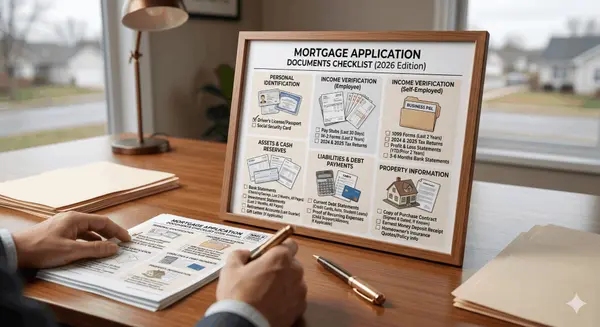
Standard Document Checklist
- ✓ Government-issued photo ID (driver's license or passport)
- ✓ Most recent 30 days of pay stubs
- ✓ W-2s from the past two years
- ✓ Federal tax returns from the past two years (all pages, all schedules)
- ✓ Most recent two months of bank statements (all accounts, all pages)
- ✓ Most recent statements for any retirement or investment accounts being used for down payment or reserves
- ✓ Documentation of any other income (bonus, commission, rental, child support, alimony, Social Security, pension)
- ✓ Explanation letters for any credit issues or large recent deposits
Additional documents by loan type
- VA loan: Certificate of Eligibility (COE) and DD-214 if separated from service
- Self-employed: Two years of complete personal and business tax returns, year-to-date profit and loss statement, and possibly business bank statements
- Gift funds for down payment: A signed gift letter and source documentation from the donor
- Divorced or paying alimony/child support: Final divorce decree and proof of payment history
- Down payment assistance programs: Income certifications and homebuyer education certificates may be required (Virginia Housing, Maryland MMP, DC HPAP, etc.)
Run the Numbers
What Will Your Monthly Payment Be?
Use our mortgage calculator to estimate your monthly payment for any home price in Virginia, Maryland, or DC.
How Long Does a Pre-Approval Last?
Most pre-approval letters are valid for 60 to 120 days, with 90 days being the most common. The expiration date exists because a lender's analysis is only as accurate as the financial snapshot they reviewed. After three months, your credit report may have changed, your employment may have shifted, your debts may have moved.
When your pre-approval expires, refreshing it is usually fast. Your loan officer typically needs:
- An updated credit pull
- Your most recent 30 days of pay stubs
- Updated bank statements
- Confirmation that nothing material has changed (no new debt, no job change, no large unexplained deposits)
If your situation hasn't materially changed, the refresh can usually be completed within a day. If you've been searching for several months and your letter is approaching expiration, it's worth proactively reaching out to your lender — not waiting until you find a home and discovering you're suddenly out of date.
What Pre-Approval Does NOT Guarantee
A pre-approval is a strong commitment, but it's not a final loan approval. Several things still need to happen between the pre-approval letter and the closing table:
1. The property must appraise
After you go under contract, the lender orders an independent appraisal. If the property appraises below the contract price, the lender will only lend on the appraised value — not the contract price. This is one of the most common surprises in a deal, and it's why an appraisal contingency in your purchase contract is important.
2. Title must be clean
A title company will research the property's chain of ownership and look for any liens, judgments, or unresolved claims. Title issues can delay or kill a deal. Title insurance protects you and your lender against future claims.
3. Final underwriting must clear
Once you're under contract, your full file goes to a human underwriter for final review. The underwriter may request additional documentation — explanation letters for items on your credit report, sourcing of large deposits, updated pay stubs, etc. This is normal.
4. Your finances can't materially change
If you lose your job, take on significant new debt, make a large unexplained deposit, or do anything that changes your debt-to-income ratio between pre-approval and closing, your loan can be denied — even at the closing table. This is why mortgage professionals advise buyers to make zero major financial changes during the loan process.
Mistakes to Avoid After Pre-Approval
Many otherwise-strong loan files fall apart in the 30 to 60 days between pre-approval and closing — almost always because of avoidable buyer behavior. The number one rule: don't change your financial picture in any meaningful way until after closing.
Don't Do These Things After Pre-Approval
- ✗ Don't apply for new credit. No new credit cards, store cards, auto loans, or personal loans. Each new application creates a hard inquiry and may add new monthly debt to your DTI.
- ✗ Don't finance furniture or appliances. Wait until after closing to buy that sofa, refrigerator, or new mattress on a financing plan.
- ✗ Don't change jobs. Lenders verify employment again right before closing. A job change — especially one that changes your pay structure or industry — can derail the loan.
- ✗ Don't make large unexplained deposits. If anyone is gifting you money or you're transferring funds, document the source. Underwriters scrutinize every deposit on every statement.
- ✗ Don't drain your accounts. Maintain reserves equivalent to your stated assets. Don't move money to investment accounts the lender hasn't reviewed.
- ✗ Don't co-sign anyone else's loan. Even if you're not the primary borrower, co-signed debt counts against your DTI.
- ✗ Don't ignore lender requests. When your loan officer asks for an updated document or explanation, respond the same day if possible. Delays compound.
- ✗ Don't make large purchases or pay off old collections without asking first. Both can affect your credit score in unpredictable ways before closing.
Free · No Commitment
Start Your Pre-Approval With a Local Lender
Ken Byrne and the team at ALCOVA Mortgage have been helping DMV buyers get pre-approved for over a decade. The application takes about 15 minutes.
Ken Byrne NMLS #187129 · ALCOVA Mortgage LLC NMLS #40508
How Pre-Approval Strengthens Your Offer
A strong pre-approval letter does more than meet a baseline expectation. Used strategically, it can win you the home in a multiple-offer situation — sometimes even at a slightly lower price than a competing offer.
It signals certainty of close
A listing agent reviewing five offers will weigh financing strength heavily. A buyer with a verified pre-approval — especially one from a reputable, locally-known lender — looks dramatically less risky than a buyer with a generic online pre-qualification.
It supports faster timelines
Because the heavy lifting is already done, a pre-approved buyer can typically agree to a 21-to-30-day close. That's an advantage over buyers who haven't yet started their loan and need 45+ days. In most DMV negotiations, a faster, more reliable close is worth real money to a seller.
It enables more flexible contingencies
A confident pre-approved buyer can sometimes shorten or modify their financing contingency to make their offer more attractive — though that decision should always be made carefully, in consultation with both your lender and your real estate agent. Removing contingencies isn't the right move for everyone, but it's an option pre-approved buyers can consider that pre-qualified buyers can't.
It allows your agent to advocate effectively
A good buyer's agent will often have their lender call the listing agent to vouch for your file. That conversation is much more meaningful when the lender can speak to a fully verified file rather than a self-reported estimate.
Ready to Start Your Search?
Browse Homes for Sale in Northern Virginia
Once you know your budget, explore available homes across Loudoun, Fairfax, Prince William, Arlington, and Alexandria.
Choosing the Right Mortgage Lender
Not all pre-approval letters carry the same weight in the eyes of a listing agent. A pre-approval from a national online lender that may not service your loan locally is a different signal than a pre-approval from a known DMV lender with a local track record. Here's what experienced buyers look for when picking a lender:
Local presence and reputation
Listing agents in Northern Virginia, Maryland, and DC tend to have working relationships with local lenders. They know which lenders close on time, which ones have responsive loan officers, and which ones tend to fall apart at underwriting. A pre-approval from a known local lender lands differently than one from a faceless brand.
Direct access to your loan officer
Can you actually call your loan officer when you need an offer letter at 8 PM on a Saturday? When you find the right home, you may need a fresh pre-approval letter at the offer price within an hour. A loan officer who answers the phone matters.
Range of loan products
A good local lender should offer the full range of loan programs — Conventional, FHA, VA, USDA, jumbo, and the major down payment assistance programs (Virginia Housing, Maryland MMP, DC HPAP). The right loan product depends on your situation, and a one-size-fits-all lender isn't ideal.
Transparent fee disclosure
Ask for a Loan Estimate before committing. Compare lender fees, origination charges, and rate offers across at least two or three lenders. The Truth in Lending Act gives you the right to shop without commitment.
For DMV homebuyers, Ken Byrne at ALCOVA Mortgage LLC has spent more than a decade building exactly this kind of practice. ALCOVA is licensed across Virginia, Maryland, DC, and West Virginia, and Ken's team works with buyers across every loan type — from first-time FHA borrowers in Manassas, to VA buyers near Quantico and Fort Belvoir, to jumbo buyers in Great Falls and Bethesda.
Buying & Selling at the Same Time?
Sell Your Current Home for 1.5% Listing Commission
If you're selling your current DMV home to buy your next one, a full-service 1.5% listing program can keep more of your equity available for your down payment.
Frequently Asked Questions
What's the real difference between pre-qualified and pre-approved?
Pre-qualification is an estimate based on what you tell the lender; nothing is verified. Pre-approval is a conditional loan commitment after the lender has pulled your credit and reviewed your pay stubs, W-2s, tax returns, and bank statements. In the DMV, pre-approval is the standard listing agents expect with an offer.
Does pre-approval hurt my credit score?
Yes, slightly — pre-approval involves a hard credit inquiry, which typically reduces your score by 2–5 points temporarily. Mortgage shopping is treated leniently though; multiple mortgage credit pulls within a 14–45 day window are usually counted as a single inquiry by FICO scoring models.
How long does pre-approval take?
A standard pre-approval typically takes 1–3 business days from when all documents are received. If your situation is straightforward and you have your documents ready, your loan officer may be able to issue a same-day or next-day letter. Underwritten/TBD pre-approvals take longer — usually 5–10 business days.
What credit score do I need to get pre-approved in Virginia?
Minimum credit scores vary by program. Conventional loans typically require 620+, FHA loans accept scores down to 580 (or 500 with 10% down), VA loans don't have a hard minimum but most lenders require 580–620, and USDA loans typically require 640+. Better scores generally translate to better rates.
How long is a pre-approval letter valid?
Most pre-approval letters are valid for 60–120 days, with 90 days being most common. After expiration, the lender will need updated documents (recent pay stubs, current bank statements) and a new credit pull to refresh the letter.
Can I get pre-approved with student loan debt?
Yes. Student loan debt is factored into your debt-to-income (DTI) ratio, but it doesn't disqualify you. The exact calculation varies by program — some use a percentage of the loan balance, while others use the actual monthly payment showing on your credit report. Discuss your specific situation with your loan officer.
Should I get pre-approved with multiple lenders?
Shopping is smart — you should compare rates and fees across at least two or three lenders before committing. FICO and VantageScore both treat multiple mortgage inquiries within a short window (14–45 days depending on the model) as a single inquiry, so rate shopping doesn't disproportionately damage your credit.
Can I be denied a mortgage after pre-approval?
Yes. Pre-approval is conditional, not final. Common reasons buyers are denied later include: the property fails to appraise, title issues are discovered, the buyer takes on new debt or changes jobs during the process, large unexplained deposits appear in their accounts, or final underwriting uncovers something not flagged in automated review.
What is the conforming loan limit in the DC metro for 2026?
For 2026, the conforming loan limit for a single-family home in the DC metro high-cost area is $1,249,125. Loans above this amount are considered jumbo loans and have separate qualification standards. The FHA loan limit in the DC metro for 2026 is $1,149,825.
How much does a pre-approval cost?
Pre-approvals are free at most reputable lenders, including ALCOVA Mortgage. You should not pay an application fee or a credit pull fee for a standard pre-approval. If a lender charges for pre-approval, that's a flag worth questioning.
Can I get pre-approved if I'm self-employed?
Yes. Self-employed borrowers typically need to provide two years of complete personal and business tax returns, a year-to-date profit and loss statement, and possibly business bank statements. Lenders calculate qualifying income from net business income (after deductions), which is different from gross revenue.
How do I find a good mortgage lender in Northern Virginia?
Look for a local lender with a verified NMLS license, a track record of on-time DMV closings, transparent fee disclosure on the Loan Estimate, multiple loan program options, and direct access to your loan officer. Ken Byrne (NMLS #187129) at ALCOVA Mortgage LLC (NMLS #40508) is licensed in VA, MD, DC, and WV and works with first-time buyers, military buyers, and move-up buyers across the DC metro.
Mortgage Glossary
Pre-Qualification
An informal, self-reported estimate of how much a lender might be willing to lend. No documents or credit verification required.
Pre-Approval
A conditional loan commitment from a lender, issued after credit pull and full document review.
TBD Approval (Underwritten Pre-Approval)
A pre-approval where a human underwriter has fully reviewed the file before a property is identified — leaving only the property contingency. Provides near-cash strength.
Debt-to-Income Ratio (DTI)
The percentage of your gross monthly income that goes toward debt payments. Most loan programs cap DTI between 43% and 50%.
Hard Inquiry
A formal credit pull that may temporarily lower your credit score by a few points. Pre-approval requires a hard inquiry; pre-qualification typically does not.
Loan Estimate (LE)
A federally standardized form lenders provide that itemizes the estimated rate, fees, and closing costs. It's the document you compare across lenders when shopping.
Conditional Approval
A loan approval contingent on remaining items being cleared — typically the appraisal, title work, and final document verification before closing.
Conforming Loan Limit
The maximum loan amount Fannie Mae and Freddie Mac will purchase. In the DC metro for 2026, the single-family conforming limit is $1,249,125. Above that, jumbo loan rules apply.
The Bottom Line
If you're more than a few months away from buying, a pre-qualification can be a useful first step. But the moment you're seriously thinking about touring homes — let alone writing offers — you need a full pre-approval. In the DMV market, it's not optional.
Getting pre-approved is free, takes about 15 minutes to apply, and the full letter is typically issued within 1–3 business days. The exercise also gives you something more valuable than a piece of paper: a real, verified understanding of what you can actually afford, what your monthly payment will look like, and what your closing costs will be. That clarity is what turns a stressful home search into a confident one.
Free · No Commitment
Get Your Pre-Approval Started Today
Apply online in about 15 minutes. Ken Byrne and the ALCOVA team will review your file and issue a pre-approval letter within 1–3 business days.
Ken Byrne NMLS #187129 · ALCOVA Mortgage LLC NMLS #40508
Disclaimer: This article is for informational purposes only and does not constitute financial or legal advice. Mortgage programs, rates, and eligibility requirements are subject to change. Contact a licensed mortgage professional for guidance specific to your situation. Ken Byrne, NMLS #187129 · ALCOVA Mortgage LLC, NMLS #40508 · Licensed in VA, MD, DC, WV.
Categories
Recent Posts





GET MORE INFORMATION

Broker Associate