
Property Tax Assessment Appeals in Northern Virginia: Deadlines and Evidence
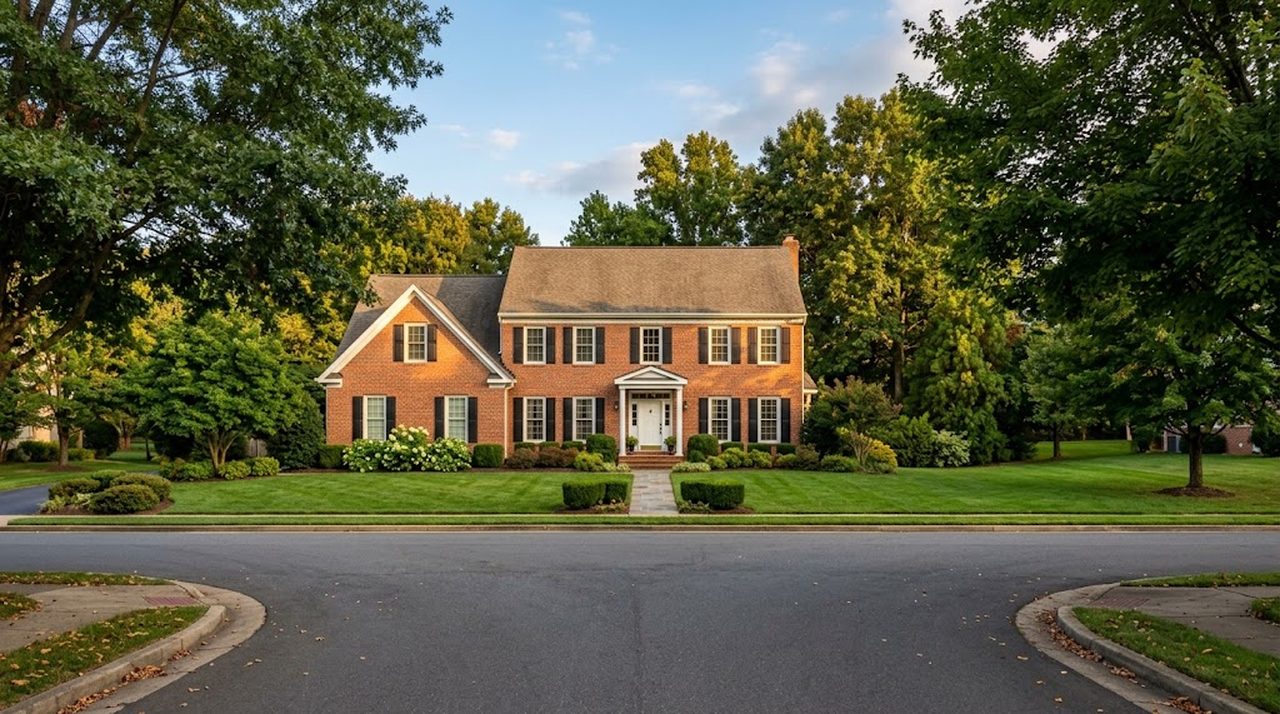
An assessment is an opinion of value as of January 1. The window to challenge it opens with the notice and closes weeks or months later, depending on the locality.
Short answer: in Northern Virginia you appeal a property tax assessment in up to three steps: a review by the county or city assessor, then the Board of Equalization, then circuit court. The deadlines are short and differ by locality. For tax year 2026, Arlington’s review deadline was March 1, Loudoun’s and Alexandria’s March 16, Fairfax County’s April 1 and Prince William’s June 1. Virginia law presumes the assessment is correct, so you must show it is above fair market value, usually with recent comparable sales or proof of a factual error. An appeal can also raise the value, and you still have to pay the tax on time while it is pending.
By Ken Byrne, NMLS #187129 · ALCOVA Mortgage LLC, NMLS #40508 · Updated September 2026
Your property tax bill is the assessment times the rate. The rate is set by the county board or city council and applies to everyone. The assessment is specific to your home, and it is the part you can challenge. This guide covers how Northern Virginia localities set assessments, the 2026 deadlines for Fairfax, Loudoun, Prince William, Arlington and Alexandria, the legal standard you have to meet, the evidence that counts, and what a successful appeal is actually worth on your mortgage payment. If you want a second opinion on whether your value looks high, JB Financing mortgage specialists can help you read the numbers.
How Northern Virginia assessments are set
Virginia law requires assessments to be made at 100 percent of fair market value. Fairfax County states that it must assess all real estate at 100 percent of its fair market value as of January 1, and the notice that arrives early in the year shows the new value.
| Locality | When 2026 notices went out |
|---|---|
| Arlington County | Mailed and posted online each January |
| Loudoun County | Mailed beginning February 6, 2026 |
| Fairfax County | Mailed beginning February 17, 2026 |
| City of Alexandria | Mailed February 25, 2026 |
| Prince William County | Mailed in March 2026 |
Va. Code 58.1-3201; each locality’s 2026 assessment announcement or tax calendar.
Read the notice the day it arrives. Check the new value and the review deadline, then compare the property details in the locality’s online record, such as square footage, bedrooms, bathrooms and finished areas, with your actual home. Strong cases usually start with something on that record being wrong or out of line with what similar homes nearby sold for.
Virginia law also gives you the right, on request, to examine the working papers the assessor used for your property. That is the fastest way to see which sales and which property data drove your number.
Va. Code 58.1-3331.
Appeal deadlines by county
Each locality runs its own first level review and its own Board of Equalization, with its own dates. These were the 2026 deadlines. They have passed for this year; the 2027 dates will be printed on next year’s notice and usually follow the same pattern.
| Locality | Review by the assessor, 2026 | Board of Equalization, 2026 |
|---|---|---|
| Arlington County | March 1 each year; before March 2 in 2026 | Filed or postmarked by April 15 |
| Loudoun County | Requested by March 16 | Filed by June 1 |
| City of Alexandria | Filed by March 16 | Filed by June 1, or 45 days from the review decision letter |
| Fairfax County | Filed by April 1 | Filed by June 1 |
| Prince William County | Filed by June 1 | Filed by July 1 |
Arlington County Department of Real Estate Assessments; Loudoun County; City of Alexandria 2026 notice of assessment; Fairfax County Department of Tax Administration; Prince William County Tax Administration.
Arlington is the earliest by weeks. Its notices go out in January and the review deadline is March 1. An Arlington owner who waits for the first tax bill in June has already missed both the review and the Board of Equalization deadlines.
Prince William is the outlier the other way: its notices arrive in March and its deadlines run into June and July, later than anywhere else in this guide. Buyers there can compare lenders and costs in our guide to the best mortgage lender in Prince William County.
Fairfax County accepts administrative appeals online for residential property, or by mail or email, and a member of its appraisal staff will contact you to schedule a field inspection.
Assessments matter again when you buy or refinance, because the tax on the assessed value goes into the payment a lender qualifies you on. For Loudoun buyers, our guide to choosing a mortgage lender in Loudoun County covers that side.

Get a Mortgage Estimate for Free
See what a lower assessment would do to your monthly payment and escrow, on your own numbers.
✓Free, no obligation✓Licensed in VA, MD, DC and WV✓Loan officer Ken Byrne, NMLS #187129
The legal standard you have to meet
This is the part most appeal guides skip. Under Virginia law the assessor’s value starts with the advantage.
| Rule | What the Code of Virginia says |
|---|---|
| Presumption | There is a presumption that the valuation determined by the assessor is correct |
| Your burden at the Board of Equalization | Show by a preponderance of the evidence that the property is valued at more than its fair market value |
| Factual errors | Mistakes of fact, including computation, that affect the assessment are treated as not in accordance with generally accepted appraisal practice |
| The Board’s duty | To increase as well as decrease assessments, whether or not a specific complaint is made |
Va. Code 58.1-3379.
In practice that means an appeal is not an argument that taxes are too high, or that your value rose more than you expected. It is evidence that this particular value is above what the home would have sold for on January 1, or that the assessor worked from wrong facts. A wrong square footage, a bathroom that does not exist or a finished basement that is unfinished is the clearest case, because the Code itself treats a mistake of fact as a departure from proper appraisal practice.
The three levels of appeal
| Level | Who decides | Deadline pattern |
|---|---|---|
| 1. Review by the assessor | The county or city assessment office | The earliest deadline, weeks after the notice |
| 2. Board of Equalization | An independent local board | Later in the spring or early summer |
| 3. Circuit court | A judge | Within three years from the last day of the tax year, or one year from the date of the assessment, whichever is later |
Va. Code 58.1-3984 for the circuit court deadline; local deadlines as above.
Many homeowners stop at the first level. The assessor’s review is informal and is where factual errors get corrected. The Board of Equalization is a formal hearing where the presumption and the preponderance standard apply. Circuit court requires showing both that the value is wrong and that it was not arrived at in accordance with generally accepted appraisal practices, and it is usually only worth considering with professional help.

Strong reviews usually rest on a factual error on the property record or on a handful of recent comparable sales.
Evidence that counts
The localities are explicit about what they want to see. Loudoun County lists three grounds.
| Ground | What it means | Evidence |
|---|---|---|
| Market value | Your value is above what the home would sell for | Recent sales of properties similar to yours |
| Equity | You are assessed out of line with neighbors | Nearby properties with similar features assessed lower |
| Incorrect property data | The assessor used wrong facts | Floor plans, photos, permits or a survey that show the correct details |
Loudoun County real estate assessment FAQ. Fairfax County asks for market value sales that demonstrate the assessment is not at fair market value, or comparables to prove a lack of uniformity.
A practical order of work:
| Step | What to do |
|---|---|
| 1 | Check every fact on the notice and the online property record against your home |
| 2 | Ask for the assessor’s working papers to see which sales were used |
| 3 | Find three to five sales of similar homes nearby that closed close to January 1 |
| 4 | Note condition issues a buyer would have priced in, with photos |
| 5 | File the review before the deadline and keep the confirmation |
| 6 | Pay the tax bill on time regardless |
Alexandria says its staff will correct any factual errors on the property record and may inspect the home, inside or outside depending on the owner’s wishes. Arlington owners can find the county’s rate, average bill and due dates in our Arlington County property tax guide.
Get Pre-Approved Today
Buying rather than appealing? Start with a pre-approval built on the real tax bill for the home.
✓Free, no obligation✓Licensed in VA, MD, DC and WV✓Loan officer Ken Byrne, NMLS #187129
Two rules that catch owners out
First, an appeal can go the wrong way. The Board of Equalization’s statutory duty covers increases as well as decreases, Fairfax says its Board’s values may be increased, decreased or affirmed, and Arlington lists three possible results of a review: a decrease, confirmation or an increase. If the evidence suggests your home is worth more than assessed, an appeal is a bad idea.
Second, the bill does not wait. Fairfax states that you must pay all taxes on time or face penalties and interest even if you file an appeal, Loudoun says filing does not delay the tax due date, and Alexandria’s 2026 calendar set June 15 as the first half deadline regardless of review or appeal. If the value is later reduced, the difference is dealt with afterward.
The rates each locality charges, and when the bills are due, are set out in our guide to Northern Virginia property tax rates by county.
What a successful appeal is worth, and how it reaches your mortgage
Every $1,000 taken off the assessment saves ten times the rate a year, $11.20 at $1.12. Here is what two example reductions would save in a year.
| Reduction in assessed value | Fairfax County at $1.12 | Prince William at $0.935 | Loudoun at $0.805 |
|---|---|---|---|
| $25,000 | $280 | $234 | $201 |
| $50,000 | $560 | $468 | $403 |
Calculated. Illustrations of the arithmetic only; they are not a prediction of any appeal outcome.
If your mortgage has an escrow account, a lower bill reaches you through the annual escrow analysis. Federal rules require the servicer to analyze the account every year, and when the analysis shows a surplus of $50 or more and your payments are current, the surplus must be refunded within 30 days. Your monthly payment is then reset to the new, lower tax. How that account works is covered in our guide to mortgage escrow accounts.
12 CFR 1024.17, Regulation X.
An appeal is not the only way to lower a housing payment. If you have come into a lump sum, a mortgage recast can cut the principal and interest instead, without refinancing.
Two Virginia programs can also lower or remove the bill for specific owners, on top of any appeal. The wider picture for Virginia homeowners and buyers is on our Virginia mortgage page.
| Other ways to lower the tax bill | Who qualifies | Basis |
|---|---|---|
| Tax relief for the elderly and disabled | Qualifying owners, on terms each locality sets | Va. Code 58.1-3210, a local option |
| Disabled veteran exemption | Veterans rated 100 percent service connected, permanent and total, on the home they live in | Va. Code 58.1-3219.5 |
Frequently asked questions
How do I appeal my property tax assessment in Northern Virginia?
Ask the county or city assessor for a review by the deadline on your notice, then, if needed, appeal to the Board of Equalization and finally circuit court. Bring comparable sales or proof of a factual error.
What is the deadline to appeal a Fairfax County assessment?
For tax year 2026, administrative appeals were due April 1 and Board of Equalization appeals June 1. Check next year’s notice for the 2027 dates.
When is the Loudoun County real estate assessment appeal deadline?
For 2026, reviews had to be requested by March 16 and Board of Equalization appeals filed by June 1.
When is the Prince William County assessment appeal deadline?
For 2026, administrative appeals were due June 1 and Board of Equalization appeals July 1, the latest of the localities in this guide.
When is the Arlington County assessment appeal deadline?
The review deadline is March 1 each year; in 2026 filings were accepted before March 2. Board of Equalization appeals must be filed or postmarked by April 15.
Can my assessment go up if I appeal?
Yes. Virginia law charges the Board of Equalization with increasing as well as decreasing assessments, and Fairfax and Arlington both say an appeal can end in an increase.
Do I have to pay my property tax while my appeal is pending?
Yes. Fairfax, Loudoun and Alexandria all state that the due date does not change because you filed.
What evidence do I need to win a property tax appeal?
Recent sales of similar homes near January 1, nearby homes with similar features assessed lower, or proof that the property record has wrong facts such as square footage or finished areas.
Who has the burden of proof in a Virginia assessment appeal?
You do. The assessor’s value is presumed correct, and at the Board of Equalization you must show by a preponderance of the evidence that the value is above fair market value.
How much can I save by appealing my property taxes?
It depends on the reduction and the rate. A $25,000 reduction saves about $280 a year in Fairfax County, $234 in Prince William and $201 in Loudoun.
Next stepStart Your Pre-Approval
Start online, and Ken Byrne’s team will factor your property tax and escrow into the numbers.
✓Free, no obligation✓Licensed in VA, MD, DC and WV✓Loan officer Ken Byrne, NMLS #187129
This article is general information, not financial or legal advice and not a commitment to lend or an offer of credit. Loan limits, program rules, premium schedules and rates change, and individual eligibility depends on a full review of your credit, income, assets and the property. Every figure here is an illustration, not a quote, built from published sources and a weekly survey average rather than underwriting decisions. Insurance and mortgage insurance amounts are planning estimates. Confirm anything you plan to act on with a licensed mortgage professional. Deadlines and procedures are from each locality’s 2026 materials and the Code of Virginia, and change from year to year. This is general information, not legal or tax advice. For a Board of Equalization or court appeal, consider a licensed appraiser or attorney.
Categories
Recent Posts









GET MORE INFORMATION

Broker Associate